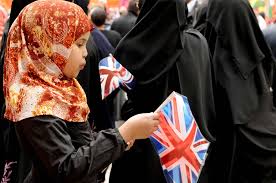
An elderly man sits beside me in the mosque. It’s Friday, our special prayer day, and although there’s another 20 minutes before the khutbah, this week’s sermon delivered in Arabic and English by our Imam, the place is filling up.
Elderly gentleman, many of whom been in the UK for 60 years, line up having greeted friends and performed the obligatory set of prayers required on entering the mosque.
Salubrious surroundings
Some shake hands. Others embrace. This community, founded by a small number of men and women whose first worship space was the back room of a carpet shop, has grown and developed to the point where 800 will gather today in fairly salubrious surroundings.
A modern, all-purpose building with car parking, first class facilities, a lift, teaching, and community rooms, this place is, to many, a second home. It’s open pretty much 24 hours.
There’s always someone to lead the succession of five daily prayers, classes and community outreach events and there are facilities to help local homeless people as well as to offer assistance or language classes to newly arrived.
Mosque is vital
The mosque is vital to the lives of doctors, nurses, care workers, delivery and taxi drivers, lawyers, restauranteurs, owners of small businesses. In other words, a cross section of the community.
The vast majority of my friends at the mosque are British-born and contribute in many ways to the good of this nation. Indeed, one of my daughters was delivered by a midwife whose family traces their roots here to 1963.
As far as I know, everyone works. Family, supporting it financially and morally, is always a major part of community life.
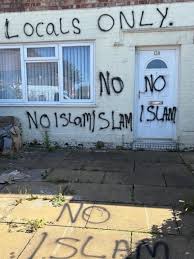
But today, Afzal, my elderly prayer neighbour, has other things on his mind.
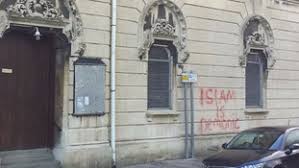
The news is not good. Two mosques have had graffiti painted on them. No Islam, read the black painted words on one. Christ is King in red on another. A crazed man is filmed outside a mosque with a knife attacking two Muslims. Things are not good.
“I thought we had turned a corner…years ago,” says my friend. “But even I, who doesn’t look at the news very much, has seen and heard things. Attacks on Palestine marchers. A girl’s hijab (headscarf) ripped off by three boys in a local park. Horrible things on social media. I am glad to avoid such misfortune.”
Dark reality
Those of us involved in anti fascism know all too well the dark reality.
The recent upsurge in violence is shocking. And it has now been made “respectable” by Nigel Farage, Rupert Lowe and a gaggle of neo-fascist thugs who behave, to all intents and purposes, like the stormtroopers and thuggish foot soldiers to the multimillionaire Reform UK and Advance leadership.

Some are surprised. Others not. Asylum seekers, refugees and religious minorities, people with a darker complexion and who prefer different styles of clothing, are the focus for blame.
And yet these, all too often the weaker less powerful members of British society, are being blamed for economic policies engendered by politicians whose friends and allies are found in the corporate sector.
Afzal knows this, and it’s tragic that a man in his late 70s should have to worry about his family and grandchildren, of whom he is so proud and who he loves with every fibre in his being.
“My sons followed me into business and my daughters are great parents, despite hardships.”
Borrowing £500 from friends and family, Afzal started a corner shop despite never having done anything like it before. It prospered despite his having to deal with casual racism from some customers.
Broke down barriers
By being open all hours and seeing himself as a community resource, he broke down barriers and was known for his kindness. “I’m certain that many people still owe me for a bottle of milk or loaf of bread,” he says with glint in eye.
But even Afzal, his neighbour Habib, and others in the same street, had to deal with small gangs of racist skinheads in the late 1960s and through into the 1970s. As the ’70s progressed, racist attacks by such gangs became more violent, more targeted and more political.
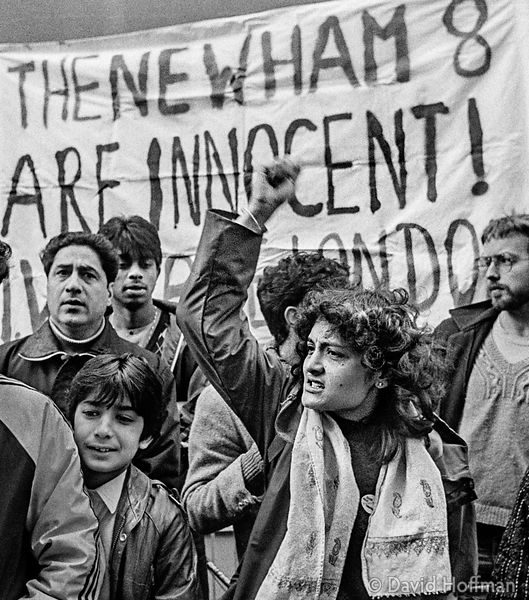
“They put leaflets through our door late at night. Put graffiti and slogans. Women didn’t feel safe even going to the shops so they went in groups. Pakistani and Bangladeshi men walking through the city were often targeted. Eventually we’d had enough.”
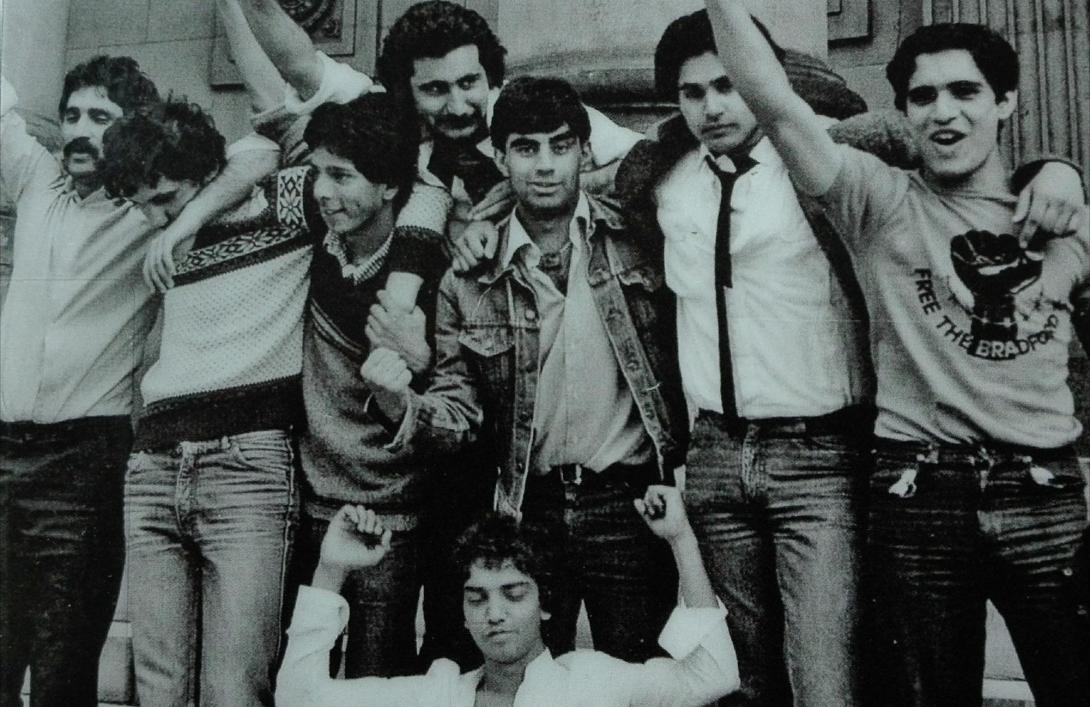
The police were often either slow, lax or unwilling to deal with racist gangs. It was all a bit of fun. Just kids. It was just a phase.
This kind of response despite serious injuries, firebombing and, sometimes, murder.
“So we had to organise,” Bilal tells me. He’s another community elder. A gentle man, gaunt with a whispy beard that doesn’t look like it’s ever had much attention.
Even this passive soul was roused to anger in the late ’70s when his wife, at home one night in October 1978, had a brick thrown through her bedroom window by men shouting “Pakis Go Home” and, worse, “Wogs Out.”
Serious intimidation
The next night a pig’s head found its way onto the doorstep of the local mosque and everyone realised that this was no fad, but serious intimidation designed to hurt people.
“Nobody likes to talk about vigilantes and self-defence. We’re not heroes, just parents trying to bring up our children in peace. We were working, contributing, paying taxes, doing our bit.”
But then, as now, where the racist is concerned that’s never enough.
This latest wave of violence, however, is evidence that, for a small yet increasingly vocal and confident minority of poorly-educated little Englanders, multiracialism, the tolerant society, basic human rights, freedom, democracy and equality under the law are alien concepts.
Farage riots
Since the Farage riots of last year, the mass media has almost fetishised racist violence and memes, giving acres of often unquestioning coverage to Farage, Tice, Matt Goodwin and those wretched, presenters of GB News.
And the men and women at my mosque, and many mosques the length and breadth of the land, know this and feel this.
Khadijah, Afzal’s granddaughter, is a successful lawyer in the city. Schooled at the local primary and secondary schools, with her only real advantages being parental encouragement and sheer hard work, she got into a Russell Group university, studied for four years and, despite some rejections along the way, battled her way into the mega competitive legal world.
Extreme politics
Afzal is proud of her, as he is of his business minded sons. This family, like hundreds of thousands of others, has overcome adversity, bigotry and intolerance only to witness the resurrection of an extreme politics at least as vile and as potentially destructive as that faced by their grandparents.
Khadijah’s best friend from school is Sameera, a midwife. Having delivered dozens of babies working in the NHS, she thought she’d seen it all until a couple complained about her assisting with the birth of their child because she was an “obvious muzzie”. A Muslim.
The couple were told that it was Sameera or nothing, because racism is not tolerated within the health service, and no less than 25% of staff are from the ethnic minorities.
Senior midwives told Sameera that they hadn’t come across such hostility for years. Another sign that the drip drip drip of racist expression has reached boiling point.
Blaming migrants
“Putting Graffiti on mosques was the ’70s and ’80s,” insists Afzal. “We came together to stop the racists and it was a hard battle. The government now should be supporting us but instead they too are blaming migrants.
“Me and Bilal, we were migrants once and it was scary but we won through. We don’t want our grandchildren facing the same thing.”
Worse, for the current incumbent of Downing St, is the certain knowledge that even for staunch lifetime Labour supporters like those at my mosque, a range of factors, foreign policy, proposed cuts to disability payments, PIP, and the ramping up of anti-migrant rhetoric, means that these people are queuing up to support Jeremy Corbyn and Zarah Sultana’s new party.
A meeting held this week saw 500 people, many from my local community, pack into a hall to hear Corbyn talk about those issues.
It is famously said that life for all gets more difficult when the political centre cannot hold. Given the experience of the last few weeks, and the shocking examples of anti-Muslim violence experienced and presented for all to see via social media, it’s increasingly clear that the centre ground is indeed occupied by less people than ever before.
Narrow patriotism
We have seen St George’s and Union flags going up everywhere. Just patriotism, say the flag bearers, but we know that for many of them, this is not the real motive at all.
These people know little about British history. Theirs is a narrowly focused patriotism that excludes all the good bits; the struggle for land and basic representation by the mid-17th Century Leveller or Digger.
It is not about Parliament seeking to militate against Charles I’s divine right of kings. Neither is it concerned with the writing of women like Mary Woolstonecraft or the struggle for women’s suffrage.
It’s not about the Great Reform Act of 1832, the Chartists or radical reformers calling for rights and freedoms we casually take for granted.
It’s not about Trades Unions or the Tolpuddle Martyrs or about the grim realities of children working in mines and factories. Neither is it about beautiful literature.
‘Glories of Empire’
Can the racist leader or thug quote us Milton or Marlowe, Dickens or Dahl? Of course not, because theirs is an exclusive, white, often English only, fascination with the so-called glories of Empire and its supposedly civilising effects.
It’s a violent, largely male only, cherry-picked history of battles like Agincourt or the Spanish Armada and it’s a ‘patriotism’ that neglects to understand that many of the groups of people coming to these isles were undocumented, “illegal migrants” upon a time.
The ancient Britons, Romans, Anglo-Saxons, Normans, Franks, Jews, Huguenots, Chinese, Moors, Russians, Cypriots, Afro-Caribbeans, Bangladeshis, Indians and Pakistanis, Afghans, Ukrainians and people from Hong Kong. They all bought their unique, beautiful and colourful culture and faith with them to add to what was here.
The racist patriot is stuck in some sort of Anglo-Saxon time warp where 19th century racial theories are still taken seriously as justification for empire.
Caustic and dangerous
Their late acquisition of Christianity omits the most important teachings about the blessed peacemaker, the Samaritan, healing the sick and Jesus living amongst the poor. And that he himself was a dark skinned Jewish man.
All this is sacrificed, pun intended, on the altar of a childish, yet caustic and dangerous, narrow-minded, patriotism that is neither historically credible nor politically acceptable
The challenge for all decent people, is to genuinely understand who we are, to accept difference and not fight over varying colours of polyester flag ordered from Amazon and made in China or Bangladesh (!)
We must not sit idly by. We must get involved by standing up and speaking out for people of different groups and faiths.
With 1.2 million job vacancies, at least 250000 empty properties in the UK and a declining birth rate that will demand new workers from abroad, it would seem that, on those basic statistics alone a political solution can be found.
And it must be found. The 1930s should be warning enough. Today, the hideous ideologies and ideas that led to the deaths of tens of millions between 1939 and 1945 are once again political currency.
We cannot stay silent.