Election successes for AfD including their significant advances in last weekend’s local elections at various levels in North Rhein-Westphalia (NRW) have pushed Germany’s other far-right parties into the shadows.
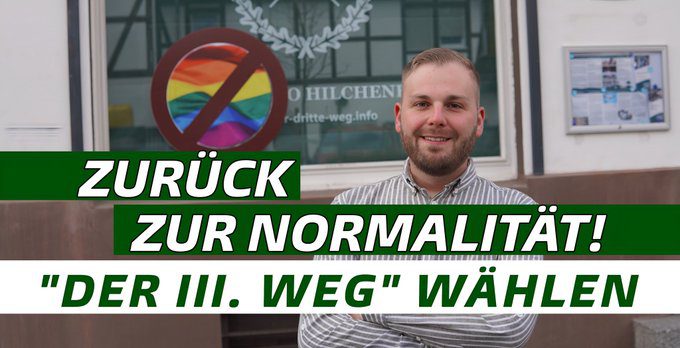
But in one small NRW town a neo-nazi party last weekend began what its allies hope will be a comeback for that side of the racist movement.
Dritte Weg (Third Way) chooses to write its name as III Weg. They go as far as they can to portray themselves as disciples of the Third Reich, without being banned under German laws designed to prevent glorification of Hitler’s regime.
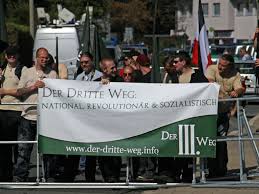
Unlike most fringe nazi parties around Europe, III Weg pursues a combination of “cadre” politics (the indoctrination of fanatical activists with an implicit commitment to revolutionary violence) and electoral politics.
They celebrated success last weekend in electing a councillor to the town council in Hilchenbach, where the party’s openly racist activism had already caused concern earlier this year.
Local community leaders have expressed horror at a neo-nazi being elected to their council. Although this might seem an overreaction to one councillor in a small town, the situation is in some ways similar to the election of nazi BNP councillor Derek Beackon at a by-election in Millwall ward, Tower Hamlets in 1993.
In East London then and Germany now, fringe nazi movements were and are involved in both street violence and to a small but growing extent in elections.
As with Tyndall’s BNP, III Weg grew out of a split in a larger fascist party and took more than ten years to win its first council seat.
Operating on the margins
The story of III Weg is part of a wider story of the collapse of its parent party NPD (National Democratic Party), by far the largest and longest-surviving nazi movement in postwar Germany until it collapsed at the start of the 2020s.
In the ruins of Hitler’s Reich, German nazis regrouped among various factions operating on the margins of the new West German republic’s laws and constitution.
Among their leaders was Adolf von Thadden, who worked with Mosley in 1962 trying to build a “National Party of Europe” that was aborted due to internal divisions over whether to be essentially anti-communist (as Mosley and von Thadden wished) or to be more neutral and even implicitly pro-Soviet and “national Bolshevik” as their former collaborator in France, Waffen-SS veteran Jean Thiriart came to believe.
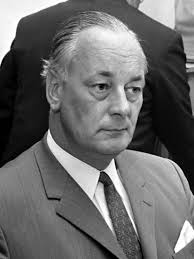
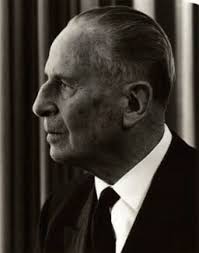
While Mosley’s project foundered, von Thadden had more success bringing together rival German extremist factions to create the NPD at the end of 1964. Just as John Tyndall later outmanoeuvred his rivals to take over the NF, von Thadden and fellow former Nazi Party members took over the NPD by 1967.
Although very obviously a revival of Nazism, the NPD stayed within the law and benefited from some of the same tides in mainstream politics that have boosted AfD in today’s Germany. The big West German parties in 1967 formed a “grand coalition”, which had the effect of radicalising dissident voters.
As a result, the NPD won many local council and even regional parliamentary (Landtag) seats during the mid-late 1960s, though they fell just short of the 5% threshold required to take federal seats in the Bundestag at the 1969 election.
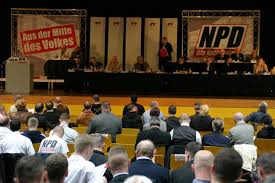
After that failure the NPD went downhill until the 2000s, when they again started to win local and regional seats, even while under investigation by the German security services for their subversive and unconstitutional activities.
By this time the NPD incorporated some of Germany’s most hardline nazis such as the lawyer Jürgen Rieger and the young militant Thorsten Heise, who became leader of its regional branch in the former East German state of Thuringia and surrounded himself with boneheads.
Radical elements
In 2013 the German authorities gave up trying to ban the NPD, but coincidentally in that same year the creation of AfD began to undermine its electoral base, while its more radical elements broke away to form III Weg.
After 2015 AfD became increasingly centred on anti-immigration politics and there seemed little point voting for NPD. In fact in Thuringia it’s an open secret that the leader of AfD’s most racist wing, which is known by the literal German word for ‘wing’, Der Flügel, has a close working relationship with the nazi boss Thorsten Heise.
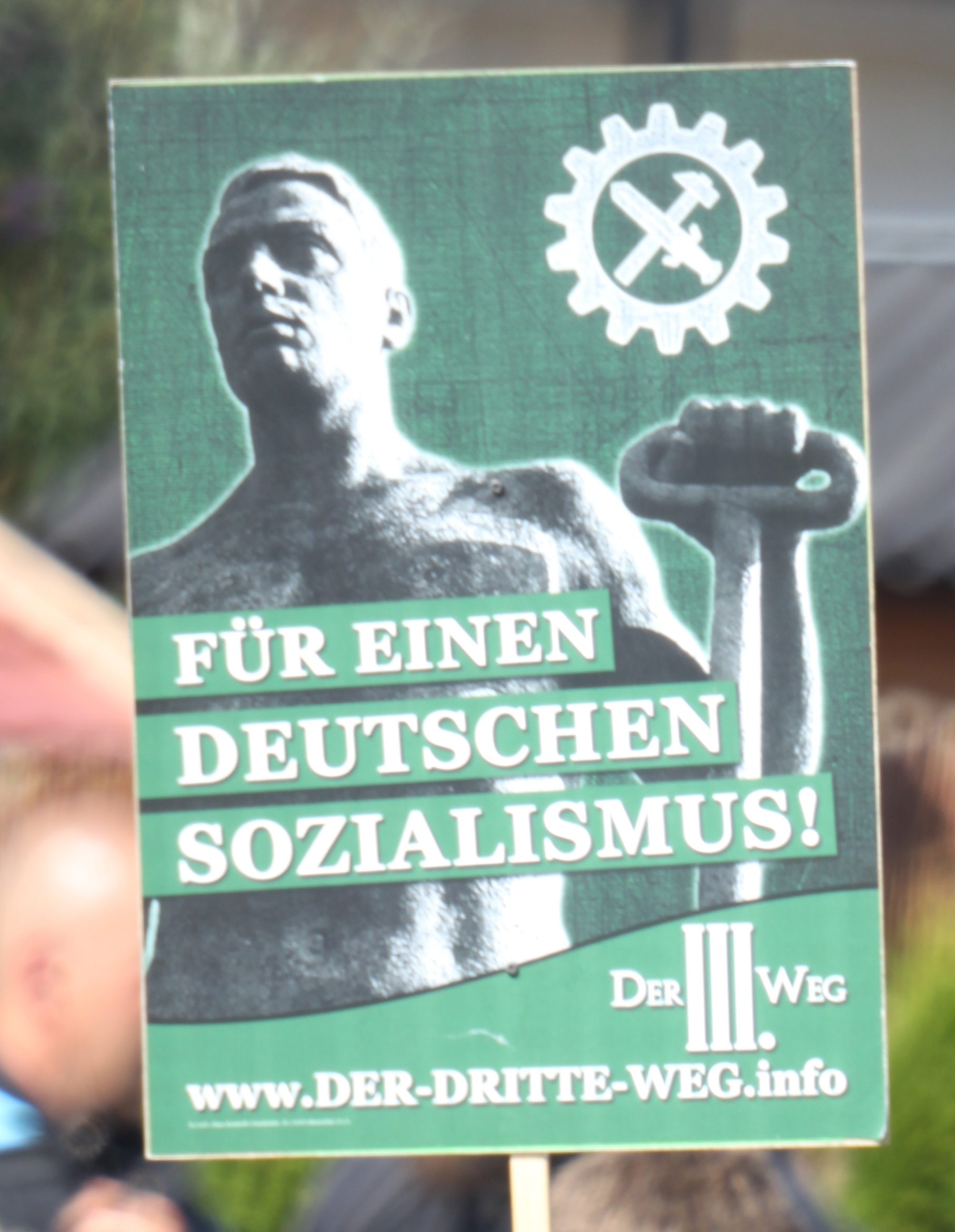
To begin with, the III Weg split from NPD was about both allegations of corruption in the party leadership, and an attempt to develop a more radical, Strasserite ideology. As with the young radicals of the early 1980s National Front in the UK, the founders of III Weg sought inspiration in the Strasser brothers and a supposedly more “worker-oriented” version of national socialism.
In 2021 the party’s founding leader Klaus Armstroff stepped down to deputy and was succeeded by Matthias Fischer. Since then, III Weg has been less distinctively Strasserite and has built links to Hitlerian national socialists such as the Spanish fanatic Isabel Peralta, who spent several periods in Germany working with the party during 2021 and 2022.
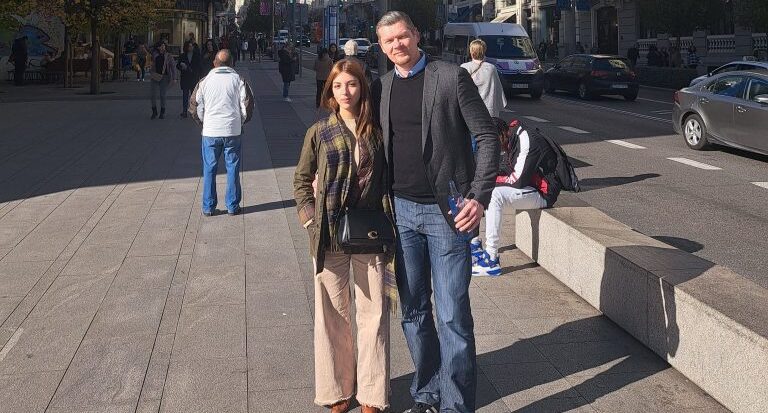
Peralta was formally banned from Germany at the start of 2023 but still maintains contacts with III Weg activists and has networked with them at several other pan-European nazi gatherings such as Nordic Resistance Movement events in Sweden, Heritage & Destiny conferences in the UK, and marches in Paris organised by the revived fascist youth group GUD.
Fringe party
As with the BNP/NF relationship during the 1980s, III Weg remained very much a fringe party until NPD fractured further in the early 2020s. In June 2023 the vast majority of NPD voted to dissolve the party and reorganise as “Die Heimat” (Homeland), though their youth wing retains its old name “Junge Nationalisten” (Young Nationalists – JN).
A tiny fragment of the old NPD has tried to continue a party using that name, but this has only a few dozen members.
Heimat tries to maintain an international presence, and its deputy leader Sascha Rossmüller spoke at last year’s Patriotic Alternative conference in Leicestershire. But within Germany it seems in terminal decline, caught between the electoral success of AfD, the street radicalism of III Weg and other splinter groups, and the online lunacy of assorted conspiracy theorists.
Double game
Since 2022 the most distinctive aspect of III Weg has been its strong support for Ukraine, while Heimat and most of the AfD are pro-Putin. As Searchlight has discussed in previous articles, it’s strange to see III Weg collaborate with the Scandinavian Putinists of the Nordic Resistance Movement.
Equally strangely, a small minority in AfD is pro-Ukraine but security agencies and anti-fascists, as well as the leaders of certain Ukrainian militias, have begun to question whether some of their far-right international “allies” are entirely sincere, or whether these are playing some double game controlled by Moscow.
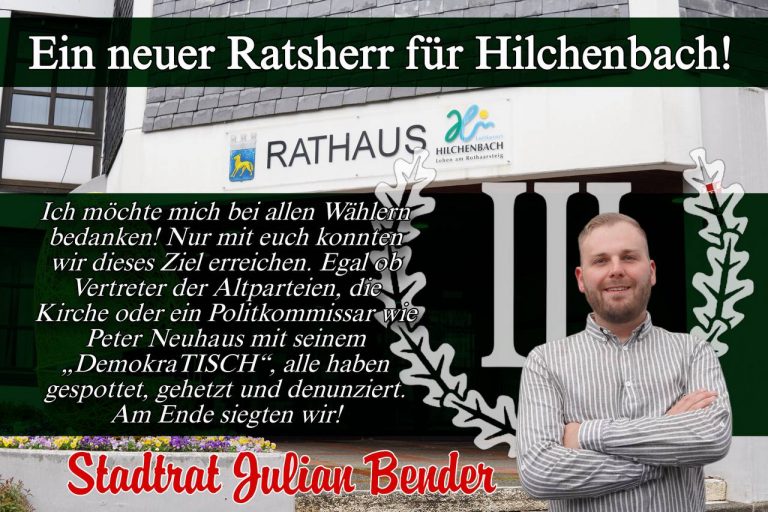
From an anti-fascist standpoint, III Weg’s success in winning a council seat last Sunday is alarming. As with the much wider success of AfD, it shows that German anti-nazis cannot complacently assume that old assumptions still hold true.
A “cordon sanitaire” denying “respectability” to the racist and fascist right is no longer enough. We face a difficult but essential task, in Germany as in the UK, not only in exposing the far-right’s evil ideology, subversive activities, and shady connections, but in explaining to voters why the politics of hate should be rejected.