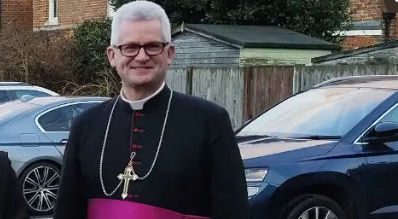
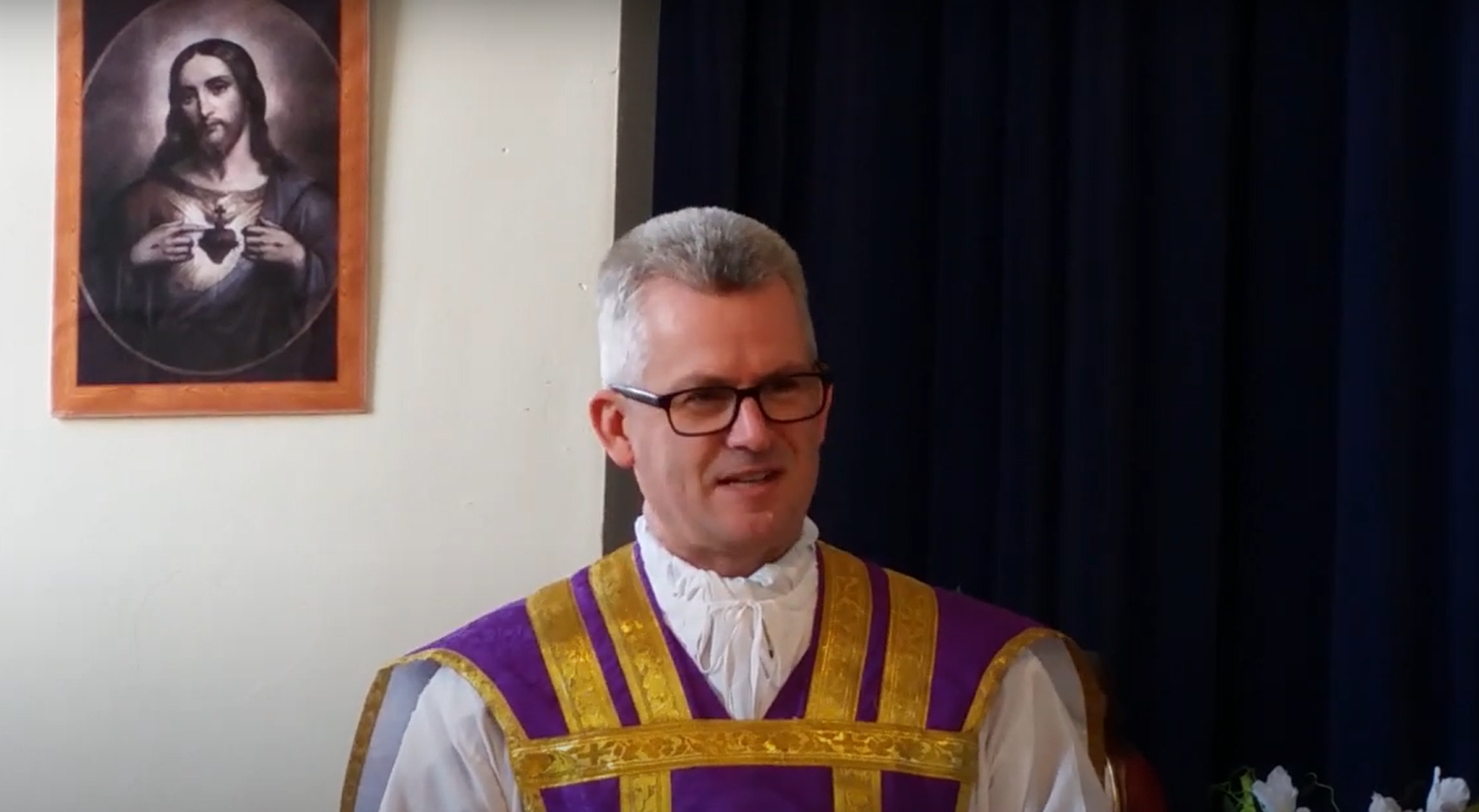
Although his name is not well known outside traditionalist Catholic circles, Bishop Paul Morgan has come to occupy a pivotal position acting as a bridge between radicalised Catholic splinter groups and the broader ecosystem of far-right politics.
Consecrated as a bishop by the holocaust-denying Bishop Richard Williamson, Morgan has quietly become one of the Catholic far right’s most active figures, providing clerical legitimacy to a network of schismatic chapels, preaching to radical Catholic enclaves, and, in the process, rubbing shoulders with Holocaust-deniers, conspiracy theorists, and elements of the far right.
Nowhere is this more evident than in Ireland, where Morgan’s activity has intersected with recent surges in ultra-conservative Catholic mobilisation, anti-immigrant agitation, and far-right conspiracy theorists.
From SSPX to The Resistance
The Society of St. Pius X was founded in 1970 by Archbishop Marcel Lefebvre in reaction to the reforms of the Second Vatican Council.
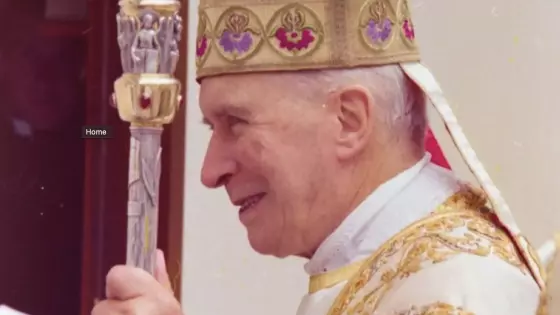
The Society, though traditionalist and often confrontational with Rome, retained a precarious legitimacy until 1988, when Lefebvre consecrated four bishops without papal approval.
Among them was Richard Williamson, who would later become infamous for Holocaust denial. When he died last year, Morgan officiated at his funeral.
Theological rigidity
Paul Morgan entered the SSPX priesthood in this context, serving first in Britain as district superior. Known for his theological rigidity, Morgan aligned himself early with the hardliners who opposed reconciliation with the Vatican.
His loyalty to Williamson, even after Williamson’s expulsion from the SSPX in 2012 for Holocaust-denial and defiance, set him on a trajectory toward the splinter group that would call itself the SSPX Resistance.
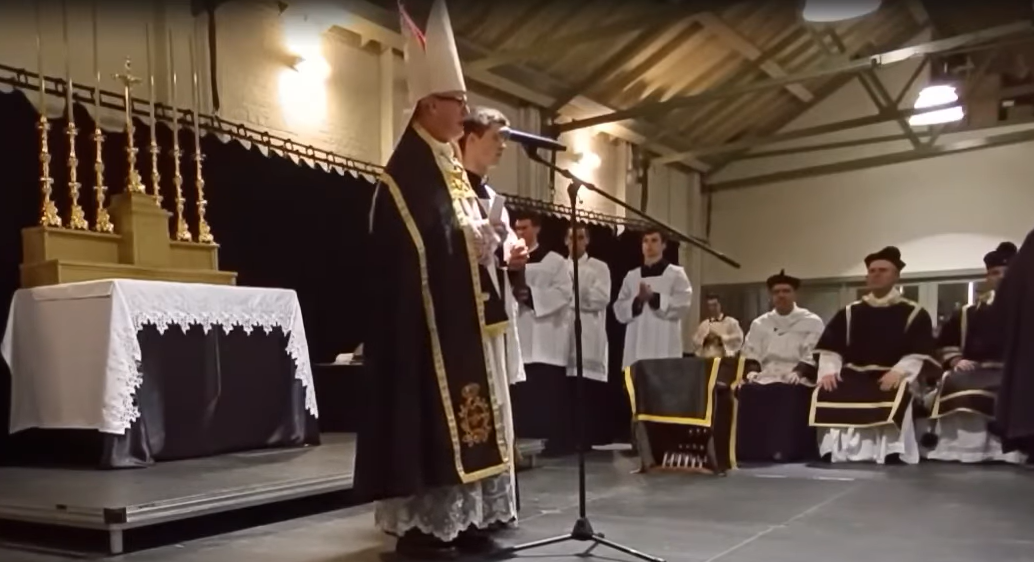
In 2022, Williamson consecrated Morgan as bishop, a move designed to ensure the continuity of his Resistance faction beyond his own lifetime. Williamson’s death earlier this year elevated Morgan to one of the most senior figures in the movement.
Role in ‘The Resistance’
Since his consecration, Morgan has become a key operator within the Resistance. His role is twofold:
- Pastoral and liturgical: He offers the sacraments, ordinations, and confirmations to communities rejecting both the Vatican and the mainline SSPX, thus guaranteeing their continued existence.
- Symbolic and strategic: As Williamson’s chosen successor, Morgan embodies continuity for those who view the SSPX Resistance as the last bastion of “true Catholicism.”
Although the Resistance is numerically small compared to the SSPX, its ideological radicalism makes it disproportionately influential. Its rhetoric overlaps with Holocaust denial, anti-Semitic conspiracy, militant anti-LGBT campaigns, and hostility toward liberal democracy.
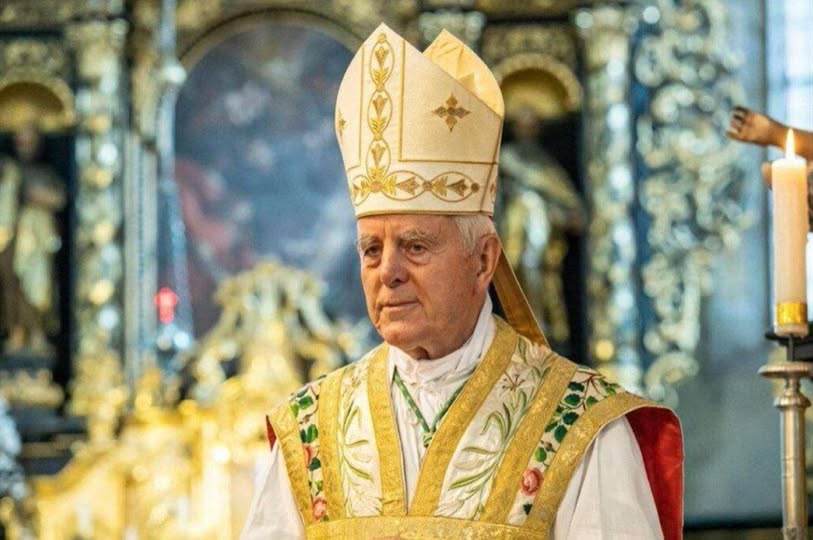
Morgan’s sermons and pastoral visits frequently blend Catholic piety with anti-modernist polemics.
Reports from observers in Ireland and Britain note his willingness to appear at events where far-right activists are present including those gatherings that blur the line between religious devotion and political rhetoric.
Far-right connections
The SSPX has long drawn scrutiny for harbouring extremists. Williamson’s open Holocaust denial is the most notorious example, but far-right infiltration has been persistent:
- United Kingdom: Resistance circles in London and the Midlands have overlapping membership including individuals connected to the BNP, National Front veterans, and the Traditional Britain Group. Morgan has not publicly disavowed such figures with his ‘chapels’ functioning as spaces where these activists find ideological reinforcement.
- France and Italy: The Resistance also taps into broader Catholic traditionalist networks including those that have historically intersected with the far right, from Action Française to contemporary neo-fascist Catholic groups. Morgan’s episcopal status grants him entry to these transnational circuits.
- United States: American traditionalist groups have also cited and elevated Morgan’s authority most notably in online forums where he is presented as a bishop untainted by compromise with Rome.
Ireland has become a testing ground for Morgan’s activities of late.
The country’s deep Catholic heritage, combined with recent disillusionment toward both the Church establishment and liberal reforms in relation to abortion rights and same-sex marriage, creates a fertile ground for such traditionalist enclaves as the SSPX Resistance.
Disaffected Catholics
Reports in 2024 and 2025 identify small but growing Resistance communities in Cork and Limerick, where Morgan has presided at Mass and confirmations.
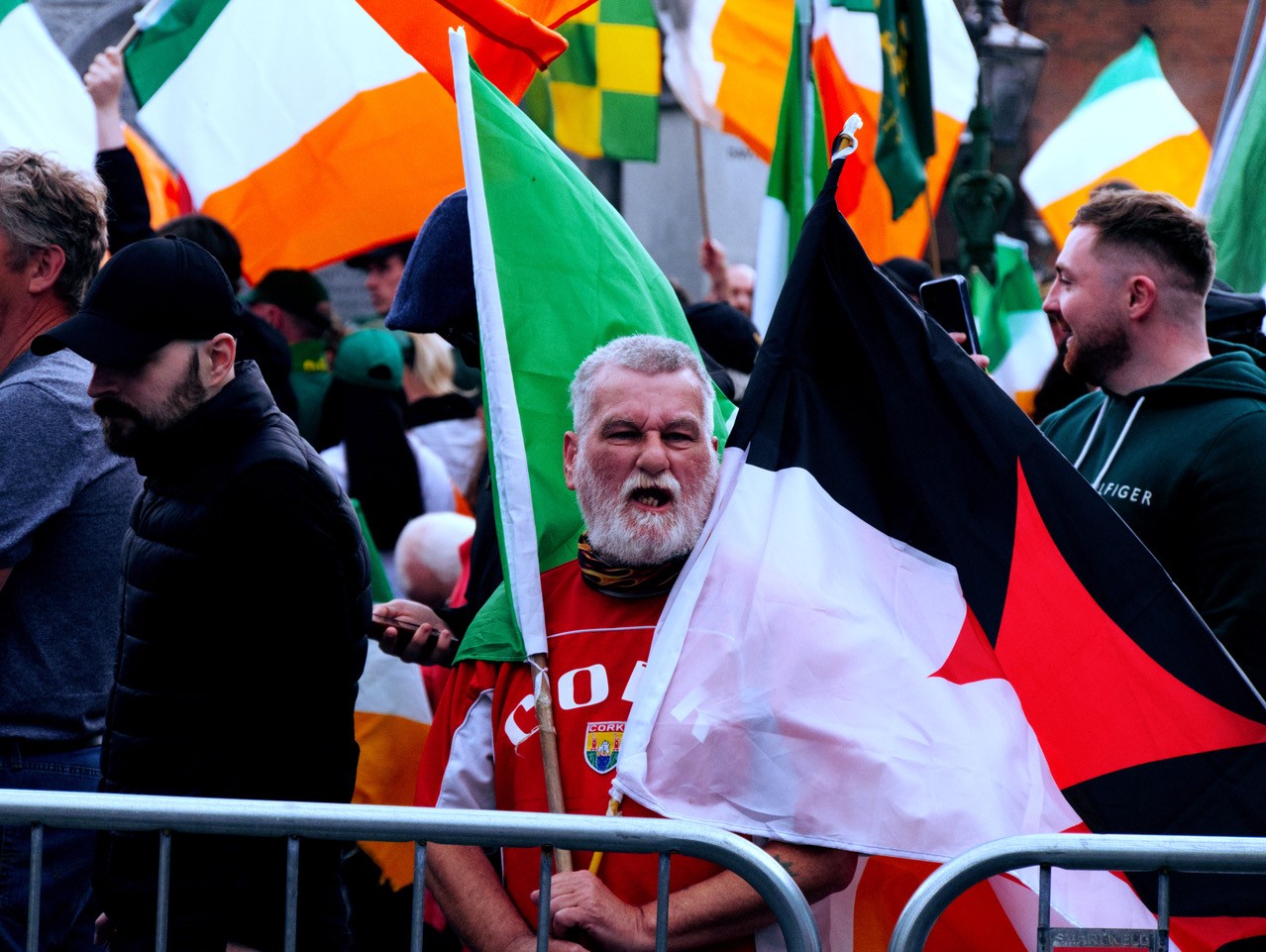
These chapels have attracted not only disaffected Catholics but also activists from Ireland’s anti-immigration street movements. Local observers note the crossover of attendees between Resistance services and far-right rallies against asylum centres.
Morgan’s pastoral visits appear also to have coincided with the escalation of far-right protests in towns such as Roscrea and Ballaghaderreen.
Leaflets distributed near Resistance chapels carried both religious rhetoric and secular far-right slogans, a convergence beyond mere coincidence.
Morgan’s sermons circulate on Irish Telegram channels that also promote anti-Semitic memes, COVID conspiracies, and far-right mobilisation. His authority as a bishop grants these spaces a veneer of spiritual legitimacy.
Financial controversies
In 2023, Morgan’s presence at a traditionalist pilgrimage to Knock Shrine caused controversy when footage emerged showing him greeting individuals later identified with the Irish far right.
Though Morgan himself avoided overtly political statements, the optics confirmed his role as a central focus rallying point.
The SSPX itself has faced repeated scrutiny over the financial privileges of its charitable status in both the UK and Ireland. Allegations include lack of transparency, opaque accounting, misuse of donations and indirect support for political campaigns.
The Resistance, lacking formal recognition, often operates on a cash basis which include chapel collections, donations from sympathisers abroad, and contributions funnelled through sympathetic Catholic charities.
Morgan’s role as bishop makes him a trustee in practice, even if not formally registered.
Critics argue that this lack of oversight creates vulnerabilities: money can flow between religious and political initiatives with little transparency.
In Ireland, this has raised concerns about whether Resistance funds have indirectly supported far-right activism.
Why Morgan matters
Within the niche world of traditionalist Catholic schism, Morgan represents continuity and legitimacy. His presence keeps alive a movement that might otherwise have dissolved with Williamson’s death.
Morgan’s significance lies less in numbers and more in networks:
- He sustains an ideological bridge between Catholic traditionalists and far-right movements.
- He provides a religious cover for extremist rhetoric, framing political hatred as theological conviction.
- He allows far-right activists to cloak themselves in the language of Catholic tradition therefore evading scrutiny.
In Ireland, where far-right mobilisation has surged since 2020, Morgan’s pastoral visits offer a rallying point for a coalition of disaffected Catholics, conspiracy theorists, and extremist activists.
Cross-pollination
Morgan’s significance relates to his consecration of ‘sacred’ spaces, both literal and symbolic, where far-right extremism is normalised under the guise of Catholic piety.
His inheritance from Williamson cements his position within the Resistance whilst his activities in Ireland show the risks of cross-pollination between schismatic Catholicism and far-right politics.
As Ireland confronts rising anti-immigrant agitation and as the UK continues to grapple with far-right extremism, Morgan’s role demands close monitoring. His presence is proof that, even in 2025, the radical fringes of Catholic traditionalism remain fertile ground for extremist politics.