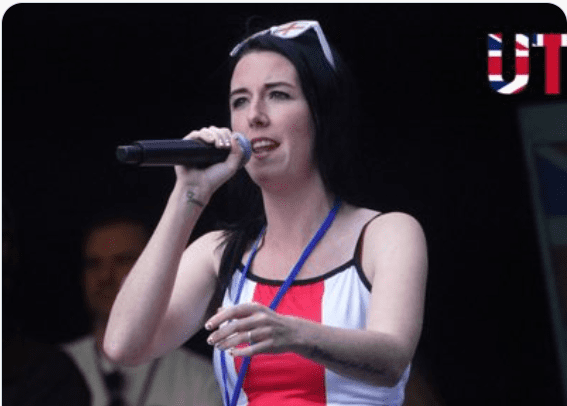
Jodie Scott – better known online by her moniker ‘Missus Kent’ and dubbed the ‘pound shop Lily Allen – is being platformed by Spotify which is hosting her anti-migrant songs, and one which contains grossly defamatory allegations against Keir Starmer.
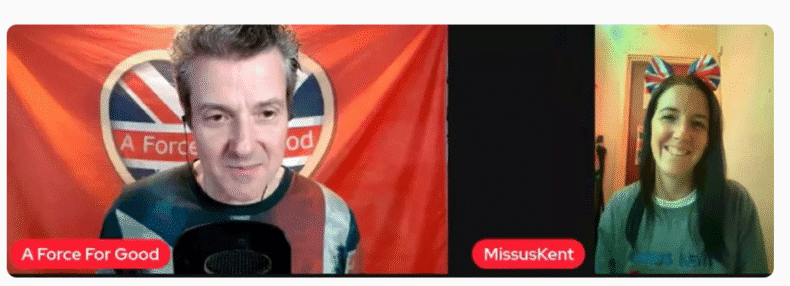
Scott boasted recently in an online interview that she could be found on Spotify. In fact, one of the songs platformed is ‘No War’, which includes an allegation so eye-wateringly defamatory that no media outlets have been prepared to cite it.
On Spotify she identifies herself by her real name – Jodie Louise Scott – as the author of the song.
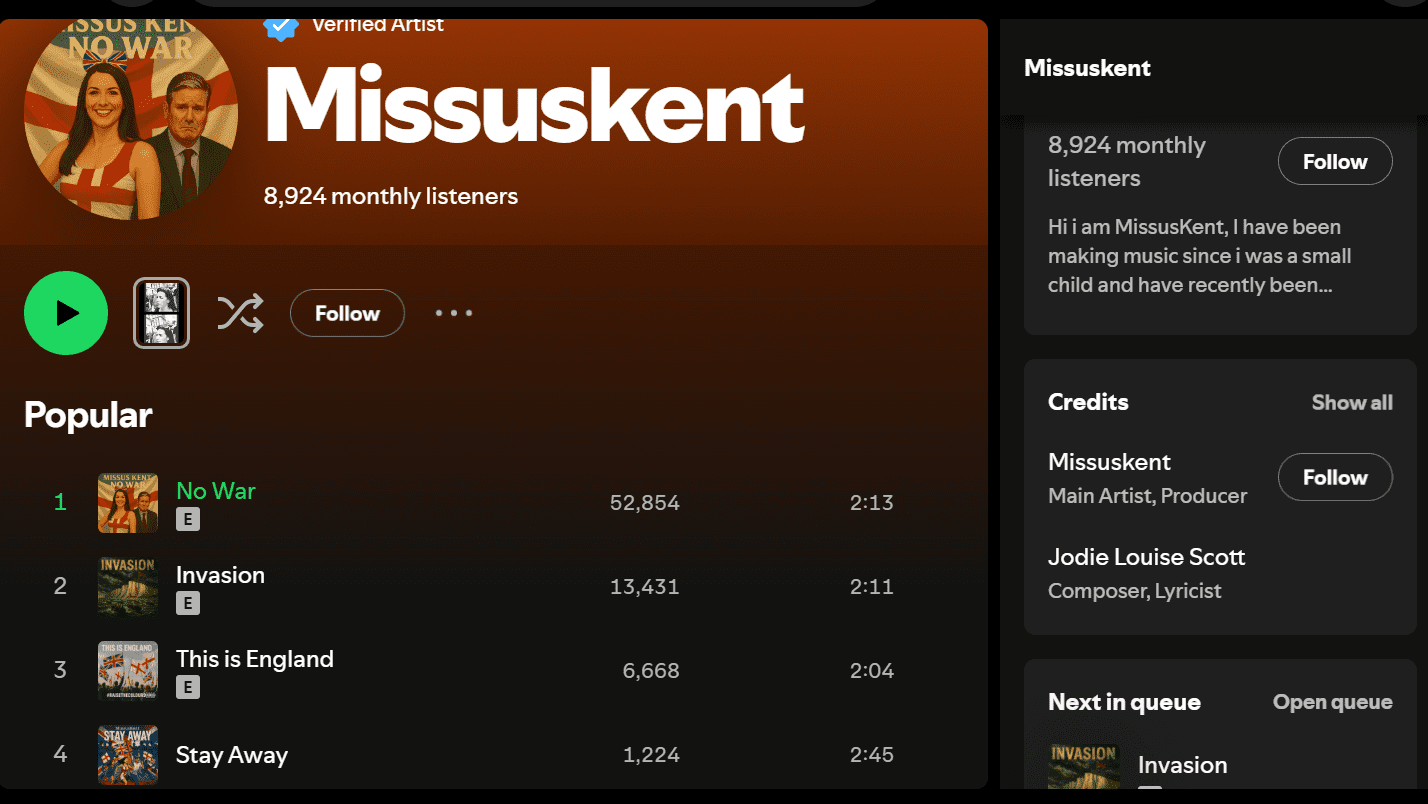
Other songs hosted on Spotify include ‘Invasion’ ‘This is England’ and ‘Stay Away’. The titles are self-explanatory.
It can surely only be a matter of time before Spotify becomes aware of what they are hosting and ban her from the platform. Readers might like to help make them aware.
Scott has found herself back in the news after an interview she gave to the veteran Holocaust-denier Alistair McConnachie was highlighted by the Daily Star.
The paper, which stopped short of naming her, reported on the controversy surrounding the interview earlier this month.
Scott, a prominent figure at recent anti-migrant protests in Kent, reacted to the renewed spotlight with characteristic disdain. Writing on Facebook she dismissed the focus on McConnachie’s record, posting: “Whats this guy being a holocaust denier got to do with my interview [cry-laugh emoji]”.
Until recently Scott had largely hidden behind her “Missus Kent” persona. That changed when KentOnline named her as Jodie Scott, confirming details first published by Searchlight in an article charting her trajectory from social-media conspiracy theorist to full-time agitator.
Scott, who sometimes uses her maiden name Goodban, has complained that public interest in her identity amounts to harassment. On Facebook she accused “psycho lefties” of trying to share her location.
Conspiracy theories
Far from retreating from the spotlight, Scott has redoubled her political activity. Her social-media feeds now promote a string of initiatives, including the launch of so-called “National Education Security” patrols outside schools – a vigilante scheme framed as protecting children but condemned by local campaigners as intimidation.
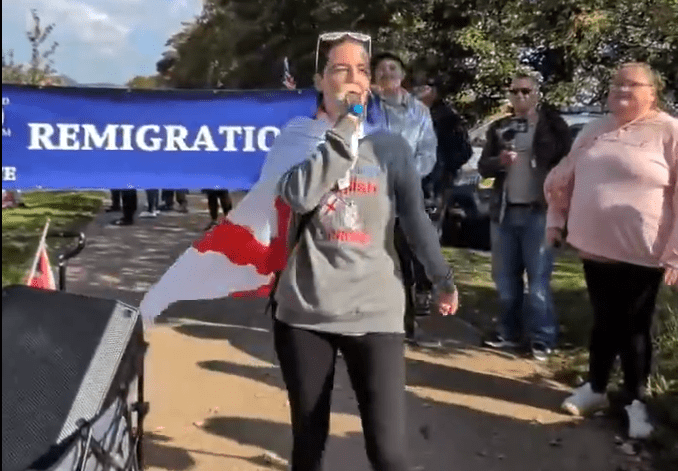
Her posts also reveal a deepening attachment to online conspiracy theories. A few days ago she railed against the Fabian Society, accusing it of being part of a supposed global plot.
Extremist subculture
Scott has previously dabbled in “Freeman-on-the-Land” pseudo-legal beliefs, declaring herself a “free-living woman of this land” and claiming she recognises only common law.
Such notions, widely debunked, and often leading to unnecessary court appearances, have become a common feature of online extremist subcultures.
Far-right networking
In a further sign of her rising profile within the far right, Scott gave a YouTube interview on 28 September to filmmaker and far-right influencer Liam Galvin, known for producing documentaries on football hooliganism and the boxing scene as well as promoting other far-right influencers.
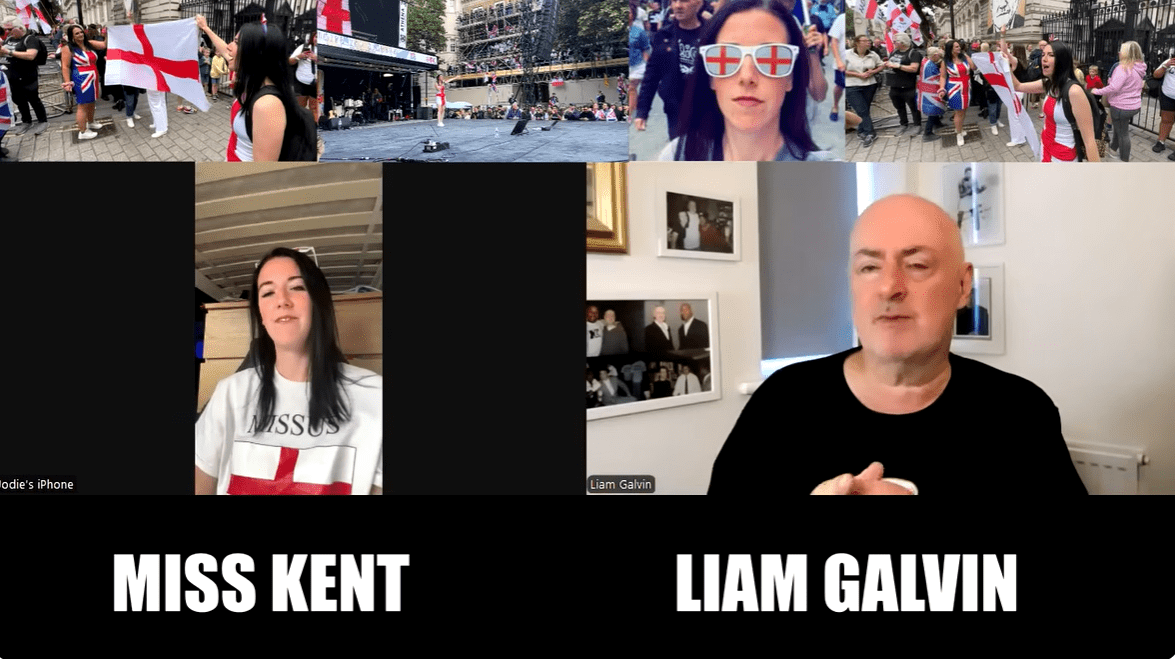
During the hour-long conversation Scott spoke about her health problems – including a heart condition and a history of ADHD, agoraphobia and anxiety – as well as the challenges of raising five children.
She credited online “research” with awakening her to “the conspiracy side” before she became politically active, praised former US president Donald Trump and described being “star-struck” when meeting Tommy Robinson and Katie Hopkins at the recent Unite the Kingdom rally where she performed her hugely defamatory song about Keir Starmer.
Scott also expressed fears of being targeted by “stalkers” but insisted she would continue her activism.
Notorious
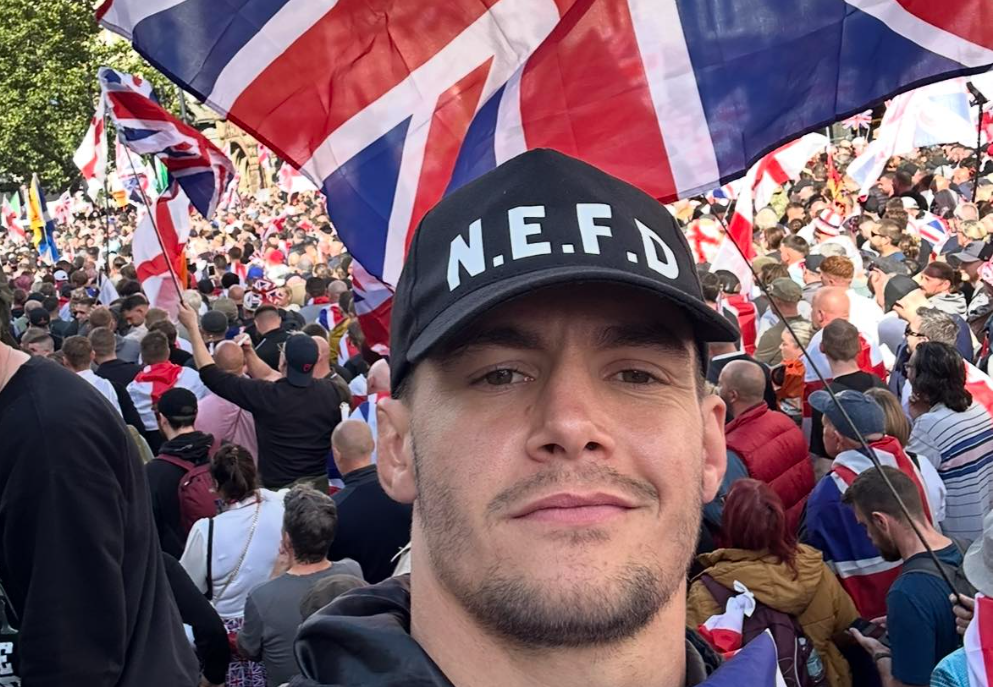
Scott is not the only figure to emerge from Kent’s turbulent protest scene. As we reported before, Harry Hilden, based in Faversham, has become notorious recently for festooning local streets with Union flags and confronting those who remove them.
Hilden recently claimed to have tracked down a man accused of taking a flag from an elderly cancer patient, boasting online that he compelled the man to apologise and deliver flowers.
Ugly incidents
His confrontational style has led to ugly incidents. At a demonstration in Canterbury on 20 September, Hilden waved a bag of used toilet paper at a KMTV journalist – days after posting on Facebook that he “would not give [journalists his] used toilet paper”.
Despite this behaviour, Hilden has welcomed offers of dialogue from Josh Rowlands, the Liberal Democrat mayor of Faversham, and another local anti-racist activist. Critics warn that such meetings risk legitimising his activities.
At a crossroads
The recent media scrutiny – from local outlets such as KentOnline to national tabloids – has tested the movement’s claim to be an authentic “voice of the people”.
While the protests in Kent have drawn a small but vocal following, revelations about the extremist backgrounds and beliefs of leading figures may have begun to alienate potential sympathisers.
Embracing notoriety
Scott’s own social-media postings suggest that, rather than moderating her tone, she is embracing the notoriety.
Her appearance alongside Galvin and her praise for figures such as Robinson and Hopkins signal a desire to establish herself more firmly in the far-right network.
For anti-racist campaigners, the challenge will be to continue exposing the realities behind the populist façade while resisting efforts by activists like Scott and Hilden to claim victimhood.