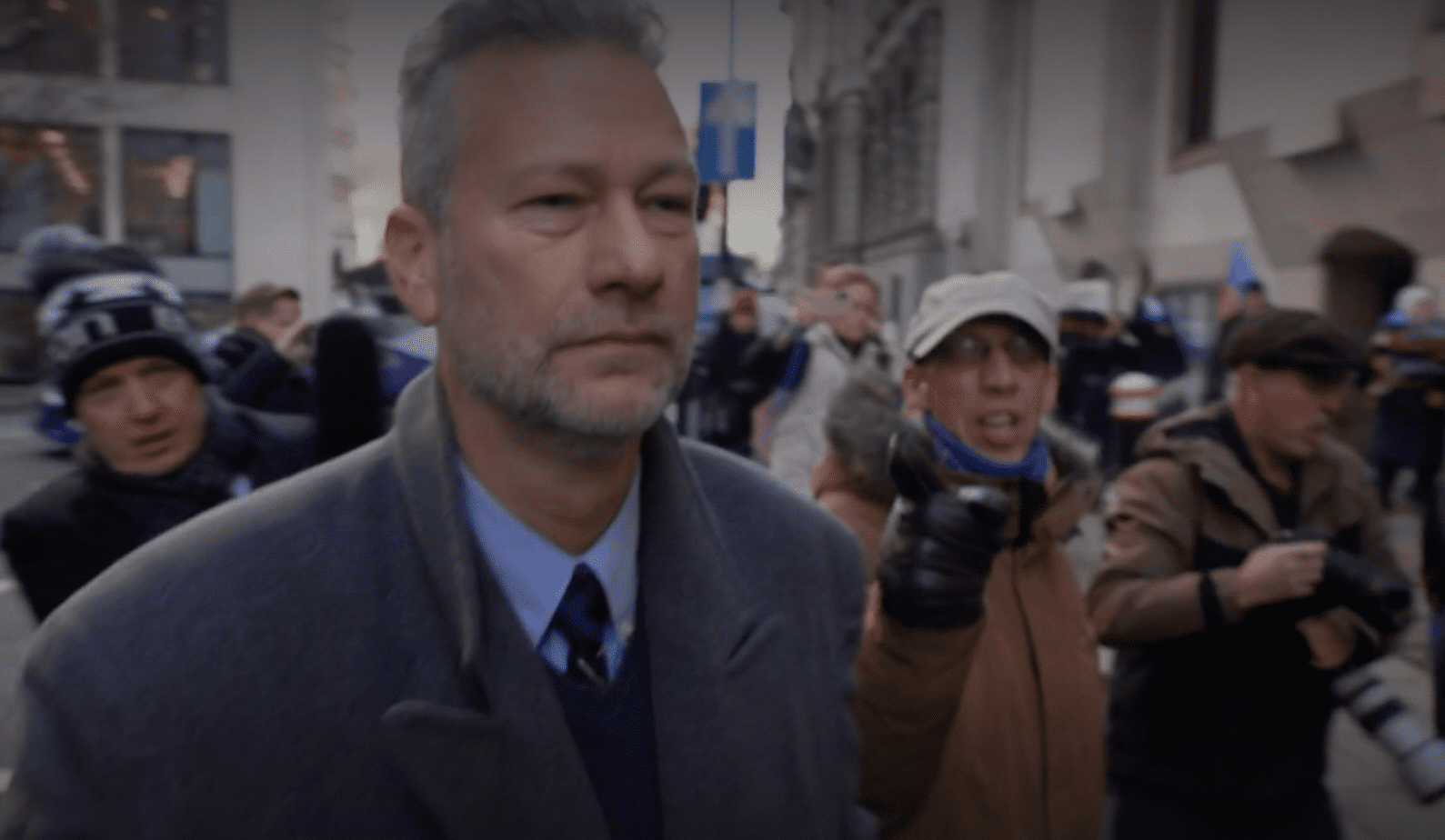
Disgraced former Reform UK Wales leader Nathan Gill was today sentenced at the Old Bailey to ten and a half years years in prison, after admitting eight counts of bribery linked to a covert Russian influence operation inside the European Parliament.
Once viewed as a rising figure on the British populist right, Gill pleaded guilty earlier this year to accepting payments from Kremlin-aligned sources in exchange for making pro-Moscow political interventions during his tenure as a Member of the European Parliament.
Scrutiny avoided
His admissions spared Reform UK from what had been expected to become a politically explosive trial in May 2026, shortly after the next Senedd election in which the party UK is expected to make significant advances.
By conceding guilt, Gill avoided a full evidential hearing – and with it the public scrutiny that might have exposed deeper patterns of Russian interference.
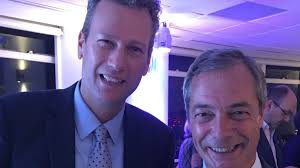
In court today, the prosecution laid out the allegations against him: for instance, how a speech on Kazakhstan he delivered in the European Parliament in 2019 ha been scripted entirely by his Russian handler, Oleg Voroshin.
The bribe Gill received for this was paid through Voroshin by Russian oligarch Viktor Medvedchuk, who is close to Vladimir Putin.
Others recruited
There was also evidence that Gill had recruited others working in the European Parliament to push Russian talking points although, as the judge today stressed, there is no evidence they knew that Gill stood to gain financially.
The judge, Mrs Justice Cheema-Grubb, said that he had “abused a position of significant authority and trust…The harm inflicted was profound”.
Describing bribery as “a malignancy on public life”, she said Gill was guilty of “a grave betrayal of the trust invested in you by the electorate”.
Career fragmentation
Gill’s political trajectory has long mirrored the turbulence of Britain’s populist right. He first emerged in 2014 as a UKIP MEP for Wales during the party’s peak years, before joining the Welsh Assembly in 2016 as one of UKIP’s brief cohort of elected representatives.
Within months he broke from the party’s official group amid bitter internal conflict, choosing to sit as an independent and setting the tone for the career fragmentation that followed.

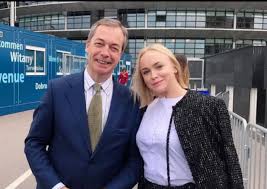
He was removed in 2017 under list-replacement rules, only to re-enter Welsh politics in 2021 as the Welsh leader of Reform UK, fronting the party’s maiden Senedd campaign.
His path – rapid ascent, factional implosion, and eventual susceptibility to malign external influence – has become emblematic of the post-Brexit populist landscape.
According to the prosecution, Gill received payments from individuals closely aligned with Russian political interests and, in return, used his elected position to insert Moscow-friendly language into parliamentary questions, speeches and committee interventions.
Kremlin aims
He appeared willing to promote narratives that dovetailed with Kremlin geopolitical aims, including efforts to undermine European unity and blunt criticism of Russian foreign policy and military aggression.
His offences fit into a wider European pattern in which Russian operatives have cultivated relationships with nationalist, Eurosceptic and far-right parties.
Among those attending today’s sentencing was Mick Antoniw, the Welsh Labour Senedd member for Pontypridd.
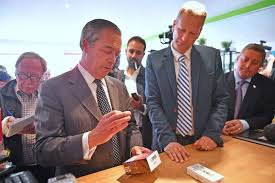
Antoniw, whose father fled Ukraine following the Second World War, has become one of Wales’s most persistent critics of Russian interference.
Since 2022 he has undertaken repeated trips to Ukraine – including to frontline regions around Kyiv – delivering aid and engaging closely with Ukrainian civic and military organisations.
His presence at the hearing highlights the symbolic and personal weight of the case, not only for Britain’s Ukrainian communities but for broader efforts to expose foreign subversion.
Tip of the iceberg
Speaking ahead of the sentencing, Antoniw warned that “there are many unanswered questions about the nature and scale of Russian interference in UK politics and democratic processes. Nathan Gill, a former Member of the Welsh Parliament, is just the tip of the iceberg.”
He condemned years of political paralysis in Westminster and called on the new Labour government to launch a full independent inquiry into Kremlin infiltration and Russian money flows into British politics.
His comments echo persistent concerns from parliamentarians and intelligence specialists who argue that London has become a hub of opaque Russian financial activity, that multiple parties, particularly on the populist right, have been targeted, and that attempts to investigate Russian influence have been repeatedly stalled or neutered.
Gill’s guilty plea resolves little of this. Instead it raises profound questions about the scope of the operation he participated in.
It remains unclear whether other elected representatives were approached or compromised, how funds and communications were channelled, whether Gill’s activities intersected with party structures in UKIP or Reform UK, or what role Russian-linked think tanks, NGOs and media channels may have played.
Unresolved warnings
Researchers in intelligence and academic circles worry that Gill’s case represents only a single node within a larger, insufficiently examined pattern of Russian cultivation efforts focussed on Eurosceptic and populist figures.
These anxieties recall the unresolved warnings of the Intelligence and Security Committee’s Russia Report in 2020.
That heavily redacted document made clear that the UK Government had not sought to determine whether Russia interfered in British democratic processes, including the EU referendum, and dismissed the need for further inquiry. Key evidence was never gathered or made available.
Gill’s case now gives those warnings new, sharp relevance. It marks the first criminal conviction of a British elected politician for accepting Russian political influence payments.
The implications for Reform UK are especially acute. Gill’s conviction strikes at a moment of heightened public attention on the party, its leadership, and the legacy of UKIP and the Brexit Party from which it emerged.
Problems for Reform
Although Gill left frontline Welsh politics in 2021, he remained publicly associated with Reform UK as its most prominent Welsh figure during the Senedd campaign. His exposure as a conduit for Kremlin-sponsored messaging while an MEP creates reputational and strategic problems for the party.
Reform’s leaders, particularly Nigel Farage and Richard Tice, must now contend with the fact that one of their former senior figures has admitted to taking foreign-linked bribes.
This seriously undermines the party’s claims to stand against corruption and feeds renewed scrutiny of Farage’s long-criticised admiration for Vladimir Putin, his frequent appearances on RT, and his habit of echoing Kremlin talking points on NATO and Ukraine.
Gill’s conviction increases pressure on Reform UK to demonstrate internal integrity by disclosing its vetting procedures, explaining whether any internal reviews have been conducted, and accounting for how Gill was able to rise within its ranks without detection.
Any failure to do so will strengthen arguments that the party remains structurally vulnerable to manipulation.
Electoral consequences
There may also be electoral consequences. With Reform currently attracting significant numbers of disillusioned Conservative voters, the association, however indirect, with a Kremlin-linked bribery scandal risks alienating moderates, agitating the security establishment, and giving political opponents a powerful line of attack.
The fact that the scandal touches on foreign interference, an issue now treated with increasing seriousness in Westminster, is particularly damaging.
Finally, Gill’s conviction is likely to intensify calls for a long-delayed reckoning with Russian influence networks across the British populist right.
Kremlin influence
Any inquiry, especially one shaped by the demands of Antoniw and other parliamentarians, would inevitably examine whether UKIP, the Brexit Party and Reform UK were targeted more widely, whether associates of Farage were approached, and to what extent pro-Kremlin narratives were amplified during key electoral periods.
Gill’s sentencing may close his own chapter, but it opens a far larger one for the movements that propelled him – and for the political ecosystem that allowed Kremlin influence to take root.