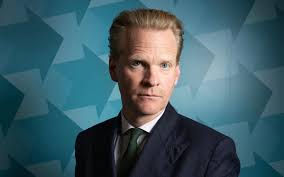
Dr James Orr, a theologian and philosopher of religion at the University of Cambridge was last month appointed senior adviser to Nigel Farage and the Reform Party. Why does this matter?
James Orr first came to prominence as a cultural conservative defending traditionalist values in debates over identity, nationalism, and religion, and later became one of the key organisers of the 2023 National Conservatism Conference in London.
Policy engine
He is also chair of the advisory board of the Centre for a Better Britain (originally launched as Resolute 1850), a rebranded think-tank positioning itself as a policy engine for Britain’s emergent national-conservative right.
The Centre has been publicly linked to Reform UK – its founders and events have attracted Reform strategists, donors, and sympathetic academics, as well as visiting figures from Orbán’s Hungary and the U.S. national-conservative network and is widely regarded as supplying informal policy guidance to the party.

Within academia, Orr describes his research as exploring the intersection of theology, culture, and politics. Outside it, he has become a visible networker across a trans-Atlantic web linking Viktor Orbán, the Roger Scruton Legacy Foundation, and U.S. populist conservatives such as J.D. Vance.
It is this combination – Cambridge respectability, ideological ambition, and international nationalist networks – that makes his arrival in Reform significant. His record on Russia and foreign policy now draws sharp attention as the party faces renewed scrutiny over its Russian entanglements following Nathan Gill’s guilty plea.
Orr on Russia: Western failure, not Kremlin aggression
Since emerging as a national-conservative interlocutor between the British right and like-minded movements abroad, Orr has repeatedly criticised what he calls the West’s reflexive historicising of Vladimir Putin.
Speaking at an Esztergom festival organised by Hungary’s Mathias Corvinus Collegium, Orr denounced what he labelled “Ukraine brain” – the tendency, he said, to read Putin through these World War Two analogies:
“The only way to understand Vladimir Putin is to think of him as Adolf Hitler; the only way you can understand Volodymyr Zelensky is as Winston Churchill.”
He argued that this framing is “naive and dangerous,” and went on to praise Hungary’s cautious, blocking approach to EU military aid and sanctions.
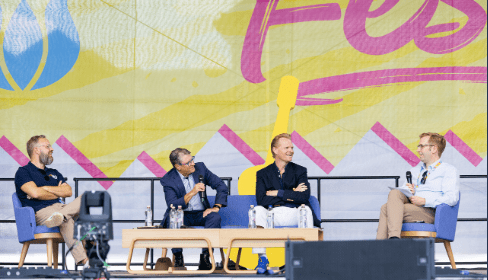
Orr has defended his stance as sceptical realism rather than Kremlin apologism, protesting that he and others such as J.D. Vance are “in no sense apologists for Putin.”
Yet his public language – stressing Western missteps and praising Orbán’s diplomacy – places him firmly in the camp that prioritises national interest and geopolitical restraint over robust support for Kyiv.
Why Orr’s Russia stance matters
Reform UK is already under intense scrutiny over Russia-related controversies. Nathan Gill’s guilty plea in September to eight counts of bribery for accepting payments to make pro-Russian statements and his expected prison sentence this month, has been described by as a major reputational blow to the party.
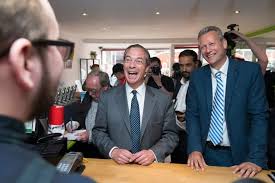
That scandal makes any senior adviser’s public remarks on Russia a live political liability: where Orr frames the conflict as Western error, critics say that political space opens for Kremlin narratives to be normalised within Reform’s broader messaging.
Practical risks
Farage has tried to distance himself, calling Gill a “bad apple,” but the combination of Gill’s conviction and Orr’s high-profile scepticism over Ukraine weakens that defence. The immediate practical risk is twofold:
- Opponents and the media will tie Orr’s rhetorical attitude to the party’s perceived softness on Russian influence.
- Donors, potential allies, and swing voters alarmed by the Gill revelations may baulk at a policy team that elevates figures who publicly applaud Orbán’s stance and question mainstream Western assessments of the war.
Networks: Orbán, Scruton, Vance
Orr is not an isolated voice. He is closely connected to several nodes of the trans-Atlantic national-conservative network.
Viktor Orbán / Hungary: Orr has publicly commended Hungary’s diplomatic approach to the Ukraine conflict and has been visible at Hungarian events (MCC), signalling an affinity with Orbánite realpolitik.
Roger Scruton / conservative intellectual legacy: Orr is centrally involved with projects that carry on Sir Roger Scruton’s intellectual legacy (the Roger Scruton Legacy Foundation), positioning him within a conservative cultural-philosophical lineage that prizes national identity and scepticism of liberal internationalism.
Orr’s writings on Russia / Ukraine have been approvingly reproduced by the far right Traditional Britain Group, with whom Scruton was linked.
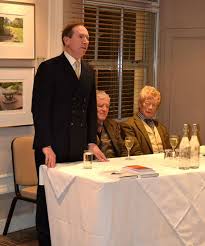
J.D. Vance / U.S. national conservatism: Orr has cultivated ties to U.S. figures such as J.P Vance, with Vance praising Orr.
Taken together, these links place Orr at the hub of a broader political current that emphasises national self-interest and cultural renewal over a traditional foreign-policy consensus.
East/West context
Orr’s interventions sit within a larger debate over how liberal democracies weigh deterrence, sanctions, and geopolitical alignment. Orr argues that Western policy has been shaped by ideological reflexes and that a narrower, national-interest calculus (often sympathetic to Orbán’s caution) is a better option.
This debate determines where political parties place themselves on the spectrum between deterrence and accommodation, and whether they appear to normalise or excuse authoritarian gambits.
Orr’s rhetoric tilts toward restraint and caution; in the current climate – with evidence of Kremlin influence operations resulting in a British politician pleading guilty to bribery – that tilt becomes, potentially, politically explosive.
Conclusions
- Reputational risk for Reform/Farage. A senior Reform adviser sympathetic to caution toward Russia, joining a party already damaged by a Russia-linked bribery conviction, poses serious questions as to Reform’s overall stance towards Putin and the Kremlin, the latter no longer a shadow but a welcome bedfellow.
- Ideological signalling. Orr’s praise for Orbán and his place in the Scruton/Vance network signal that Reform is consolidating an international national-conservative ecosystem that prioritises national self-interest and cultural questions over shared security concerns.
- Funding and contacts. Given Gill’s admission that he took payments to promote pro-Russian lines, attention should rightly focus on whether contacts between Reform figures and pro-Kremlin actors extend beyond isolated incidents, and whether policy advice from figures like Orr is shaped by ideological alignment rather than direct influence.
Orr’s appointment now places Farage and Reform directly under the spotlight as regards their collective policy position in relation to Russia, and following Gill’s likely prison sentence, a Russia-linked winter of discontent may well be the cards for some or all of the principal actors concerned.