In the fading light of a December afternoon in 2025, central London prepares for two very different visions of Christmas.
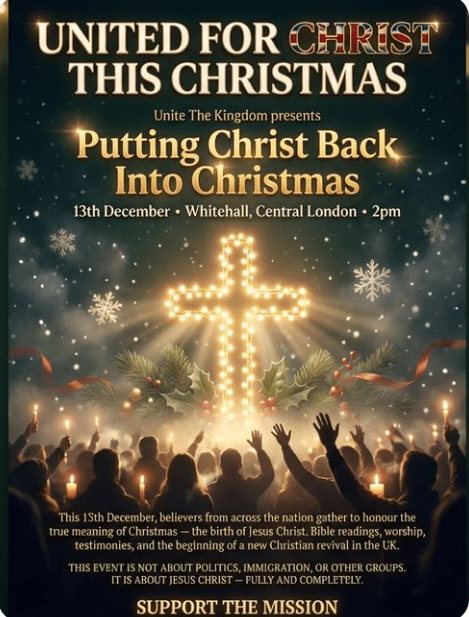
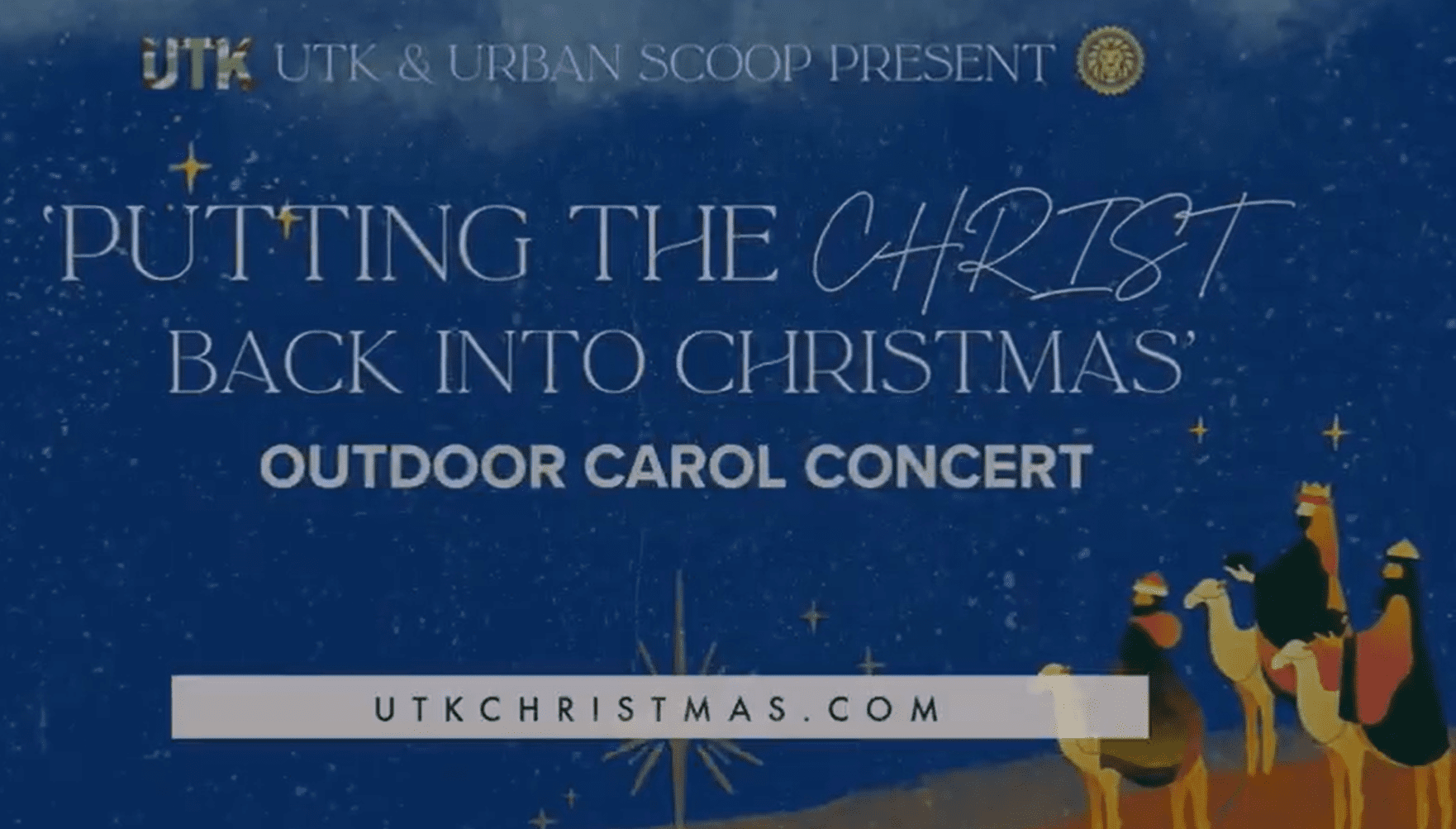
On one side, far-right activist Tommy Robinson (Stephen Yaxley-Lennon) was finalising plans for a “United for Christ this Christmas” open-air carol concert – a seasonal event under his “Unite the Kingdom” (UTK merchandise made in Bangladesh) banner that promised to “reclaim and celebrate our heritage, culture and Christian identity.”
Fundamental clash
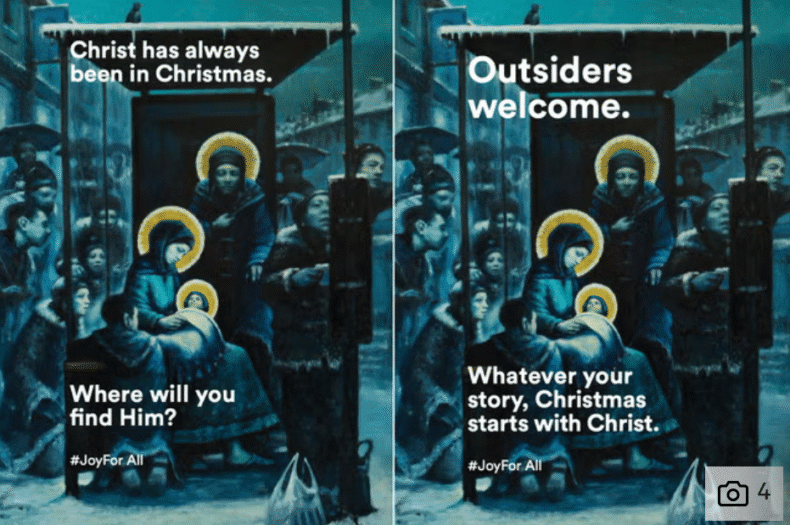
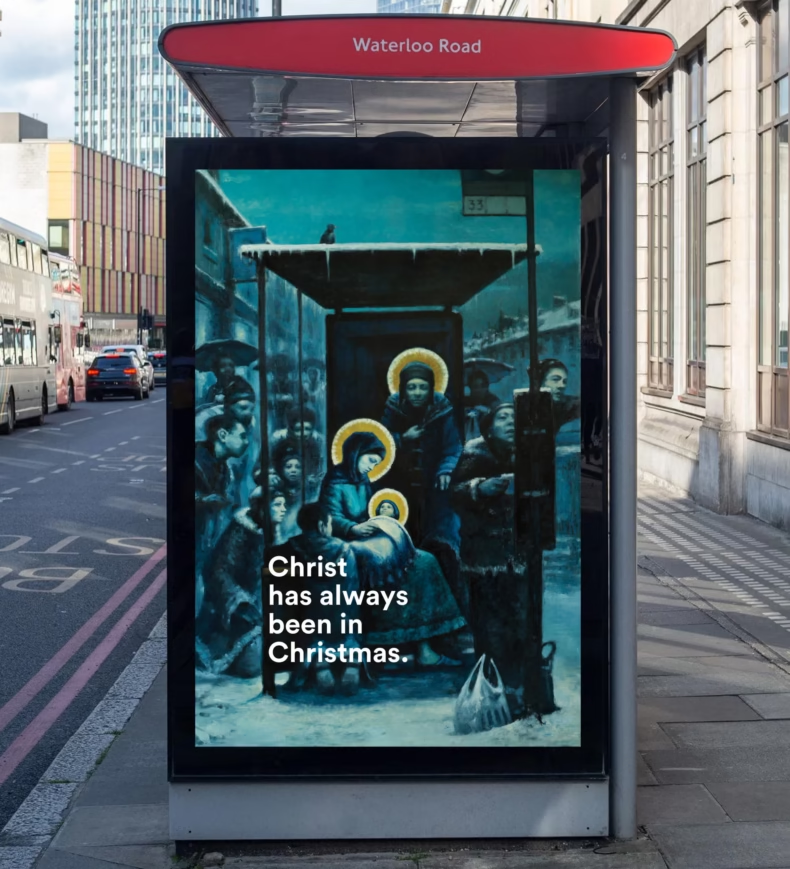
On the other, the stately halls of Lambeth Palace and church offices across Britain have coordinated an unprecedented counter-offensive: a nationwide poster campaign declaring “Outsiders welcome” alongside “Christ has always been in Christmas.”
This is no simple disagreement over holiday festivities. It represents a fundamental clash over the soul of British Christianity, the meaning of national identity, and who gets to define the symbols that shape public life.
At stake? Quite simply the story Britain tells about itself at Christmas, and who belongs in that story.
Tommy Robinson’s journey to Christmas crusader has been marked by controversy. Multiply-convicted criminal and founder of the English Defence League, known for anti-Islamic demonstrations and confrontational politics, Robinson has recently undergone what some observers call a ‘strategic rebranding’.
Or another bit of opportunistic grifting.
Seasonal grift
His December 2025 carol event is promoted as a purely celebratory occasion. “This event is not about politics…it is about Jesus Christ – fully and completely,” Robinson insists in promotional materials. But when did you last go to carol concert with thirteen speakers?
And, of course, it’s all swiftly followed by the seasonal grift: this won’t happen without your support etc and etc…
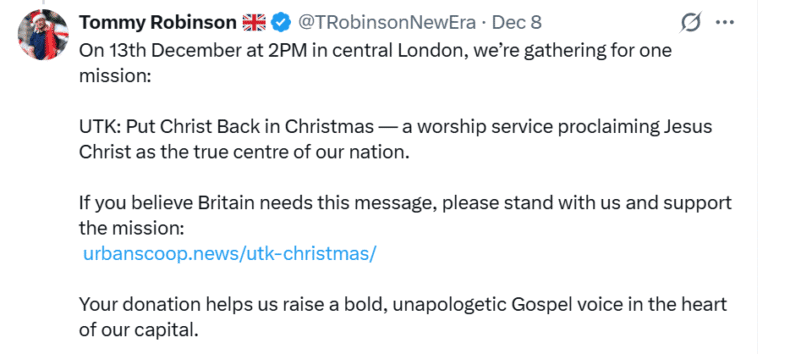
Few outside his cult believe him. Yet between the lines of Scripture readings and planned testimonies runs a consistent thread of grievance. “We shouldn’t have to put this on,” he complains. “There should be a massive Christmas event put on by our government.”
The state Church of England does that, of course, via a thousand churches…
Faith and patriotism
Robinson points to Poland’s national celebrations as his ideal – large-scale events that blend religious observance with patriotic display.
His vision is clear. He sees Christmas as a show of national pride, a reassertion of what he considers Britain’s besieged Christian identity against what he perceives as governmental neglect and cultural dilution.
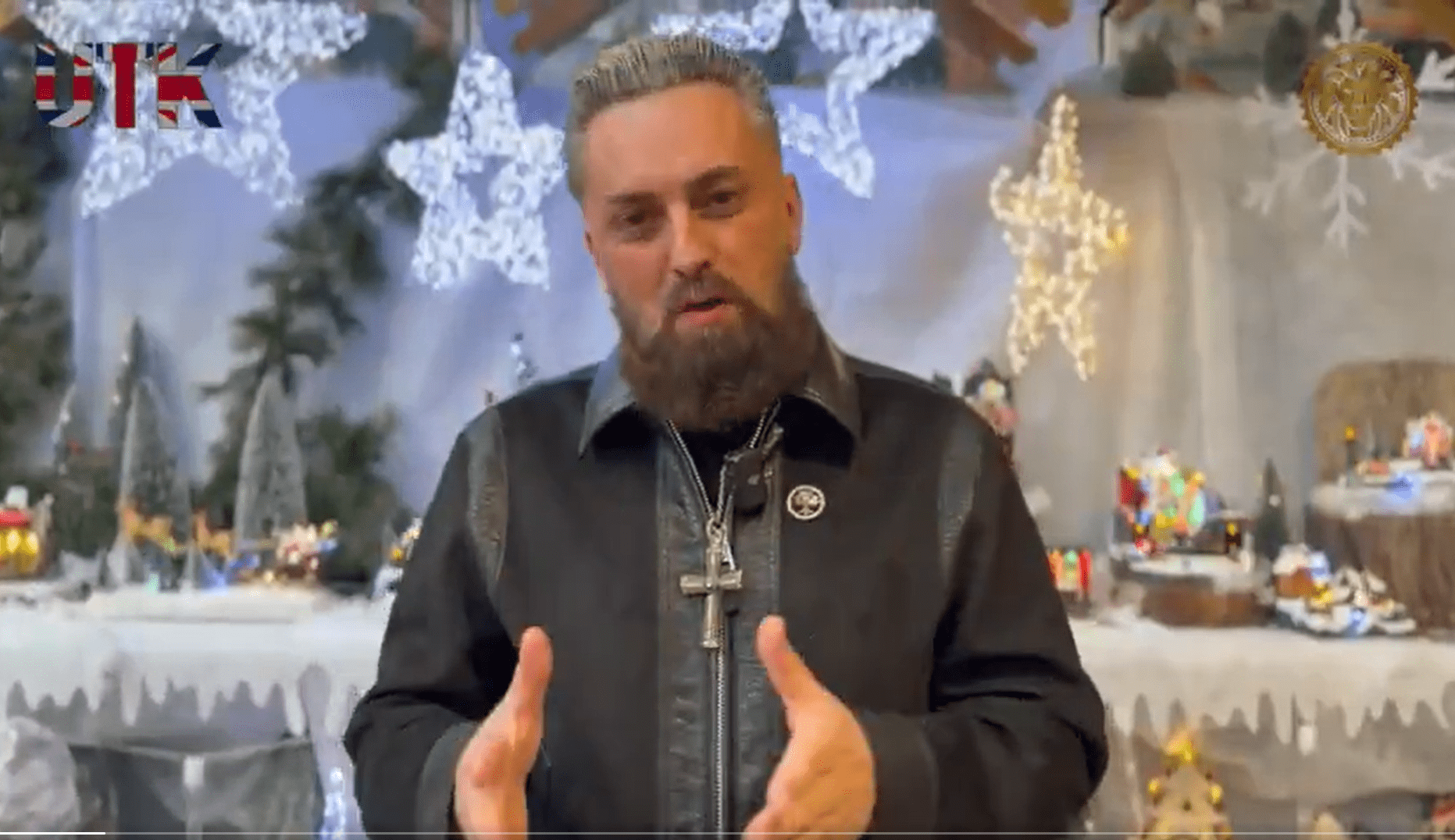
Robinson’s embrace of Christianity has not been long in the making. Locked up for contempt of court earlier this year, he sent message that he was ‘receiving instruction’ from a pastor in the prison.
Grift-world
We suggested at the time that it was only a matter of time before he launched himself fully into the lucrative grift-world that revivalist Christianity offered.
Then, he announced he would, for the first time in years, be attending Sunday service at his mate Rikki Doolan’s north London church, inspired to do so by the death of Charlie Kirk. Needless to say, he was, on that occasion, a no-show.
Not baptised
Then he claimed he had had an encounter with the Holy Spirit whilst in Israel and bemoaned the fact that he had not been baptised in the river Jordan while he was there.

A number of those closest to him have already ‘found’ Christianity: Danny Tommo, the riot inciter and scourge of inanimate objects left lying on French beaches, claims to have been reborn some time ago, Richard Inman likewise. Liam Tufts was baptised in the Jordan during the Israel trip.
And, only yesterday, Ben Habib’s Advance UK party, to which they are all affiliated, announcing that it was now registered with the Electoral Commission as a political party, pledged itself to “Upholding the UK’s Christian Constitution”.

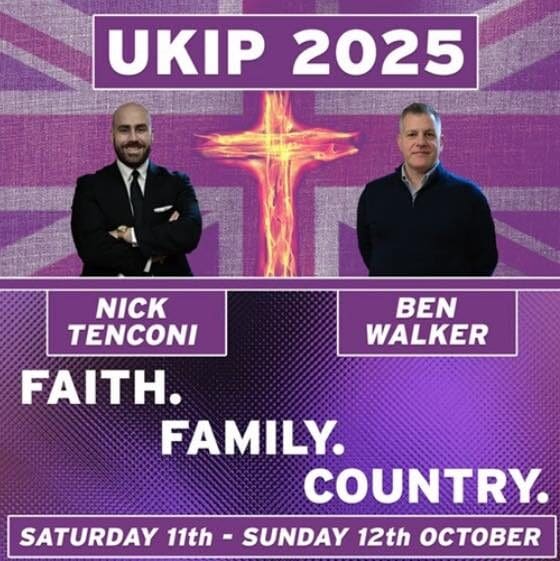
Robinson’s crew are not, of course, the first to jump aboard this bandwagon. Paul Golding’s Britain First and Nick Tenconi’s UKIP have been attempting to mine this particular seam for some while.
Strategically sophisticated
The response from Britain’s mainstream Christian institutions has been swift, unified, and strategically sophisticated. Recognising that theological disagreement alone will not counter a populist movement, they’ve mounted a multi-pronged campaign that blends doctrine, public relations, and pastoral care.
The most visible element is the Church of England’s nationwide poster campaign.
Strategically placed in public spaces and on church properties, messages like “Outsiders Welcome” and “Christ has always been in Christmas” create a visual counter-narrative to Robinson’s exclusivist messaging.
This is public theology designed for the bus stop and the billboard – accessible, immediate, and impossible to ignore.
Rapid response
Perhaps more significant is the creation of a”rapid response resource” by the Joint Public Issues Team, a coalition including the Church of England, Baptists, Methodists, and United Reformed churches.
This document arms local clergy with theological arguments and pastoral approaches to address any evidence of Christian nationalism in their congregations.
It explicitly connects the Christmas story of the Holy Family fleeing persecution to contemporary issues of migration and refuge, framing welcome not as political correctness but as biblical imperative.
Unusual directness
Senior church leaders are speaking with unusual directness. Bishop Arun Arora, the Church of England’s co-lead on racial justice, acknowledges Robinson’s conversion but adds pointedly, “that does not give him the right to subvert the faith so that it serves his purposes.”

This argument strikes at the heart of the controversy: who has the authority to define what Christianity means in public life?
Initiatives like”Shine Your Light” encourage Christians to sing carols in their communities with explicit focus on “those people pushed to the edges of society,” a deliberate theological counterpoint to Robinson’s message.
Fundamentally different
These aren’t just alternative events; they’re clear arguments about what Christmas celebration should look like.
At its core, this conflict represents two fundamentally different understandings of Christianity’s relationship to British identity.
The nationalist Christianity embraced by Robinson’s supporters views the faith primarily as a cultural and civilizational foundation.
In this framework, defending Christianity becomes synonymous with defending a particular vision of British history, values, and sovereignty against perceived threats from immigration, globalization, and secular liberalism.
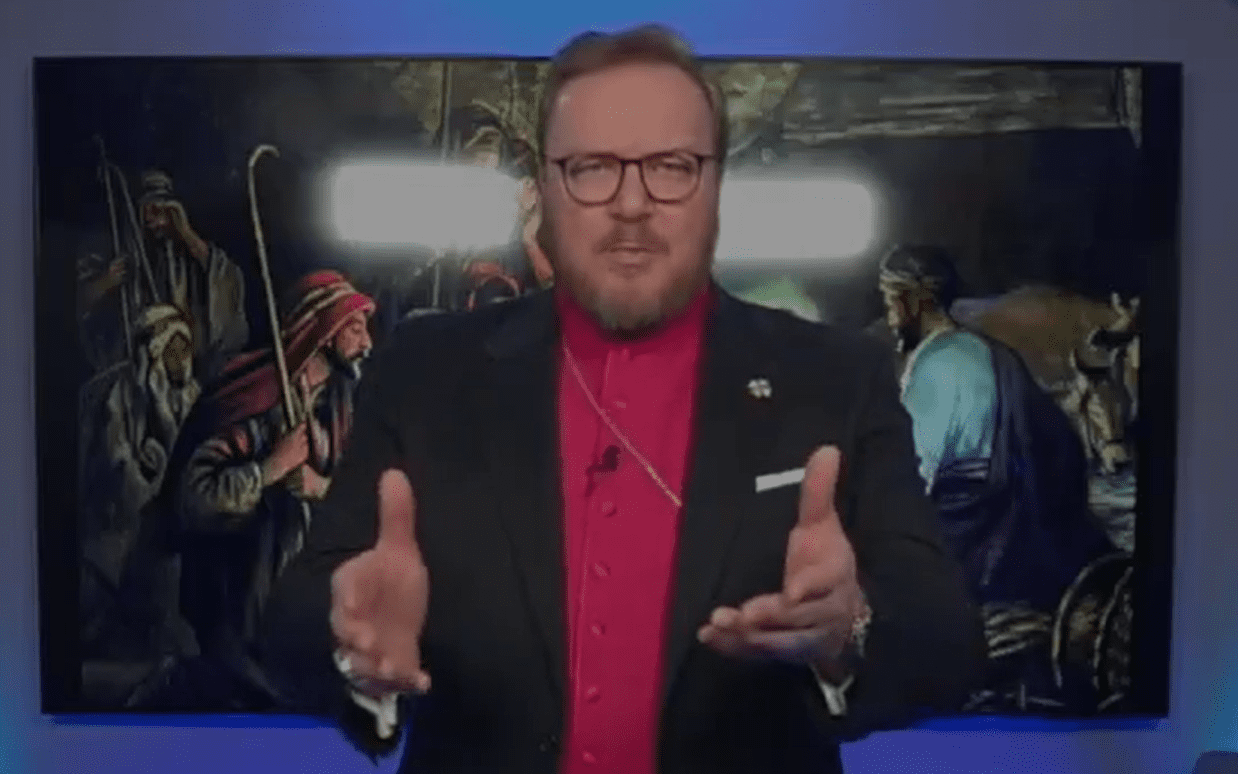
As UKIP-supporting Bishop Ceirion Dewar of (his own) Confessing Anglican Church – who has prayed at Robinson’s rallies – puts it, “We are a nation under attack.”
Core message
The institutional, liberal tradition represented by the Church of England hierarchy holds that Christian identity is fundamentally theological rather than national.
From this perspective, the core message of Christmas – “peace on earth, goodwill to all people” – is inherently inclusive, particularly welcoming those on society’s margins.
This theological divide leads to conflicting interpretations of biblical commands.

When Robinson’s movement emphasizes cultural preservation, mainstream leaders point to the Gospel of Matthew’s depiction of Jesus as a refugee fleeing persecution.
When national pride becomes central, they cite the Apostle Paul’s declaration that in Christ “there is neither Jew nor Gentile”, a dismantling of ethnic and national privilege at the heart of Christian theology.
For the Church of England, this conflict exposes painful tensions. For instance, where you have people attending services not out of spiritual seeking but cultural defense, how should churches respond?
Welcome them uncritically and risk endorsing their exclusionary politics? Or challenge them directly and risk driving them away entirely? There are no easy answers in this pastoral minefield.
Britain’s mainstream Christian institutions have also invested decades in building constructive relationships with Muslim, Jewish, and other faith communities.
Robinson’s anti-Muslim rhetoric threatens to undermine these efforts, forcing Christian leaders into an impossible choice between welcoming his followers and maintaining hard-won interfaith relationships built on mutual respect.
Political statements
As the established church, the Church of England must serve a nation of increasing religious diversity while maintaining its traditional place. Robinson’s critique – that the church has become too liberal, too accommodating, too detached from its role as defender of British values – strikes at this role.
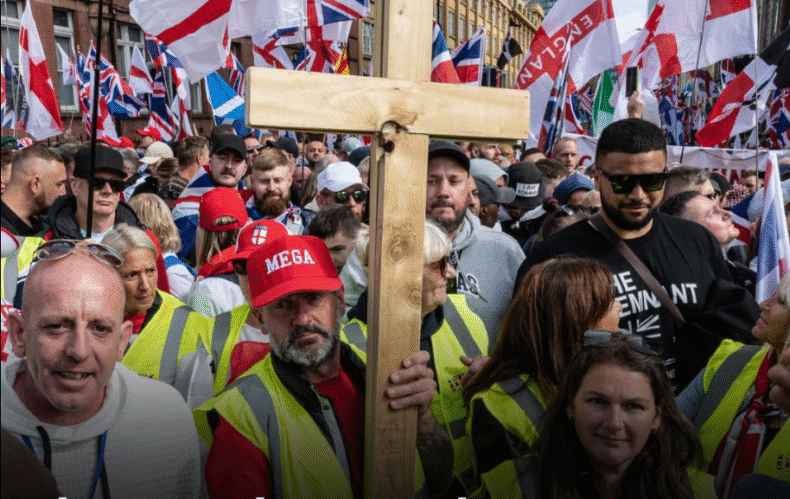
The wooden crosses carried at Robinson’s September rally weren’t just expressions of faith; they were political statements, functioning less as a symbol of sacrifice and redemption and more a boundary marker, a sign of who belongs and who doesn’t.
Ghost of Christmas to come
The ghost of Christmas yet to come hangs over this controversy, offering two visions. In one, Christianity becomes a tribal identity, a fortress against perceived threats. In the other, it becomes what the Christmas story originally proclaimed: good news of great joy for all people.
The choice between these visions may echo long after the last carol of December 2025 has faded into the winter air.