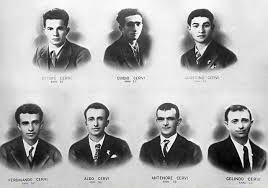
At the end of 1943, as Italy was convulsed under the collapse of Mussolini’s regime and the tightening grip of Nazi occupation, seven anti-fascist brothers from a modest farming family in Emilia-Romagna paid the ultimate price for their defiance.
The Cervi brothers, Gelindo, Antenore, Aldo, Ferdinando, Agostino, Ovidio and Ettore, were executed by fascist firing squad in December 1943 in Reggio Emilia.
Anti-fascist hub
The Cervi family were tenant farmers in Praticello di Gattatico, and, under the leadership of their father, Alcide, they transformed their farmhouse into a hub of anti-fascist activity.
As early as the 1930s, the family had established a “people’s library” distributing banned and subversive literature, an act that first drew the attention of the fascist authorities.
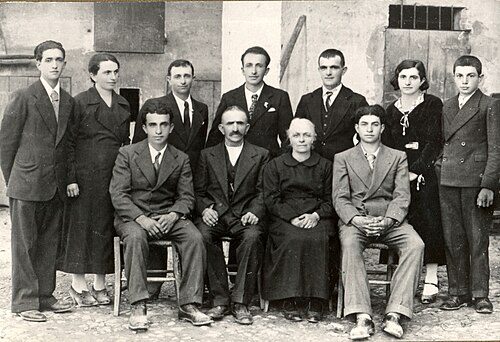
By the time of the German occupation, the brothers had become active partisans, forming a resistance squad that carried out political and military actions against fascist and Nazi forces.
Their arrest came in the night of 24 November 1943, when a fascist patrol stormed the family home, capturing Alcide and all seven sons. The farmhouse was burned to the ground, a symbolic attempt to erase not only the family but the ideas they represented.
Condemned without trial
For more than a month, the brothers were held in prison, interrogated, and ultimately condemned without trial.
Then, in retaliation for the killing of a fascist secretary in Bagnolo by a lone gunman, they were taken to the local shooting range and executed alongside fellow partisan Quarto Camurri.
Anti-fascist martyrs
The fascists believed that by killing the Cervi brothers they could extinguish a spark of rebellion. Instead, they created martyrs whose legacy would outlive the regime that murdered them.
Streets, schools, and public squares across Italy now bear their name, and their story has become a cornerstone of Italy’s collective memory of resistance.