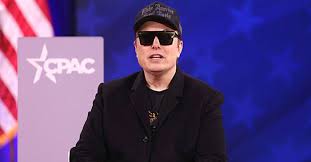
Elon Musk this week used his social media platform X (formerly Twitter) to endorse an explicit call for “white solidarity”, amplifying claims that white men face extermination if they become a demographic minority.
Musk’s response, a “100” emoji signalling agreement, marked a new low in his increasingly open alignment with the most extreme far-right politics.
The post he endorsed warned that non-white people would become “1000x times more hostile and cruel” once in the majority and claimed that “white solidarity is the only way to survive”.
Dramatic journey
Coming from the world’s richest man, who also controls one of the largest social media platforms and holds influence inside the US government, the endorsement carried particular weight.
This was not an isolated incident. Musk’s political journey over the past few years has been dramatic. Once a donor to Democratic candidates who described himself as politically moderate, he has since become a central figure on the radical right.
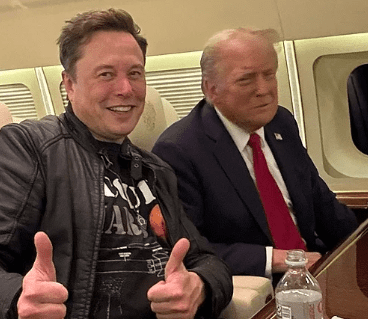
In 2024 he emerged as the single largest financial backer of Donald Trump’s re-election campaign, reportedly pledging more than $250 million.
Rewarded
After Trump’s return to the White House, Musk was rewarded with a role as a “special government employee”, heading the newly created Department of Government Efficiency.
From this position, Musk oversaw sweeping cuts to federal agencies and staffing, while promoting the idea that artificial intelligence and private-sector management techniques should replace traditional public administration.
Extremist rhetoric
Musk’s flirtation with extremist rhetoric predates this latest episode. In 2023 he endorsed an antisemitic post claiming Jewish communities promoted “hatred against whites”, replying that the author had spoken “the actual truth”.
He has repeatedly promoted the “Great Replacement” conspiracy theory, a cornerstone of modern white supremacist ideology.
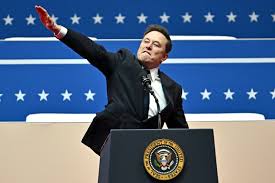
At Trump’s 2025 inauguration he performed a stiff-armed salute which white nationalist groups celebrated, despite Musk’s insistence it was a harmless “Roman salute”.
German far right
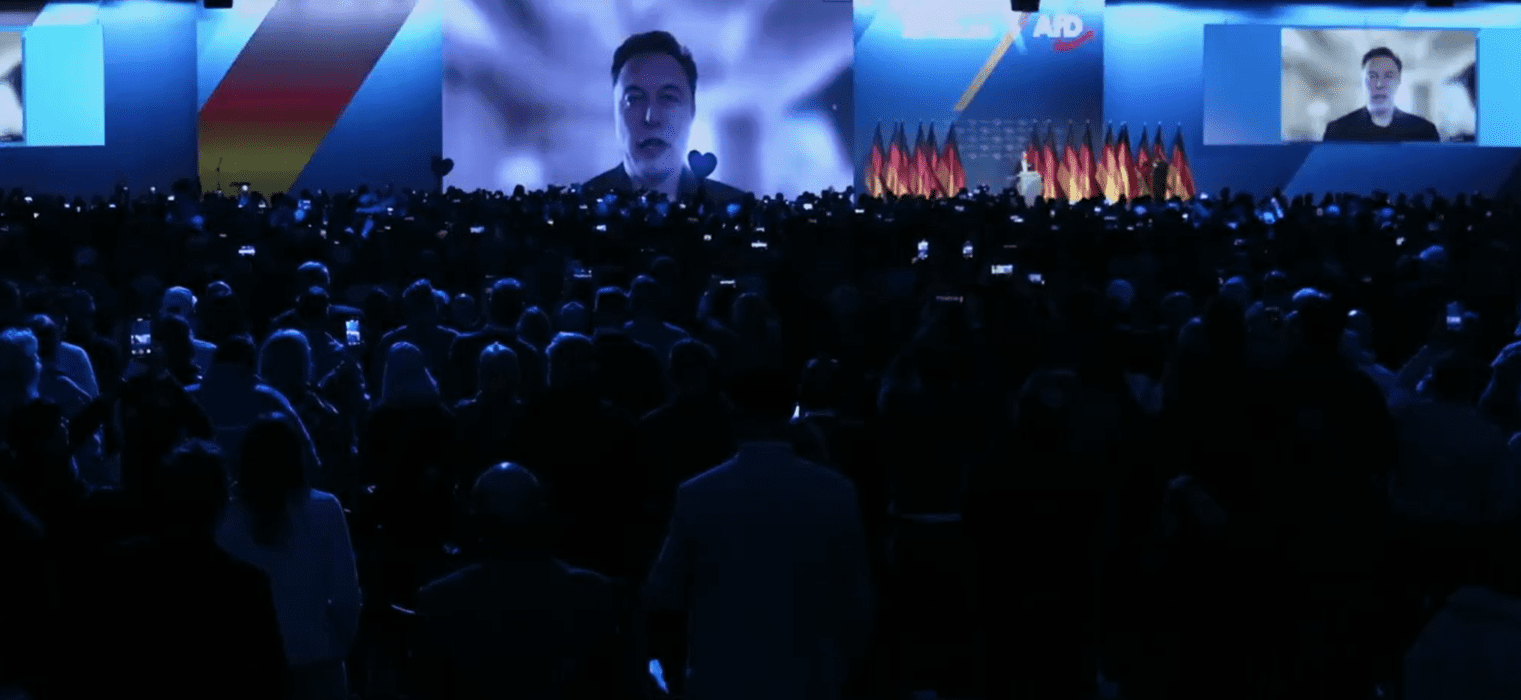
His interventions have not been confined to the United States. Musk has addressed rallies for Germany’s far-right Alternative für Deutschland via video link, telling supporters it was acceptable to be “proud to be German” and attacking multiculturalism for diluting national culture.
In September last year he spoke, via video link, to Tommy Robinson’s Unite the Kingdom rally in central London. Robinson later claimed that Musk had paid Robinson’s his legal costs when he was prosecuted for a Terrorism Act offence last October, amounting to some £100,000
Poltical project
Musk’s actions point towards a broader political project in which technological power, state authority and authoritarian ideas merge.
Historians have warned that attempts to run societies like engineering systems, prioritising efficiency, hierarchy and control over participation and rights, have disturbing precedents.

As one academic specialising in authoritarian regimes has noted, applying “technical rationality” to human societies risks sliding rapidly towards totalitarianism.
Ideologue or opportunist
Whether Musk is a committed ideologue or a cynical opportunist is a matter of dispute. Some see a wealthy businessman embracing far-right causes because they serve his commercial and personal interests, creating political chaos in which regulation and democratic restraint are weakened.
Others argue his beliefs are more coherent, and point to his long-standing hostility to organised labour, feminism and multiculturalism, and to family influences linked to earlier technocratic and authoritarian movements.
What is not in doubt is the impact.
Musk’s platform gives far-right ideas unprecedented reach, while his wealth and proximity to power lend them legitimacy.
His outbursts over culture, including attacks on inclusive changes to popular games and media, underline that this is as much a cultural struggle as a political one.
The alliance between Trump’s MAGA movement and Musk’s vision of technocratic rule is uneasy.
Figures on the populist right have already accused Silicon Valley of building a new “technofeudalism”.
Challenge to democracy
Yet while this partnership lasts, it represents a serious challenge to democracy.
Musk’s endorsement of “white solidarity” should therefore be understood not as an impulsive provocation, but as a warning sign.
When one of the most powerful men on the planet publicly aligns himself with racist conspiracy theories, the consequences may extend far beyond a single tweet.