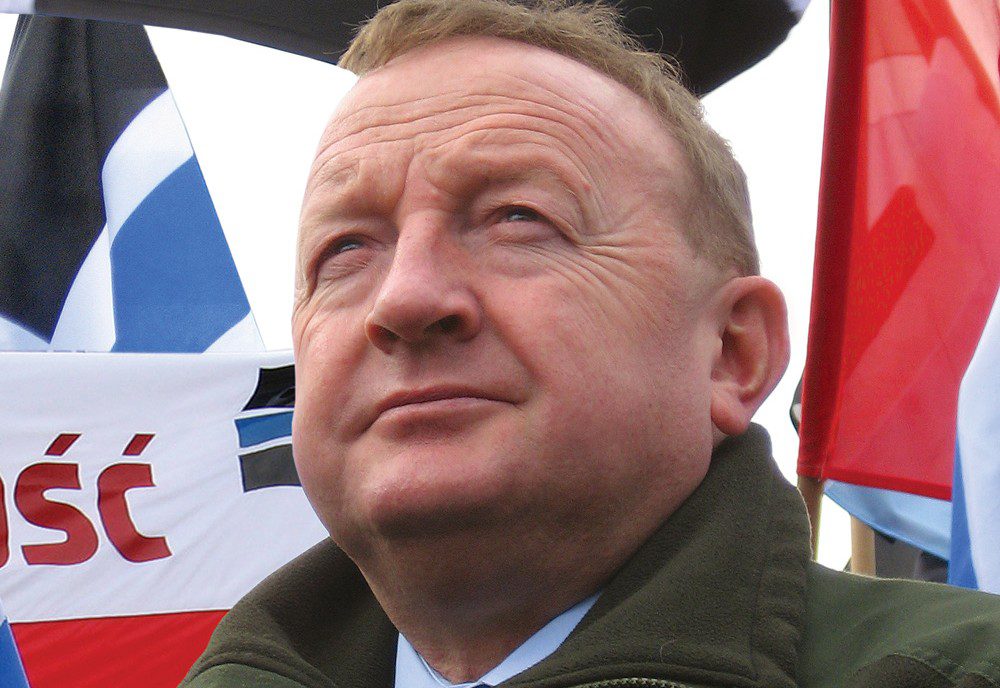
Stanisław Michalkiewicz is a Polish lawyer and political commentator with a longstanding history of antisemitic and misogynistic comments. Despite this, he was recently invited to speak at POSK, a Polish cultural centre in West London.
The event, titled ‘Will there be a war?’, was hosted by the ‘Association for Independent Thought’, a right-wing debate club led by former Solidarność activist Elżbieta Listoś. Listoś rented the multimedia hall at POSK on the 25 January, where Michalkiewicz gave his lecture.
Mesmerised
According to a spokesperson for POSK, there were around 80 attendees (mostly retired pensioners but also around ten ‘younger activists’), who were ‘mesmerised by [Michalkiewicz’s] rambling world picture.’
Ironically, just two days after this known antisemite spoke at the centre, POSK hosted an official event commemorating Holocaust Memorial Day.
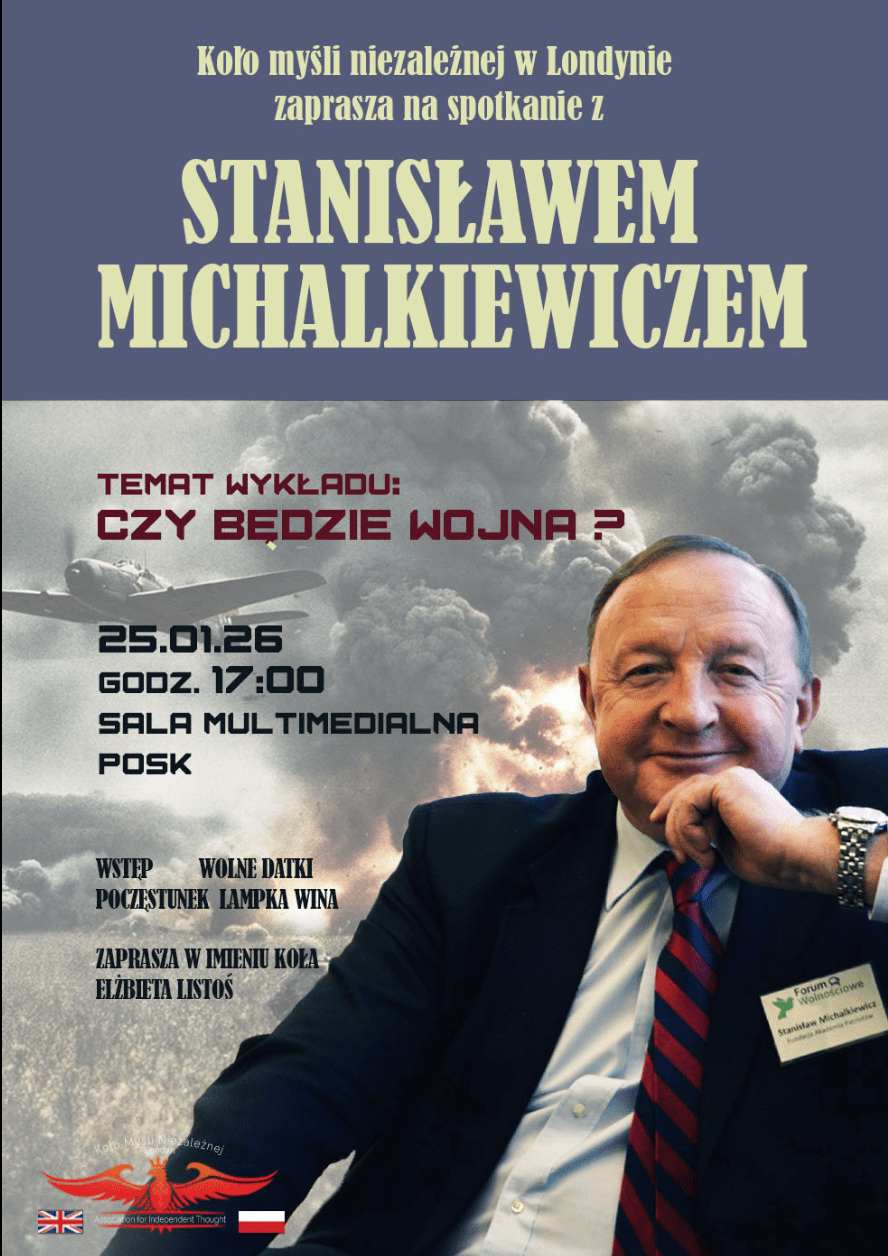
Michalkiewicz was born in Lublin, Poland in 1947 and graduated university with a law degree. In 1987 he co-founded the conservative political party Real Politics Union, yet resigned from honorary membership in 2009. He now focuses on journalism and publishes political articles for right-wing newspapers.
Antisemitism and misogyny
His statements have caused controversy on several occasions, particularly regarding antisemitism. He has accused Jewish people of benefitting politically and financially from the Holocaust; whilst speaking on Radia Maryja, he said, “Jews are trying to force a ransom from our government which they covertly call restitution”.
Michalkiewicz is also known for misogynistic remarks; he was sued for defamation after equating a rape survivor with a prostitute.
The victim was 13-years-old when she was repeatedly raped by a priest in Poznań, and in 2018 she won an unprecedented court case where the perpetrator’s religious order were forced to pay her compensation as his employer.
This ruling was vulgarly criticised by Michalkiewicz, who stated on his YouTube channel, “Get a million zlotys for molestation for someone putting their hand up your skirt once, who wouldn’t want that? many women pull up their skirts for less money”.
The victim then sued him for defamation and won; the court ruled that he must pay her 150,000 Polish złoty (around £31,000).
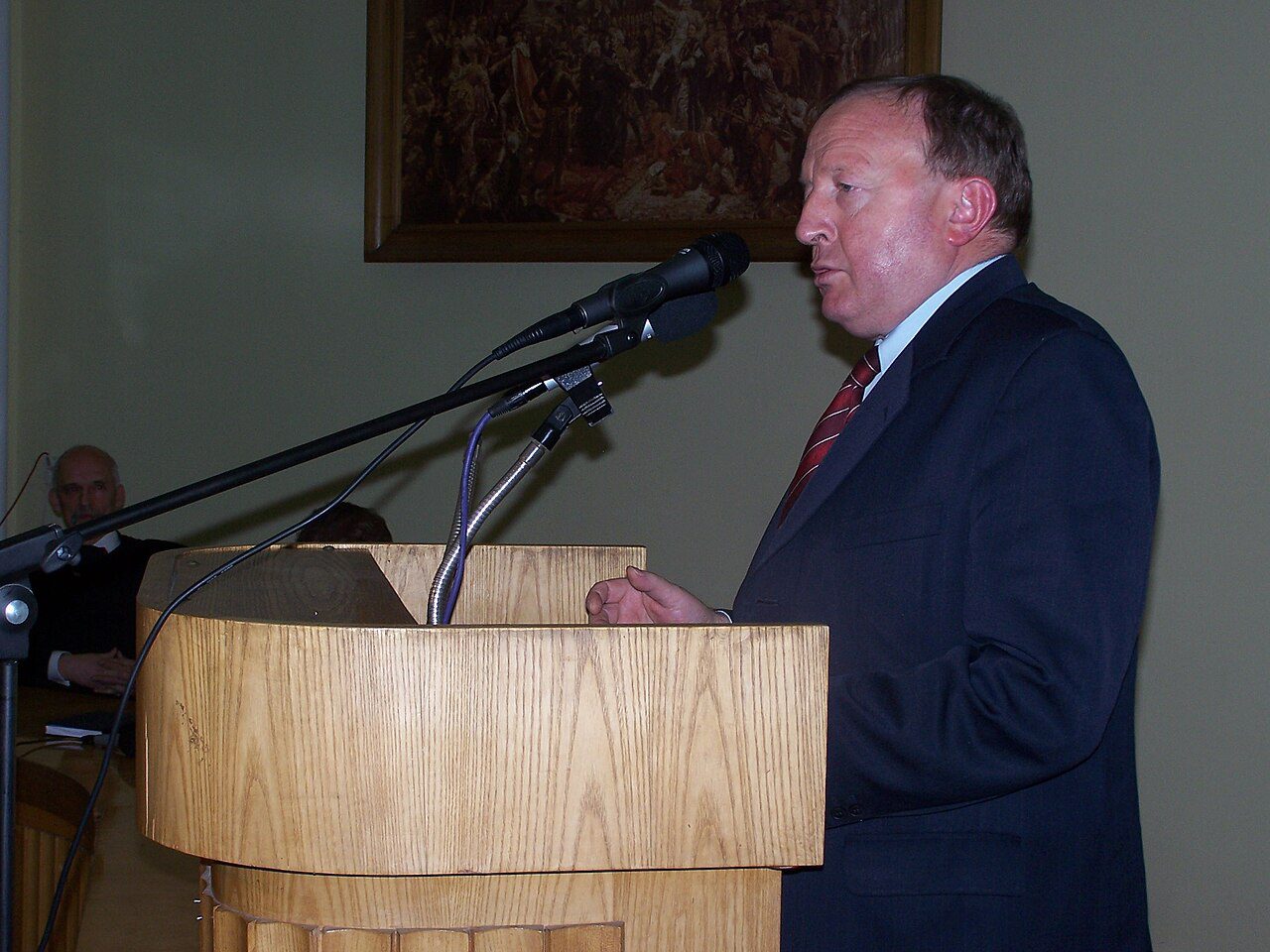
The Polish Social and Cultural Centre (POSK) is the largest Polish centre in Europe. It offers a large programme of exhibitions and talks for the Polish diaspora in London, and also rent out a theatre and gallery spaces for external events.
The centre itself is nonpartisan and does not host political meetings. However, according to the POSK spokesperson, “our member organization and our commercial clients are free to organize meetings in our buildings on topics of interest to them…
“Until now we have not interfered in the subject matter of their meetings, knowing that there is a wide spectrum of opinions that are common to the Polish community in this country.”
Elżbieta Listoś, a former Solidarność activist, hosted the event on behalf of the Association for Independent Thought, a debate club with a distinctly nationalist angle who have held events at the centre for almost two decades.
Personal friendship
Listoś has known Michalkiewicz for many years. In an article titled ‘Regardless of political correctness’, she explains how she began organising events where speakers from Poland could address the diaspora in London.
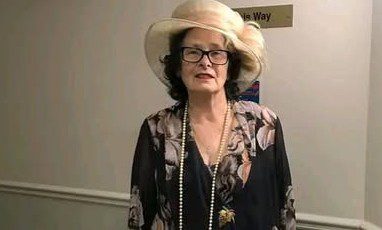
Michalkiewicz first spoke at an event in 2009 hosted at POSK, and according to Listoś, received a ‘very positive’ response from the audience. The two originate from the same parish in Lublin, and Michalkiewicz’s parents supposedly taught Listoś at school.
Cancel culture
The POSK spokesperson said, “the trustees considered a possible ban but I have to stress that we are not supportive of cancel culture…”
“…as [Michalkiewicz’s] speech was confined to geopolitics, albeit with a strong anti-liberal and pro-Russian bias, I did not feel that it in itself constituted any danger to community relations in this country’.
The centre acknowledges it was fully aware of Michalkiewicz’s history of antisemitic comments, and “agreed to monitor the meeting and to protest should it raise the issue of Holocaust denial, or praise anti-Semitism”. They concluded that it did not.
However, while the centre maintains a commitment to free expression and non-interference, the decision to host a figure with a documented history of antisemitic and misogynistic remarks raises questions about where appropriate boundaries should lie, particularly given POSK’s role as a major public space for the Polish community in London.