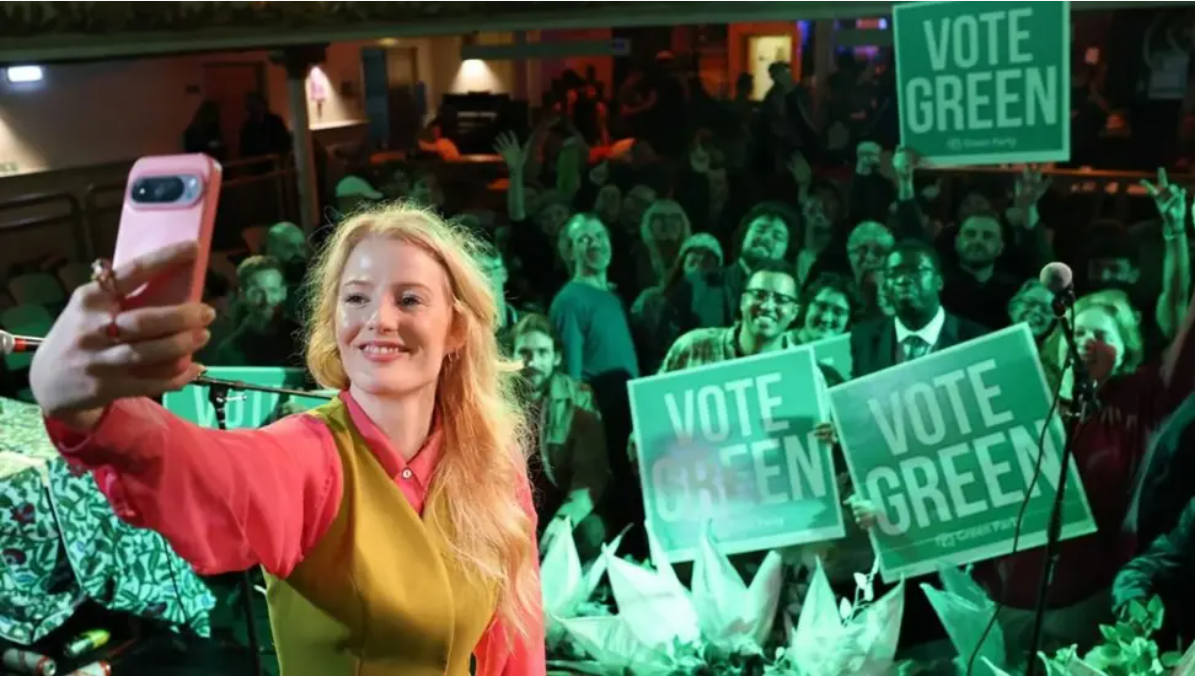
The Gorton and Denton by‑election will be remembered less for the identity of the victor than for the method of victory.
What unfolded in this corner of Greater Manchester was a decisive demonstration of something many on the progressive side have long wished for: anti‑Reform tactical voting, on a scale capable of stopping the far right in its tracks.
For months, polling suggested a tight contest, with Reform positioned as the likely beneficiary of Labour’s local weaknesses and national disaffection. Early surveys showed the Greens competitive but not dominant. Yet the final result – a commanding Green majority – tells a very different story.
Best chance
The size of that majority was not predicted by the polls because it was not visible to the polls. It emerged in the final days, even the final hours, as voters waited to see which candidate had the best chance of beating Reform and then moved in numbers to that option.

The scale of the Green win, so far beyond what early polling implied, is the clearest sign yet that many voters held back until they could see who the front‑runner was and then deployed their vote with precision.
Electoral instincts
This is not an isolated phenomenon. The Caerphilly by‑election last October showed the same dynamic: voters who might normally divide between Labour, Plaid Cymru, the Greens, or simply staying home instead coalesced around the candidate best placed to stop Reform. Gorton and Denton confirms that the Plaid victory in Caerphilly was not a Welsh anomaly but the early shape of a wider electoral instinct.
Some will now rush to declare the Gorton and Denton result a great triumph for progressive politics, or a decisive rejection of Keir Starmer’s Labour. That reading is tidy, but may oversimplify what actually happened.

The Green vote here was a coalition of motives, and it is essential to understand its complexity. Some will have been committed Green supporters, others disillusioned Labour voters keen to send a message.
But a significant number will have been voters whose first preference lay elsewhere but who prioritised stopping Reform above all else and loaned the Greens their vote in order to do so.
Not unstoppable
In another constituency, that tactical vote might have gone to Labour. In parts of Wales or Scotland, it might go to Plaid or the SNP. The point is not that the Greens are now the natural home of the anti‑Reform vote, but that the anti‑Reform vote is now behaving tactically, intelligently, and with growing confidence.
Reform has spent the past year insisting that its rise is unstoppable, that it represents a new national mood, and that the old parties are powerless to resist it. Caerphilly dented that narrative. Gorton and Denton seriously damages it.
Two by‑elections do not make a trend, but they do reveal a vulnerability: Reform’s support is broad but shallow, while opposition to Reform is deep and widely shared. When voters coordinate, even informally, even at the last minute, Reform can be beaten, and beaten decisively.
Angry Farage
Reform, predictably, have responded with anger. Farage is blaming election fraud and sectarian politics. They claim that tactical voting is undemocratic, that it is a stitch‑up to keep them out.
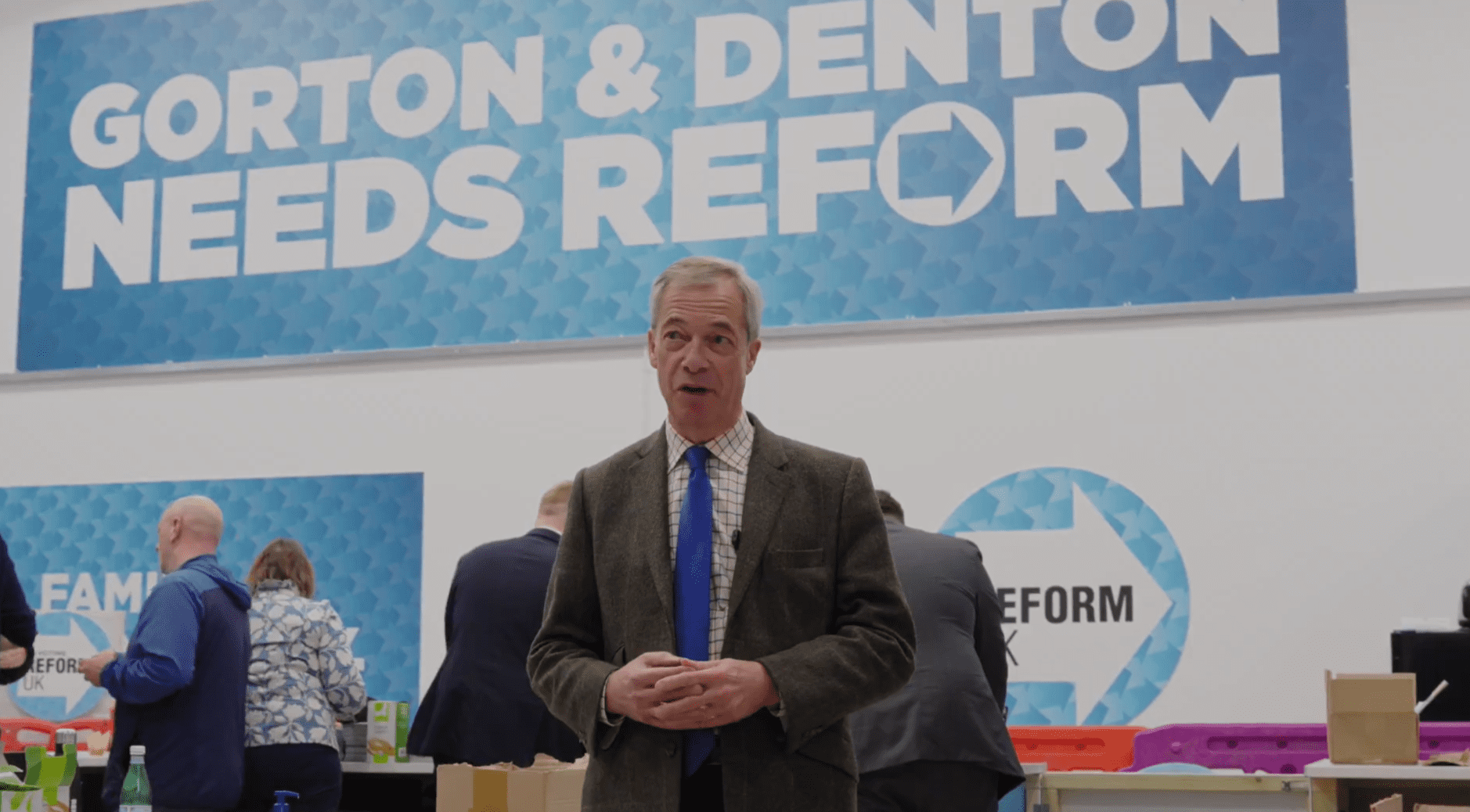
But in a flawed first-past-the-post system which might otherwise deliver a Reform victory on a minority vote, to which a majority are passionately opposed, there is nothing undemocratic about voters using the system as it exists.
Tactical voting is simply the electorate exercising its collective judgement. And if a majority of voters loathe a party, it is entirely legitimate, even healthy, for them to organise, implicitly or explicitly, to prevent that party from gaining power.
Strategic voting
The lesson of Gorton and Denton is not that the Greens are ascendant or that Labour is doomed. Both or neither could be true. Only time will tell.
The lesson for now is that Reform can be stopped. Not by wishful thinking, but by strategic voting grounded in local realities. In some seats, the Greens will be the vehicle. In others, Labour. In others still, the Welsh or Scottish nationalists. The banner matters less than the shared objective.
For now, at least, Reform’s momentum has been stalled. Whether this becomes a turning point depends on whether voters, and progressive parties, recognise what has just happened and have the discipline to repeat it.