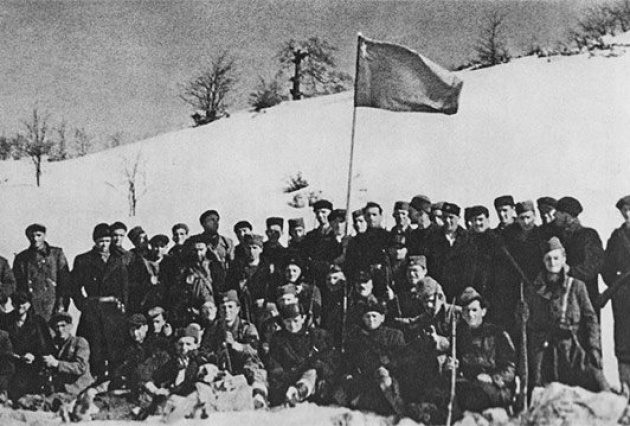
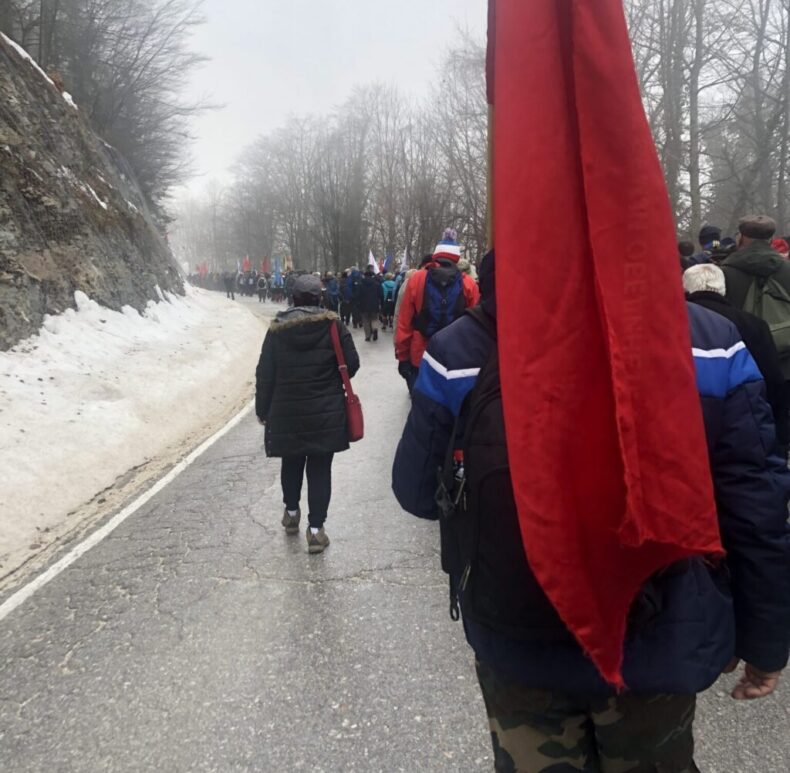
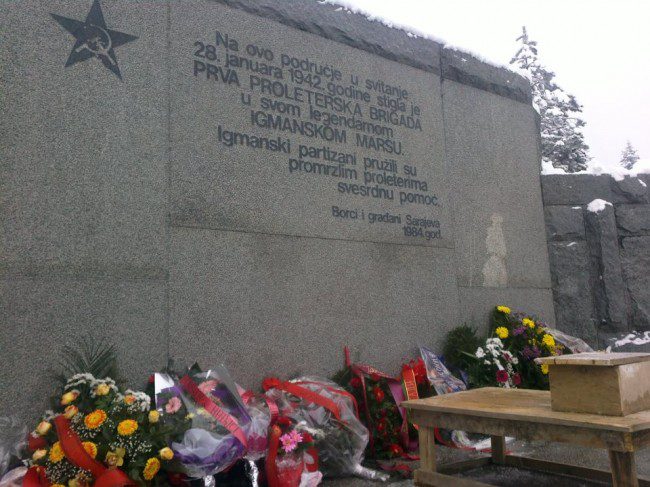
On a bitterly cold weekend at the end of January, thousands of people converged on Mount Igman in Bosnia and Herzegovina to mark the 84th anniversary of the Igman March, a defining episode of resistance during the Second World War.
More than a mere act of commemoration, this year’s gathering carried a starkly political message: the lessons of the past are urgently needed to confront what many see as a resurgence of far-right politics across the former Yugoslav republics.
In late January 1942, under conditions of brutal winter weather with temperatures plunging to around −30°C, hundreds of Yugoslav partisans from the First Proletarian Brigade made an extraordinary trek across the unforgiving slopes of Igman.
Facing annihilation
Surrounded by Axis forces and facing annihilation, the brigade’s successful break through encirclement en route to liberated territory around Foča became emblematic of collective determination and sacrifice in the face of fascism.
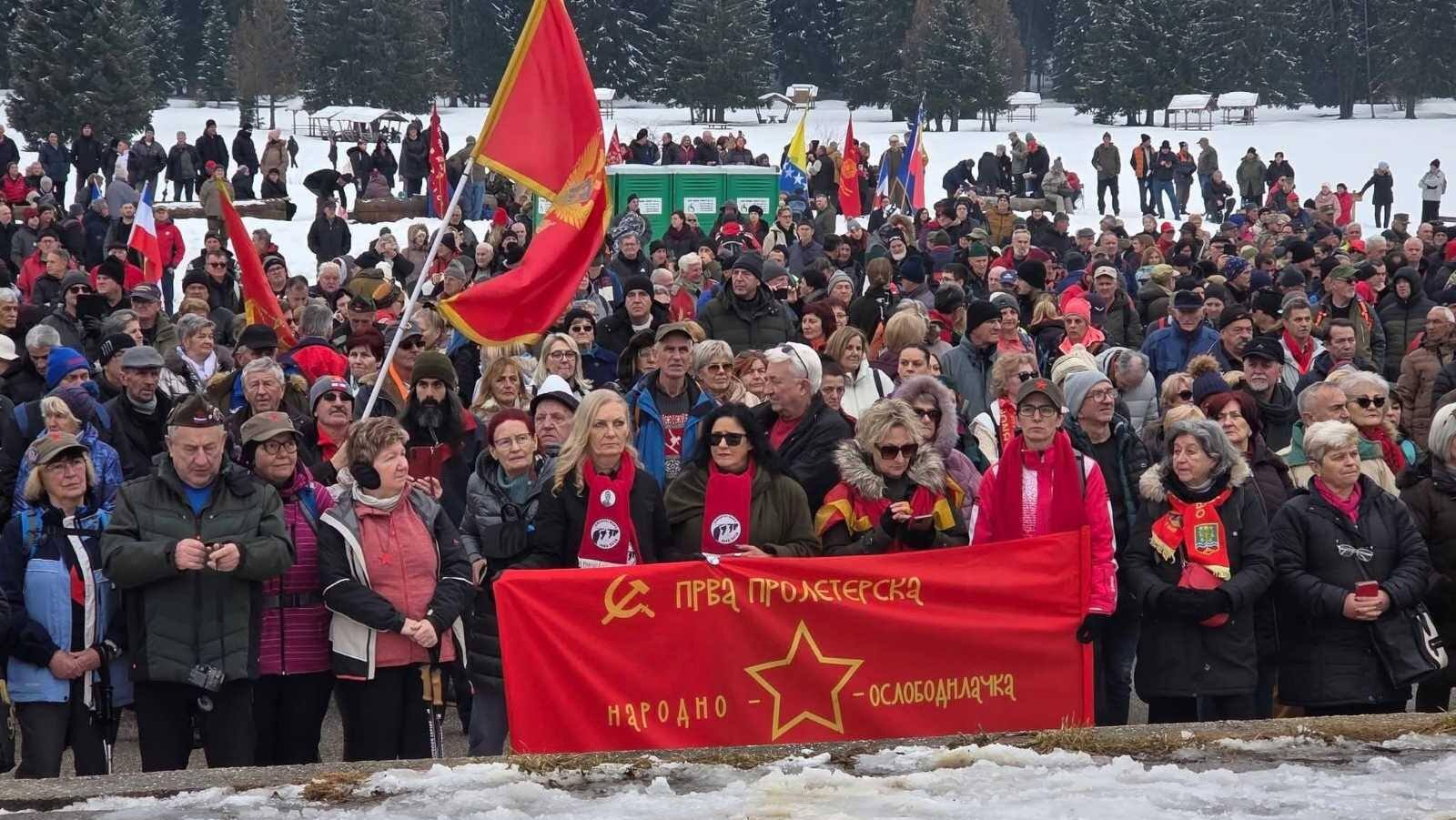
At this year’s event, held on 31 January at Veliko Polje, the site of an iconic partisans’ memorial, participants from across Bosnia, Croatia, Serbia, Montenegro and beyond carried red flags and banners of local antifascist groups.
Sounding an alarm
Speakers from the Association of Anti-Fascists and Veterans of the People’s Liberation War of Bosnia and Herzegovina (SABNOR BiH) did not just honour the partisans’ courage; they used the occasion to sound an alarm about contemporary political currents.
“Today, we take away the lesson of how to recognise fascism, how to identify the threat it poses – so that we can act against it,” said Mirsad Ćatić, president of SABNOR Sarajevo.
For him and others, freedom loses all meaning unless it is actively defended in the present.
Across the Western Balkans, speakers argued, historical revisionism and the rehabilitation of Second World War collaborators are no longer fringe phenomena.
Efforts to diminish the role of antifascist and socialist movements in the liberation of Yugoslavia and Europe risk replacing shared historical understanding with nationalist narratives.
Critics highlight the growing absence of antifascist history in school curricula and the elevation of nationalist symbols and figures in public life.
Education initiatives
In response, SABNOR Sarajevo has launched educational initiatives such as The Partisan Reader, a booklet intended to reintroduce younger generations to the history and values of antifascist struggle.
Yet organisers at Igman stressed that awareness alone is not enough.
Anti-fascist resistance, they insisted, must be unified and universal, confronting not only historical amnesia but also contemporary political agendas that erode civil rights and fuel exclusion.
“Today, we are surrounded by a new fascism,” Ćatić warned, describing it as a subtler, more insidious force than its mid-20th-century predecessor, one that slips into institutions and shapes laws in ways reminiscent of the past.
Reject silence
Sead Đulić, president of SABNOR BiH, echoed this call, urging activists and citizens alike to reject silence and build a broad antifascist front to uphold human dignity and shared rights throughout the region.
While the Igman anniversary is rooted in history, those gathered made clear that its meaning resonates powerfully in the present: remembering is not enough.
It must be an act of resistance.