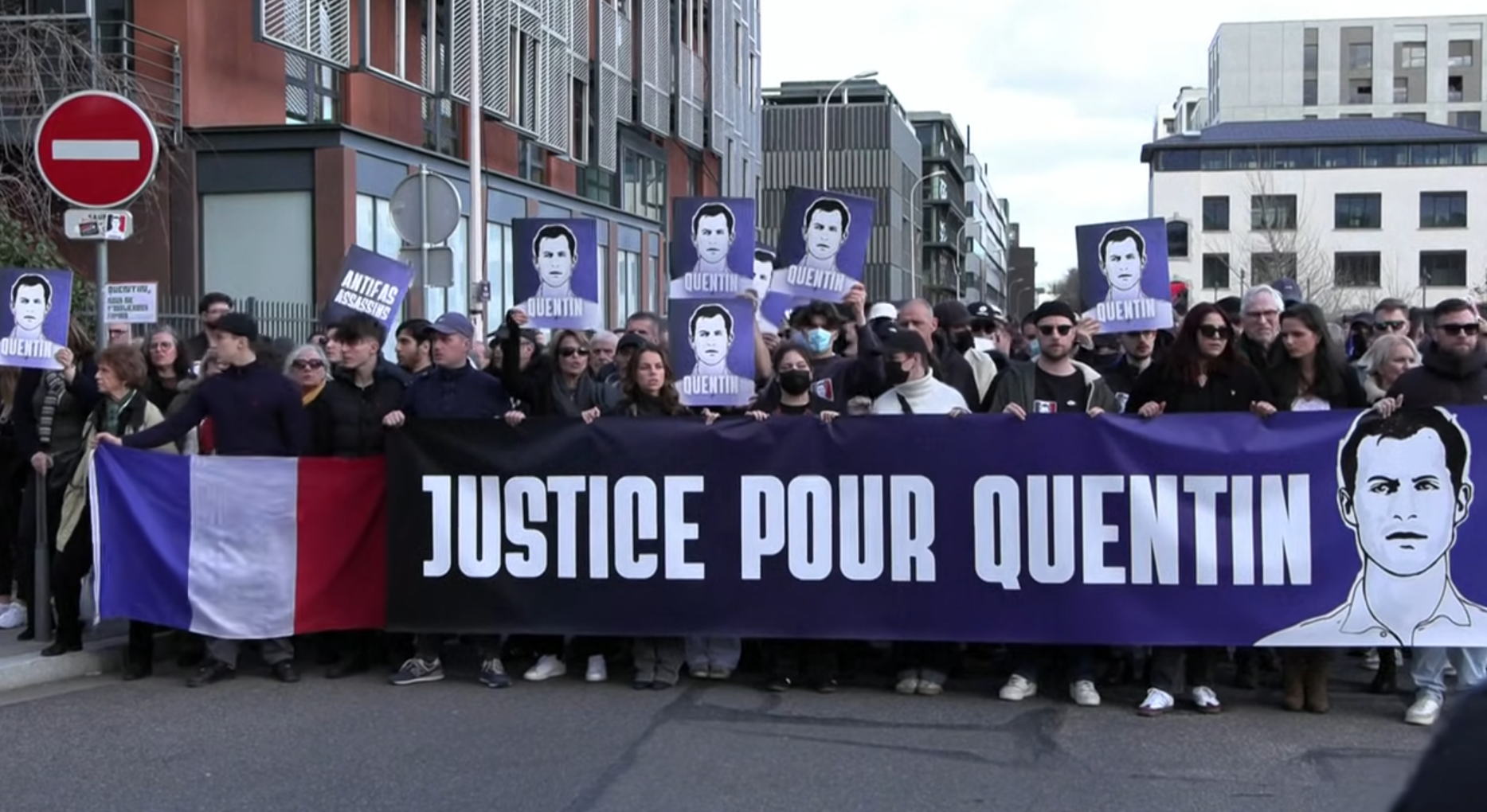
When Quentin Deranque died on 14 February, two days after suffering catastrophic head injuries in a street fight in Lyon, something else died alongside him: any honest account of who he actually was, or how he came to die.
Within hours, the European far right had a martyr. Within days, it had constructed a myth.
The 23-year-old was portrayed across right-wing media and social networks as an innocent Catholic boy, a gentle patriot going about his peaceful business when he was hunted down by murderous leftists.
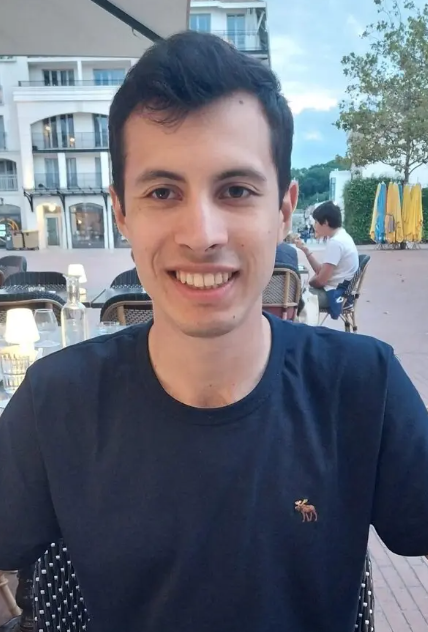
His family’s lawyer, Fabien Rajon, spoke to Le Figaro of a “lynching of his memory” by the press, accusing journalists of smearing a “religious and peaceful young man” who “weighed 63 kilos” and could not possibly be the ultra-violent skinhead some had described.
The European Conservative ran the story uncritically, framing the coverage of Deranque’s actual political affiliations as a deliberate attempt to “exonerate those responsible for his death.”
The irony is stark. It is the far right, not the press, that has been doing the rewriting.
Now, thanks to a meticulous investigation by Mediapart published on 12 March, we know a lot more about Quentin Deranque, racist, neo-nazi, holocaust denier and far-right street thug.
Who was Quentin Deranque?
Born in Perpignan on 13 July 2002 to a French father and a Peruvian mother, Deranque grew up in Saint-Cyr-sur-le-Rhône before moving to Lyon, where he studied mathematics and later enrolled in a data science degree at Université Lumière-Lyon-II, working part-time for the national rail network, SNCF.
His friends and family described him to the press as a devout Catholic who attended traditionalist masses in Latin at the Fraternité Saint-Pierre, was active in the parish of the Cercle Saint-Alexandre, and had even become godfather to his own father’s confirmation.
Intellectual heroes
His close friend Vincent Claudin told Mediapart that his intellectual heroes were Aristotle, Saint Thomas Aquinas and Saint Augustine. It is a portrait of quiet, bookish piety.
The documented record of his political life tells a rather different story, though one his friends and associates tried hard, after his death, to obscure.
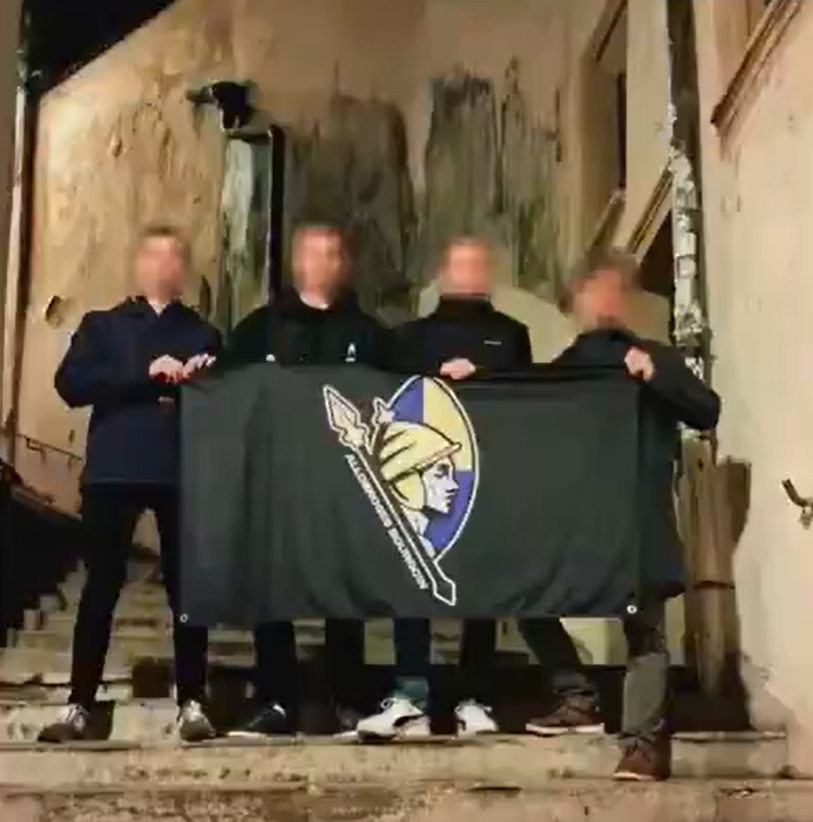
Deranque was an active member of Allobroges Bourgoin, a white supremacist neo-fascist group in Isère that he helped co-found in the spring of 2025. Before that, he had been a militant with Action Française, the centuries-old anti-Semitic royalist movement.
White self-defence
He was a regular participant in the training sessions of Audace Lyon, a far-right identitarian organisation whose stated purpose, as Le Monde reported, was practising “white self-defence” against “extra-European populations and left-wing extremists.”
Quentin attended a training session in a Lyon park as recently as 1 February 2026, eleven days before his death. According to Mediapart, he excelled at unarmed combat.
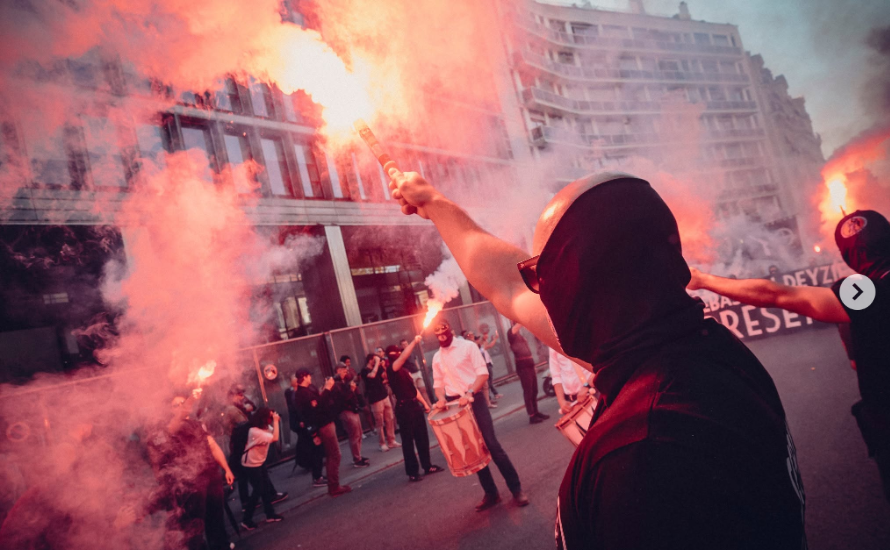
In May 2025, he marched in Paris with the so-called Comité du 9-Mai, a neo-Nazi parade in which black-clad militants processed under flags bearing the white supremacist Celtic cross.
One of his flatmates had been involved in a violent “punitive expedition” carried out by fascists in 2018. Several of his closest associates were themselves known far-right militants. None of this featured in the eulogies delivered in his name.
Posts left behind
The most significant revelations come from Mediapart’s excavation of Deranque’s online presence. Working from his social circles, cross-referencing interactions between known neo-Nazi accounts and his associates, the investigators identified three anonymous accounts on X: @PatricienD, @Gavariou and @ultragavariou.
The first was active from 2024 and amassed nearly 7,000 posts in a single year before he switched to the others. The third was still active until February 2026, the month he died. Together, they contain thousands of posts.
His friends rushed to set the accounts to private after the street fight. They were too late.
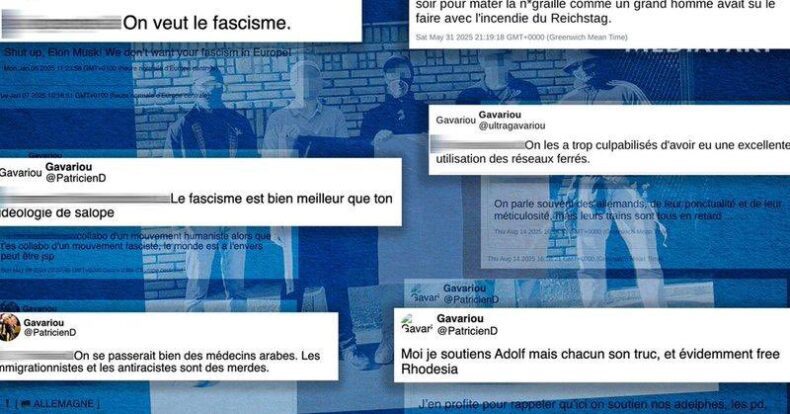
The content is unambiguous. In January 2025, Deranque wrote on @PatricienD: “We want fascism.”
The same month, on the same account, he described himself as “un fasciste”. He took the trouble to define his terms: “A fascist is someone who supports fascism, i.e. who affirms the primacy of the state over the individual.”
In July 2024, when a user posted their support for LGBTQ+ people, Derqanque replied: “Me, I support Adolf, but each to their own”. A few weeks later he posted that Mein Kampf should be “given to every schoolchild to read.”
When a fellow user pointed out in April 2025 that the Rassemblement National had been “founded by Waffen SS,” Deranque responded: “Et c’est très bien” – “And that’s a very good thing.”
Explicit racism
When eighteen months’ imprisonment was sought against neo-Nazi leader Marc de Cacqueray for assaulting SOS Racisme militants, Deranque commented: “Support to him, he did nothing wrong.”
On German trains being delayed, he quipped that Germany had been “excessively made to feel guilty for their excellent use of rail networks”, a reference, unmistakeable to anyone familiar with the far-right lexicon, to the Nazi deportation trains.
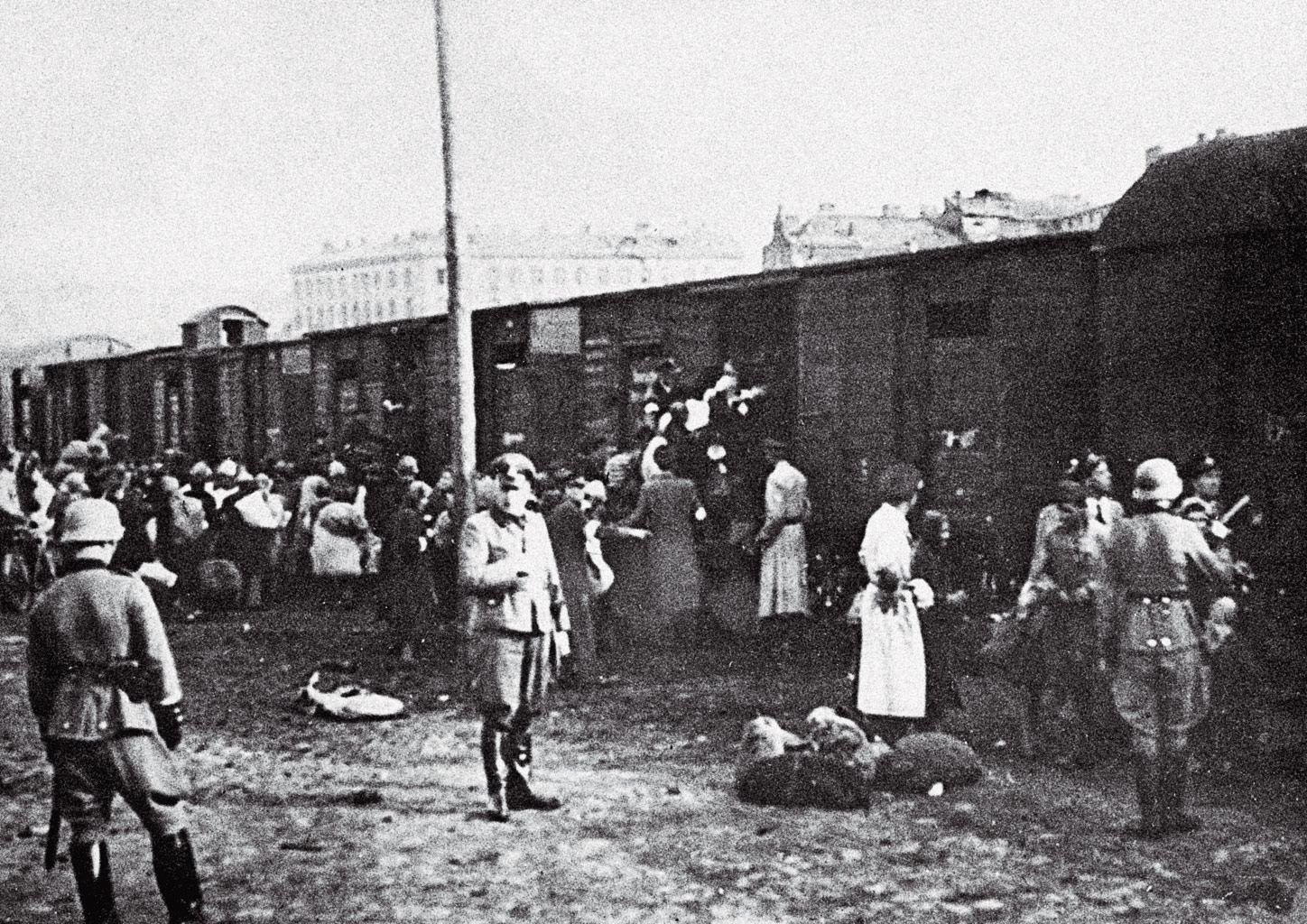
His racism was similarly explicit. “We don’t want to live with Africans, whether they are criminals or not” he wrote in December 2024.
He regularly used the acronym TND, standing for “Total N****r Death,” used in white supremacist circles.
He called a nurse who highlighted the contribution of racialised staff to French hospitals “a whore for blacks”. He worried about the “extreme minoritisation of white people in the world.”
He called for the deportation of “millions of Arabs and Black people” from French soil, referring to them collectively as “allogènes” — the old far-right term for those deemed racially foreign.
Antisemitism
The antisemitism was equally undisguised. In one post, he called for Gisèle Halimi, the celebrated feminist Jewish lawyer who fought against torture in Algeria and for women’s rights, to be “dug up and shot,” marking her name with the triple-bracket notation used by online antisemites to identify Jewish people.
He posted a historical archive about the hunting of escaped enslaved people with the caption “Projet 2027”, the year of the next elections.
He called for the abolition of France’s anti-racism and anti-Holocaust-denial laws. Simone Veil, survivor of Auschwitz and author of France’s abortion law, he called a “salope meurtrière”, a “murderous slut”.
How did Quentin Deranque die?
On 12 February 2026, a lecture by La France Insoumise MEP Rima Hassan was scheduled at Lyon’s Sciences Po campus. The femo-nationalist group Collectif Némésis arrived to disrupt it, accompanied by a security contingent of far-right men of which Deranque was part.
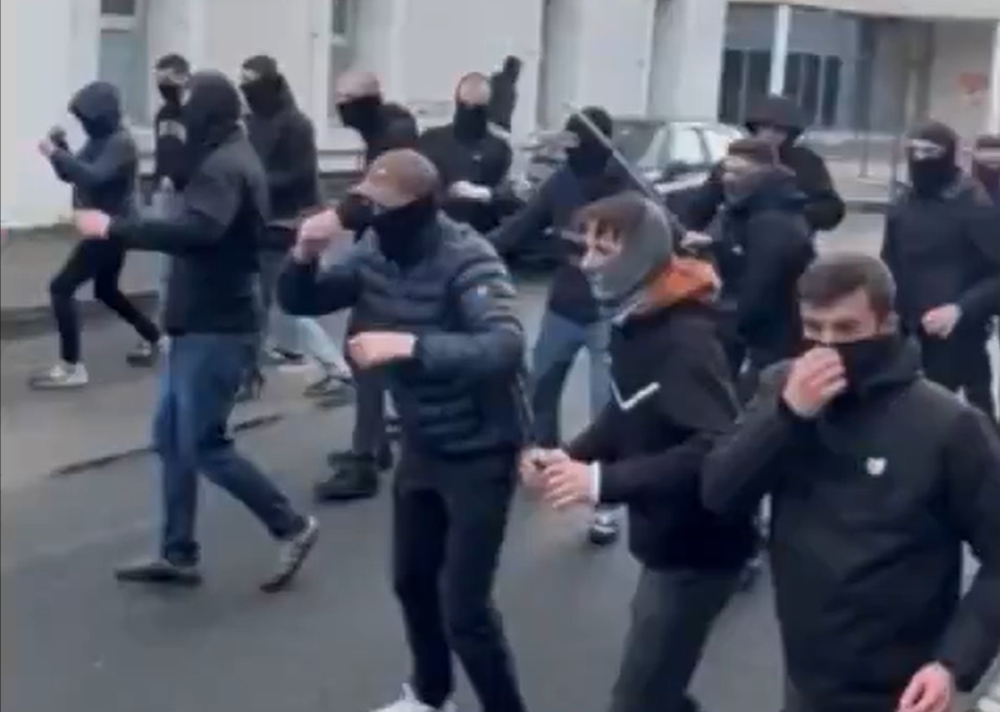
The initial skirmish near the university was relatively minor. The fatal confrontation took place several hundred metres away, at 14 Rue Victor Lagrange, where approximately fifteen far-right militants clashed with a similar number of antifascists.
The picture promoted by Némésis and right-wing media, of a peaceful youth singled out and hunted down by political killers, is directly contradicted by multiple pieces of footage.
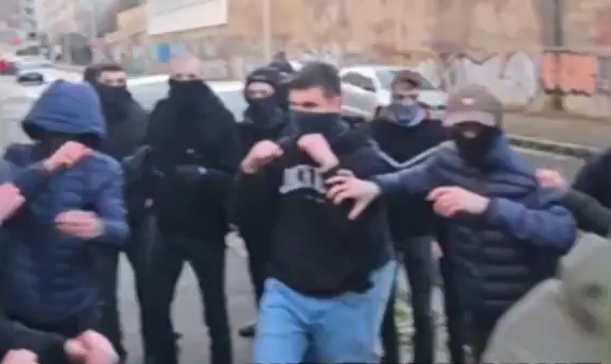
Images published by Le Canard Enchaîné show the far-right group laying an ambush: neo-Nazi militants dressed in dark clothing and masked threw an incendiary torch before attacking antifascists with tear-gas canisters and a metal crutch.
Throwing punches
The antifascists, some of them unmasked, responded with their bare hands. Quentin Deranque, identifiable throughout by his grey New Balance trainers and hooded puffer jacket, appears in the front line. He is throwing punches.
On other footage, he can be seen in a combat stance at the forward edge of the far-right group. He wore a balaclava throughout the brawl.
An investigation by L’Humanité had already revealed that Némésis Lyon developed a deliberate strategy, as far back as October 2025, to use female activists as “bait” while neo-Nazi militants positioned themselves nearby to engage antifascists. It was a planned provocation, not spontaneous.
One of the most corrosive claims repeated across right-wing media was that Deranque had been “left for dead” at the scene, abandoned, helpless, the sole victim of a one-sided slaughter.
Video evidence
New video evidence, published by Contre Attaque and verified by cross-referencing with Google Maps street imagery, demolishes this account entirely.
Footage filmed at 6:07 pm on 12 February, timestamped and geolocated to the precise address of the fight, shows Quentin Deranque standing upright, his balaclava pulled down to his nose, speaking with passers-by.
His hands are covered in blood.
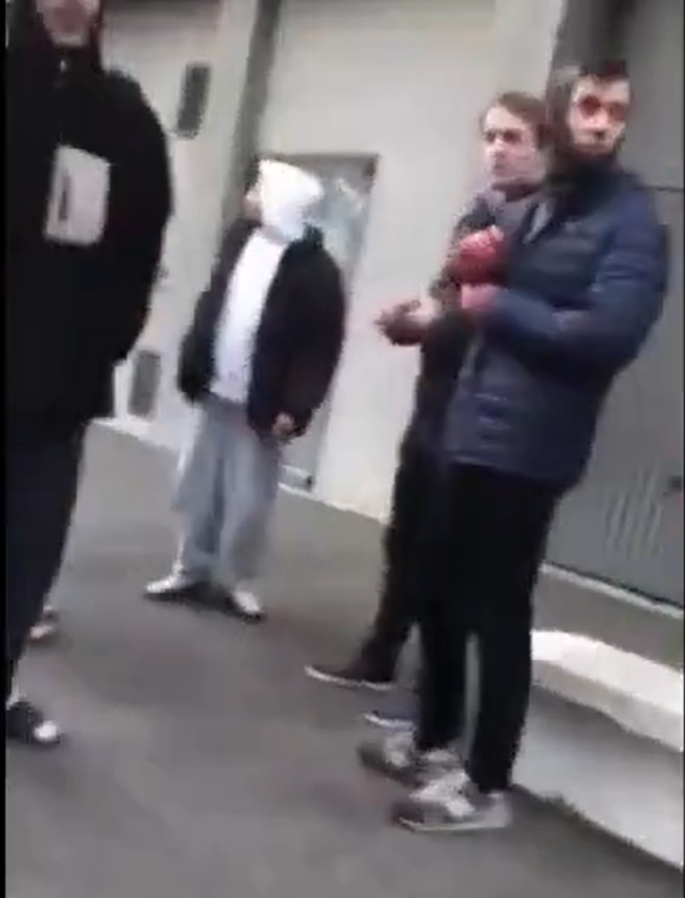
A woman and a man urge him to go to hospital, and can be heard mentioning blows to the head. “It’s an organised fight,” one bystander explains to another. “Two groups fought each other. I think he needs to go to Saint-Joseph because he has…”
Deranque declines. He is on his feet. He is talking. He chooses not to receive medical attention.
Right takes flight
This timeline matches what far-right militants themselves told Le Figaro, placing the confrontation at around 6 pm. The same location is recognisable in the TF1 footage broadcast nationally, which shows the end of the fight as the far-right group took flight.
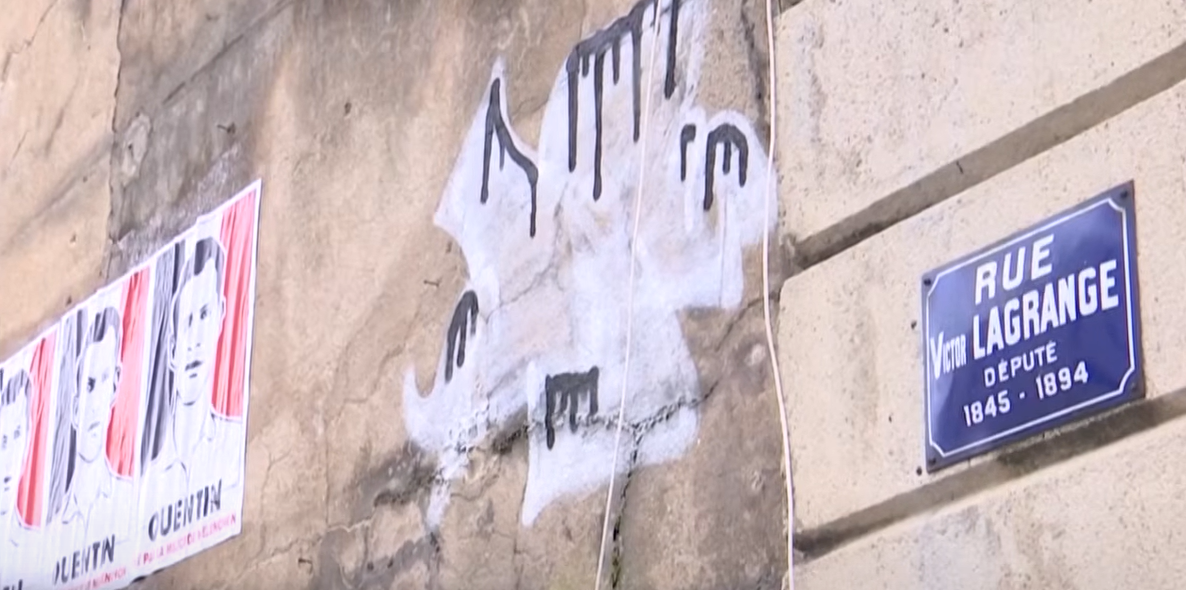
Although Deranque had sustained serious injuries, the footage shows no sign of a wound that was visibly catastrophic in the immediate aftermath. He walked away from the scene on his own two feet.
Deranque died in hospital two days later, and his family’s lawyer claims his doctors have said the severity of his head injuries meant faster care would not have altered the outcome.
Simply false
Nine individuals linked to the antifascist group Jeune Garde Antifasciste, which was dissolved by the French government in June 2025, have been charged, two of them parliamentary aides to LFI deputy Raphaël Arnault. That investigation is ongoing.
But the claim that he was “left for dead,” weaponised for weeks by the far right as proof of antifascist savagery, is simply false. He was accompanied. He refused help. He walked away.
Manufacturing a martyr
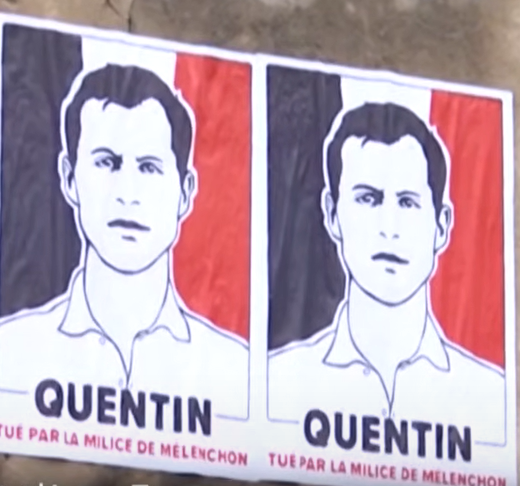
The far-right response to Deranque’s death was speedy. His portrait was projected onto public buildings. Rallies were announced. The National Assembly, and the Senate, observed a minutes silence.
His image was displayed on the facade of the Auvergne-Rhône-Alpes regional council building.
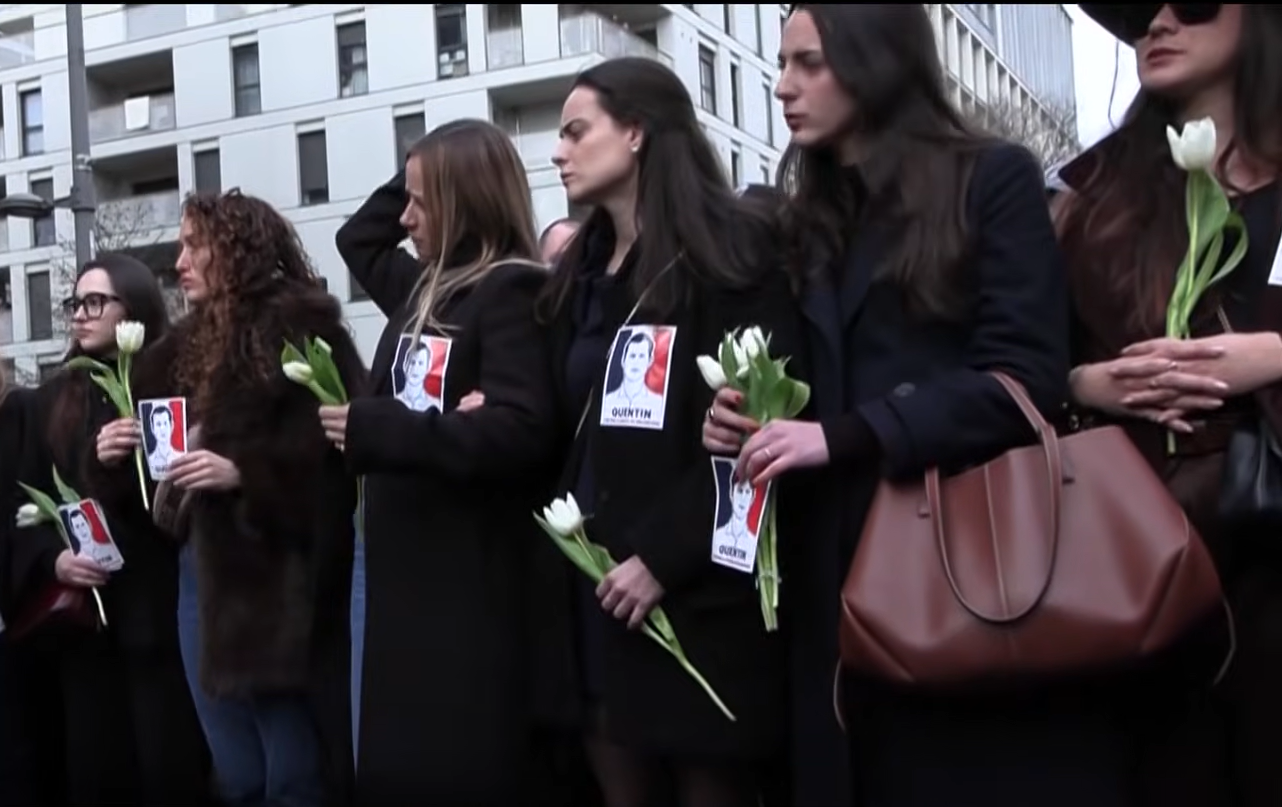
RN vice-president Sébastien Chenu told a campaign rally on 6 March that Deranque had given his life “to defend ideas,” adding that these were “really our ideas.” He said this after Deranque’s membership of a neo-fascist organisation was already publicly known. After the Mediapart revelations emerged, Chenu offered no retraction.
But, as Euronews documented, many images circulated under the caption “His name was Quentin” actually depicted Dylan Guichaoua, a local RN official with no connection to the events in Lyon. Others showed Quentin Piron, a 23-year-old Belgian killed in a road accident in 2024. AI-generated images were also deployed. Guichaoua himself had to publish a public statement making clear he was still alive.
Explicit threats
On the night of Deranque’s death, neo-Nazis marched through Ménilmontant in Paris, chanting “We are at home here.” Swastikas and antisemitic slogans were daubed on the Place de la République. LFI offices were attacked across France. Death threats flooded into LFI representatives, including explicit threats to “kill all the crooks, leftists, and Black people” in Deranque’s name.
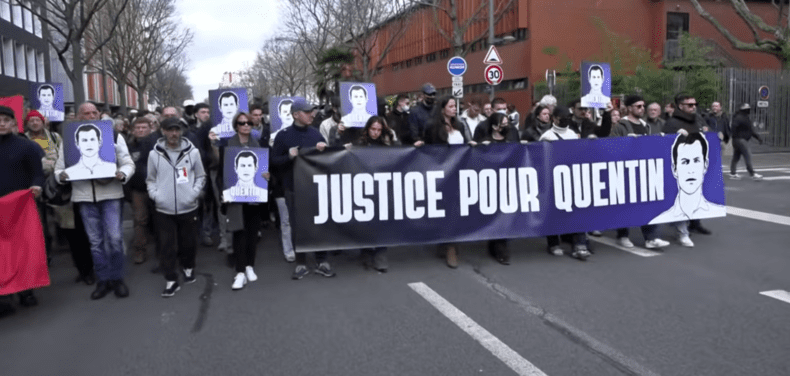
The Lyon rally on 21 February drew roughly 3,200 people; the prefecture of the Rhône subsequently referred the matter to prosecutors over Nazi salutes and racist and homophobic abuse directed at journalists and passers-by.
International pile-on
The case rapidly became a vehicle for the international far right to attack the European left. Italian Prime Minister Giorgia Meloni blamed “a climate of ideological hatred” sweeping Europe.
The US Embassy in Paris published a statement claiming that “violent radical leftism” posed a threat to public safety. The French Foreign Ministry summoned the US ambassador.
Marine Le Pen called for antifa to be designated a terrorist organisation. The death of a young man who had written “I support Adolf” on the internet and marched in a neo-Nazi parade in Paris had become, within days, an international cause célèbre for the right.
Sociology professor Isabelle Sommier, who tracks political violence in France, has found that of 57 deaths linked to political group violence between 1986 and 2017, all but five were caused by right-wing extremists.
Six further deaths have been recorded since 2022, all attributed to the radical right. Rue89 Lyon has counted 102 far-right violent actions in Lyon alone since the 2000s, with 70 per cent escaping either judicial or police sanction.
The young man who died co-founded a white supremacist organisation, expressed admiration for Hitler, joked about the Holocaust, called for the deportation of Black and Arab people from France, and came to Lyon as part of a far-right fighting unit which lay in ambush to inflict violence on their political opponents.
He died because they fought back. He is not a martyr, he was a victim of his own vileness.
The far right has not been defending Quentin Deranque’s memory. It has been unscrupulously scraping it clean to level a vicious attack on the left, and on democracy itself.
It must not succeed.