It’s a script Nigel Farage knows well. Candidates or causes closely linked to him, perhaps even bearing his name and his photograph, make large, attention-grabbing promises. Votes are won on the strength of them. Then, once the votes are counted the promises are declared – with an air of wounded innocence – to have never been made, and certainly not by him.
Ahead of the May 2025 local elections, in which Reform UK won control of ten local authorities, the party’s candidates distributed leaflets across England making explicit promises to voters about council tax.
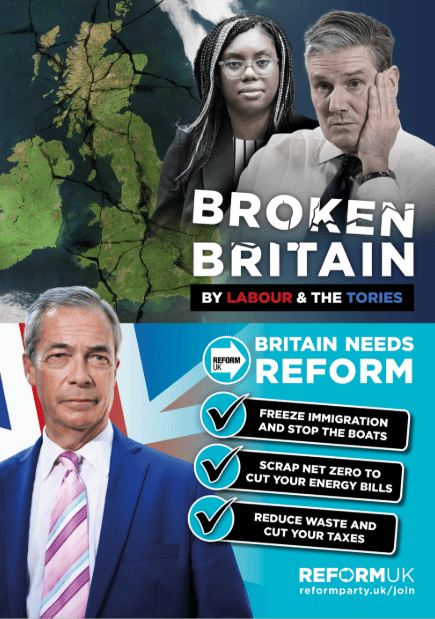
In Kent, leaflets urged voters to back Reform and promised to “reduce waste and cut your taxes.”
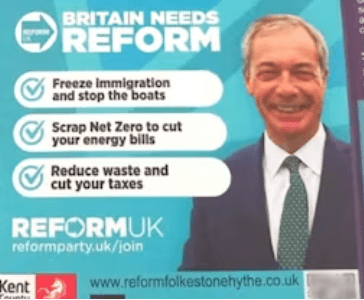
In Lancashire, Reform candidates made the same pledge:
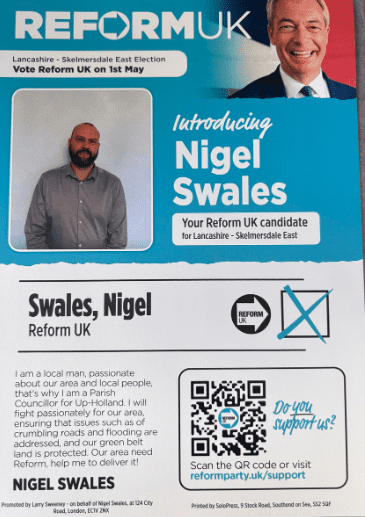
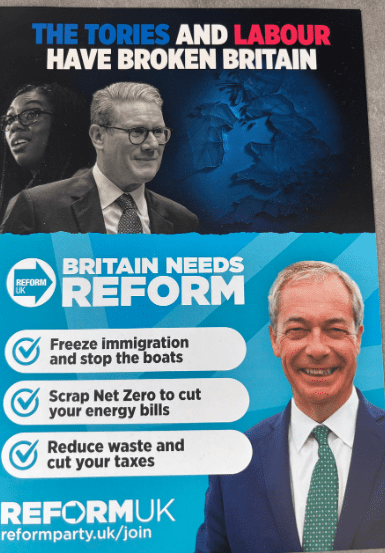
In Warwickshire, the local party leaflet stated plainly that Reform would: “cut your taxes.”
Worcestershire’s version promised to “reduce waste and cut your taxes.”
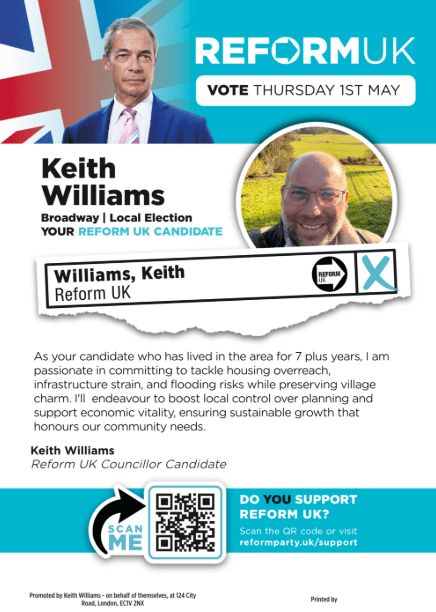
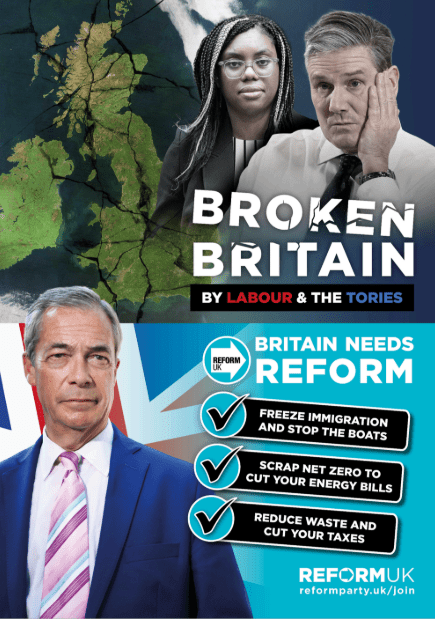
In Longdendale, Greater Manchester, the same pledge was made by the victorious Reform candidate:
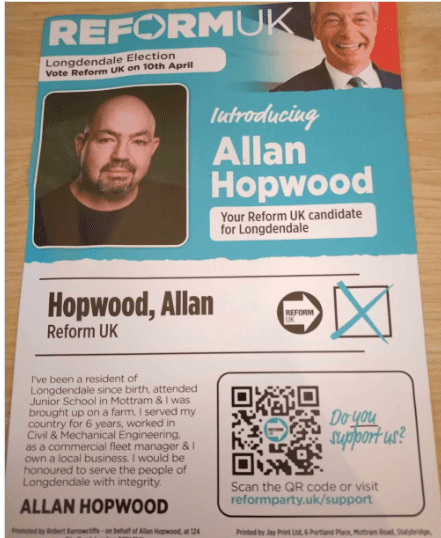
In Durham, leaflets promised to “fight for lower council tax.”
In Derbyshire, the local branch told voters that a vote for Reform was a vote to “say no to increased council tax.”
These particular leaflets were not obscure, locally-produced oddities. What is especially striking is the similarities, especially with the graphic which contained the “we will cut taxes” pledge; almost as if they had been produced from one, central template.
Most carried the image of Farage himself. And Reform’s national media account promoted one candidate in Warwickshire, Stiliyan Petrov, explicitly as someone “ready to fix his local area by cutting wasteful spending, lowering council tax and ensuring proper funding for key local services.”
The reality
Once in power, Reform’s councils found themselves face-to-face with the fiscal pressures every other local authority has long grappled with: soaring social care costs, central government funding settlements, and the structural challenges baked into the system for years.
The result was predictable. Kent voted through a council tax rise of 3.99 per cent. Durham, Warwickshire, Worcestershire, Leicestershire, and Lincolnshire all signalled increases.
In Leicestershire, Reform councillor Dan Harrison had reportedly told colleagues it was “categorically” his plan to reduce council tax before proposing a 3 per cent increase.
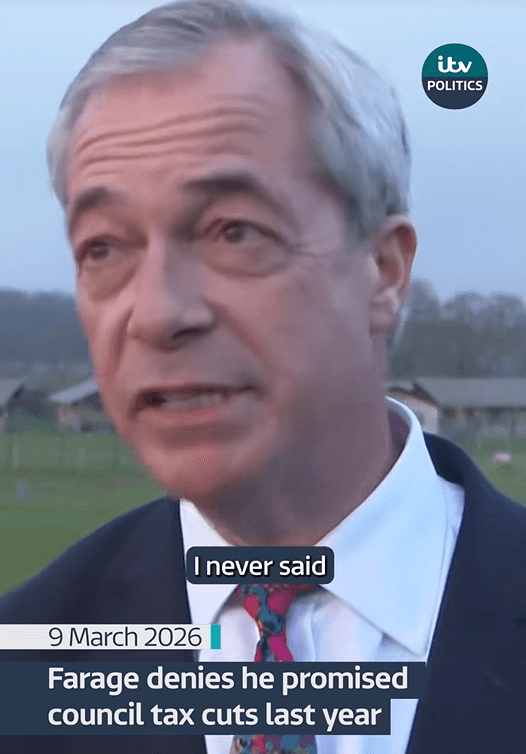
What followed was a Farage masterclass in political evasion.
In an interview with ITV News, Farage was told directly: “Your leaflets at last year’s local elections promised to ‘reduce waste and cut your taxes’.
“Most of the councils that you took control of are putting tax up, including Kent – 3.99 per cent.”
He then shifted ground entirely. “I never once, in the country, ever once did I say we would cut council tax,” he said, apparently distinguishing between his own words and those on campaign material bearing his photograph.
His response was to deny the plain meaning of words in print. “I never said we’d cut. I never said we’d cut,” he insisted.
Not in my name
When the journalist pointed out that his leaflet used precisely the word “cut,” Farage retreated into sophistry: “Cutting taxes could mean not putting them up as much, I suppose.”
Asked whether it had been “a mistake” to put the pledge on the leaflet, Farage replied: “I never put it on my leaflets.”
When told that the leaflet did carry those exact words, he insisted: “Nothing with my name ever went on that.”
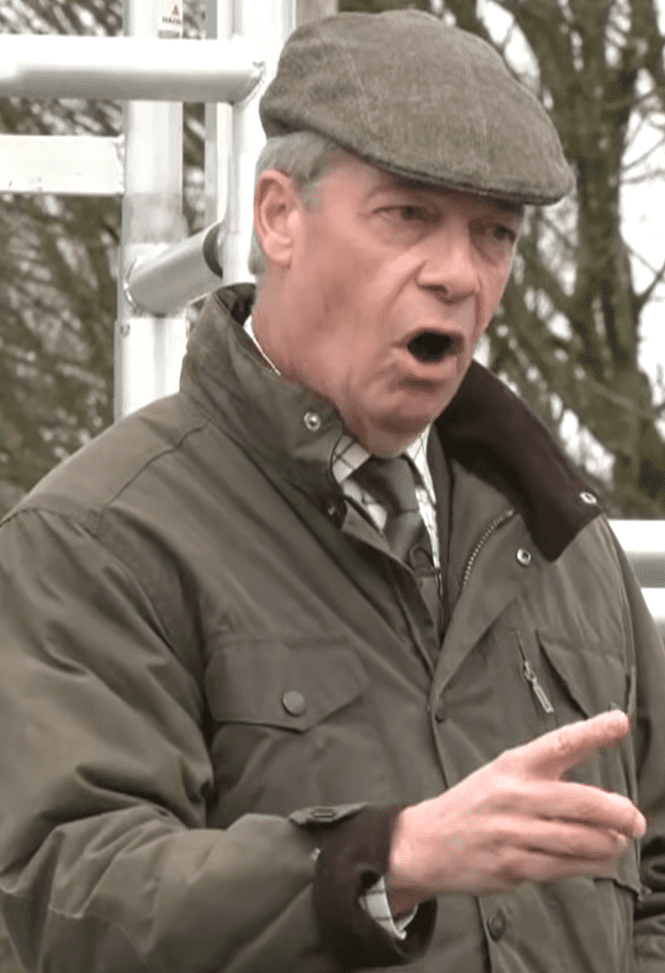
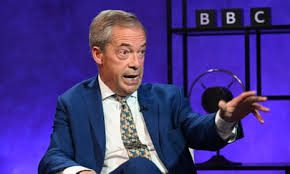
In a separate interview with Sky News’s Beth Rigby, Farage grew visibly agitated, repeatedly shouting “Wrong! Wrong! Wrong! Wrong! Wrong!” when questioned about the broken pledges and at one point threatened to end the interview entirely.
Reform’s deputy leader, Richard Tice, fared no better.
Appearing on Times Radio, Tice demanded that a Times headline reporting that Reform had promised to bring council tax down “has to be corrected” and was “simply untrue.”
The presenter, Stig Abell, patiently read back the exact words from Reform’s own leaflets in Warwickshire and Worcestershire.
Fall back
Tice’s response was to fall back on a distinction between “the party leadership level” and what individual candidates had said in their materials – as if the two were entirely separate enterprises.
“Nigel and I, we very clearly said we will cut waste,” he maintained, as if the word “waste” and the word “taxes” are interchangeable once scrutiny arrives.
The Lancashire council leader, Stephen Atkinson, also refused to accept responsibility, insisting that promises to cut council tax were “not sanctioned from head office” and that if a candidate had gone rogue, “that’s not the national party’s position.”
It is a convenient get-out that ignores the fact that these pledges appeared across multiple counties simultaneously, often using identical wording and graphics, and frequently accompanied by the party leader’s own face.
We’ve been here before
Students of Farage’s political career will find all of this achingly familiar.
The council tax episode follows an almost identical pattern to the most notorious broken promise of the Brexit campaign: the claim, emblazoned on the side of the Vote Leave battle bus in 2016, that Britain sent the European Union £350 million a week and that this money should instead fund the National Health Service.
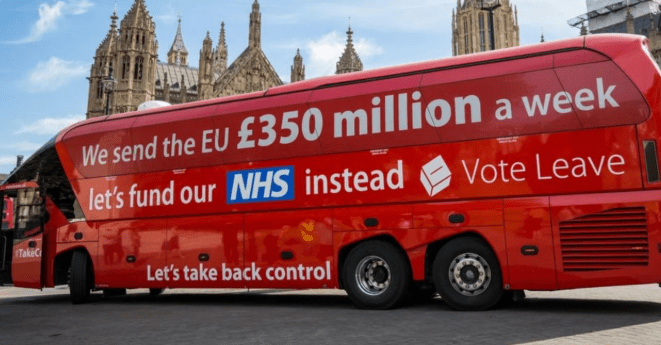
The slogan, “We send the EU £350 million a week. Let’s fund our NHS instead”, became one of the most visible and influential messages of the entire referendum campaign.
The pledge was discarded almost before the votes had finished being counted.
Within hours of the Leave victory being declared on the morning of 24 June 2016, Farage appeared on ITV’s Good Morning Britain and was asked whether he could guarantee the £350 million would go to the NHS.
His answer was unambiguous: “No I can’t, and I would never have made that claim. That was one of the mistakes that I think the Leave campaign made.”
When the presenter pointed out that the bus had driven around the entire country displaying the pledge, Farage said: “It wasn’t one of my adverts, I can assure you!”
The echo across a decade is striking. In 2016: a pledge on a vehicle bearing Brexit branding – a cause with which he was virtually synonymous – disowned hours after the votes were counted with the claim that it was somebody else’s work.
In 2025: pledges on leaflets bearing his photograph, disowned months after the council elections with the claim that nothing with his name went on them.
In neither case did it occur to him to distance himself at the time from the promises being made, even though he would inevitably be associated with them.
In both cases, millions of voters made decisions, at least in part, based on promises that were later declared never to have been made.
The pattern
What makes the council tax episode particularly telling is that, unlike the Brexit bus, which Farage could at least claim was a Vote Leave production rather than a UKIP one, these local election leaflets were distributed under the Reform UK banner, in Reform UK campaigns, in some cases promoted by Reform UK’s own central social media account.
The party’s own councillors have since told PoliticsHome that the mistake of promising tax cuts should not be repeated ahead of the May 2026 local elections. That internal admission is as candid an acknowledgement as one is likely to get that the pledges were real, were made, and were broken.
Thirty year trick
This is a pattern going back the better part of thirty years, and the script barely changes: the pledge is made loudly, in large type, on the side of a bus or the front of a leaflet. Maybe not by him but by others so closely identified with him that the distinction is gossamer thin.
And then comes the denial, accompanied by a look of bemused innocence and a suggestion that the person asking the question has rather stupidly misunderstood what was meant in the first place.
The remarkable thing is that it just keeps working.