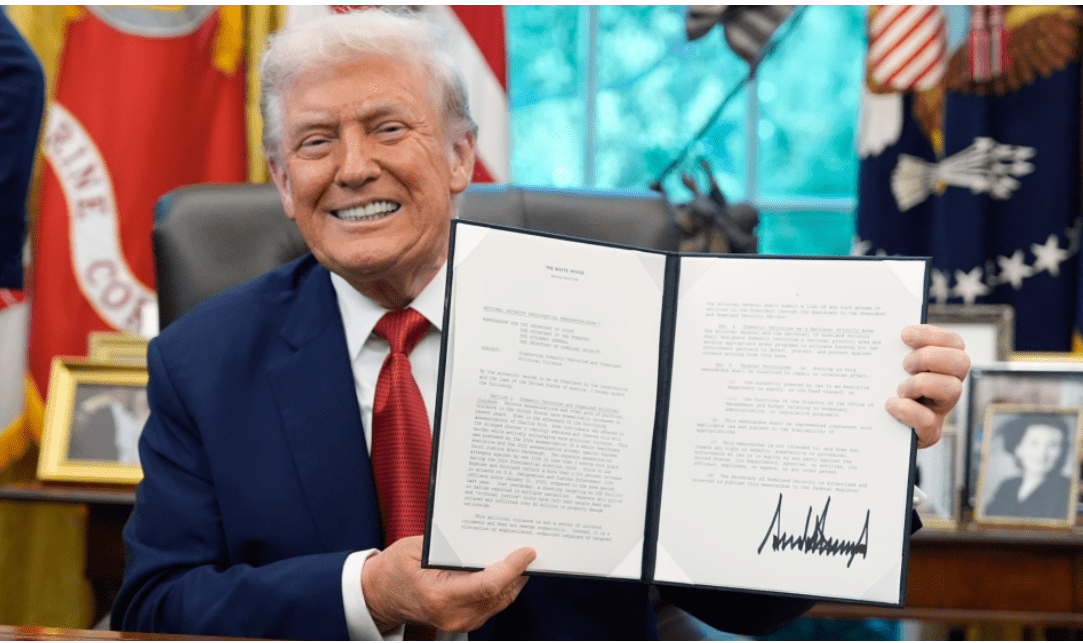
The Trump administration is planning an international summit this summer aimed at what it calls the threat posed by “antifa” and allied left-wing movements.
According to Reuters, senior State Department figures are organising the gathering with the intention of building intelligence-sharing arrangements and coordinated policy responses among allied governments.
If that reads like a parody of counterterrorism priorities, that is because it essentially is.
Far-right threat
The timing is instructive. Despite the main terrorism threat in Europe and the USA for years being from the far-right, the Trump administration’s response has been to look the other way and conjure up a different enemy.
But as they well know, “Antifa” is not an organisation. It has no membership rolls, no leadership structure, no command hierarchy. It is, in practice, a label applied to anyone who turns up to oppose fascists on the street.
Since returning to the White House, Trump has signed executive orders attempting to designate antifa as a terrorist organisation, and his Justice Department has pursued prosecutions using sprawling conspiracy charges to criminalise political opposition.
The pattern is consistent: redefine dissent and opposition as terrorism, then prosecute accordingly.
Export model
The proposed summit is plainly designed to export that model abroad. Encouraging allied states to adopt Washington’s framework risks embedding a politicised conception of terrorism in the policy frameworks of governments that ought to know better. The danger is, of course, that they will crumble in the face of pressure and threats emananting from Washington.
Once those definitions are institutionalised -in law, in intelligence-sharing protocols, in proscription lists – they will acquire a momentum of their own. Surveillance follows. Prosecutions follow. The line between violent conspiracy and lawful opposition to the far-right dissolves.
This development will need to be watched carefully.