My father was a World War II veteran. Decorated. Medalled. He fought across continents against a monstrous ideology that threatened to engulf the world in darkness. For him, and for his generation, Remembrance Day was a sacred contract: a promise to honour the fallen by ensuring such a war would never happen again.
He would be horrified by what he would see today.
Solemn hypocrisy
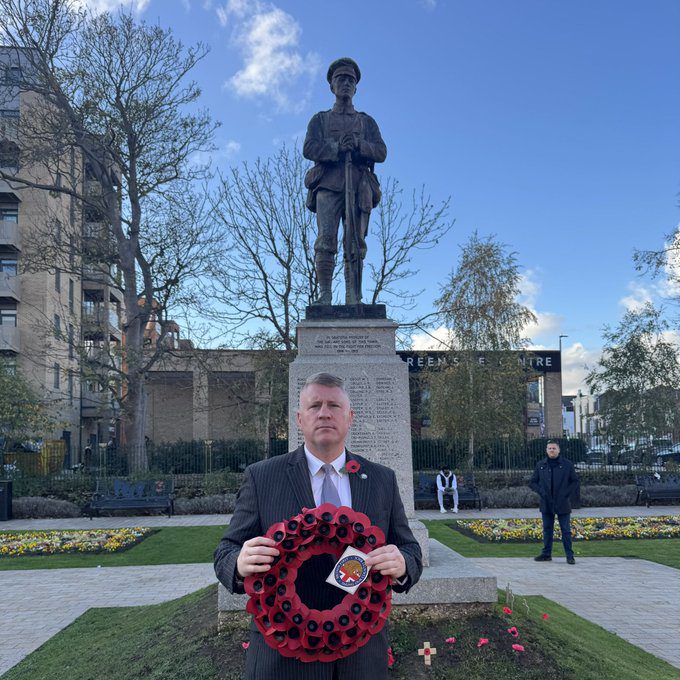
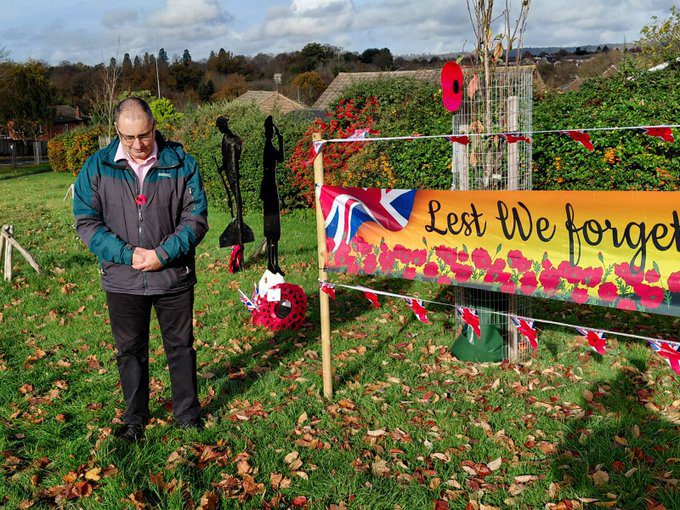
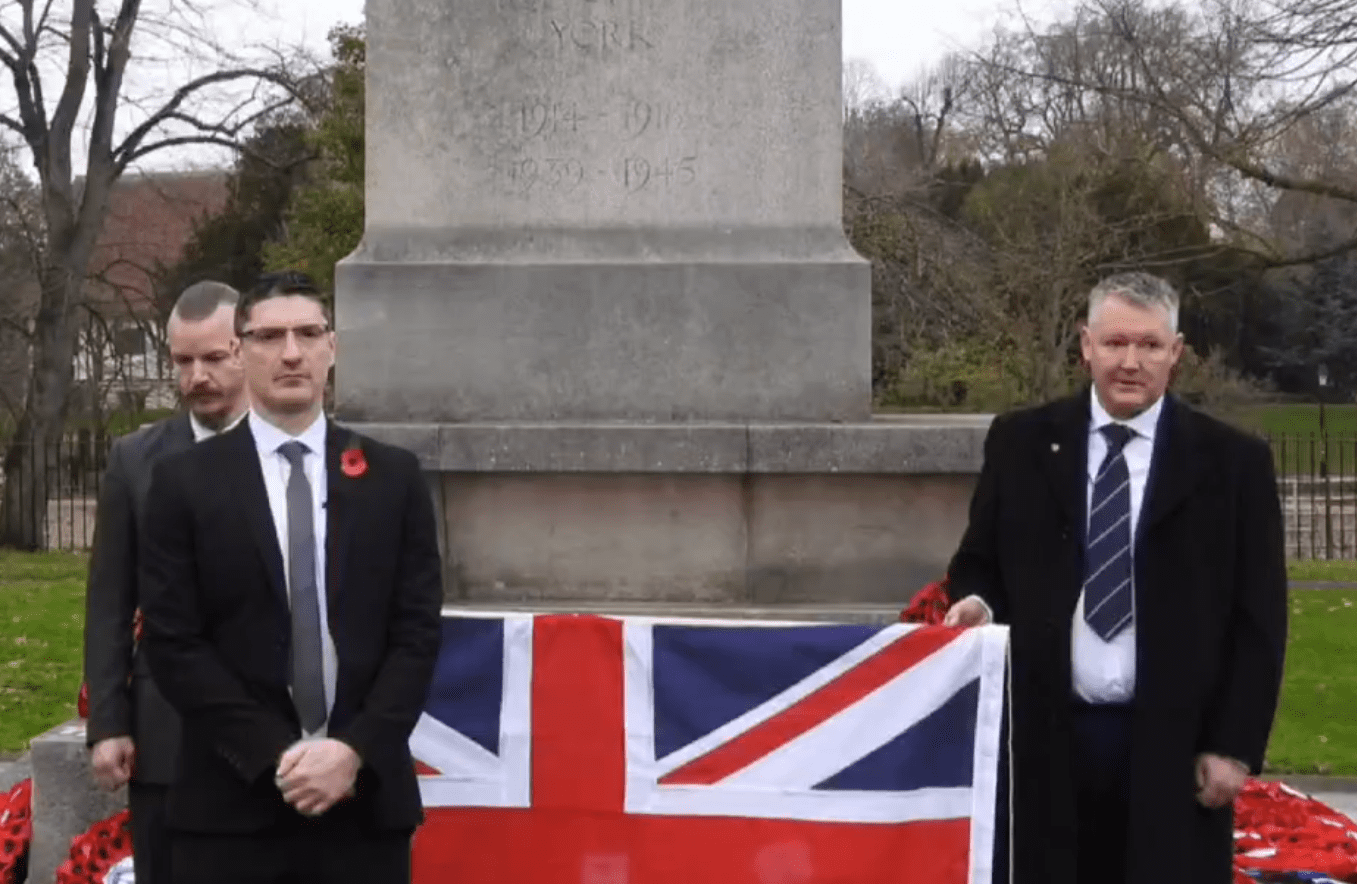
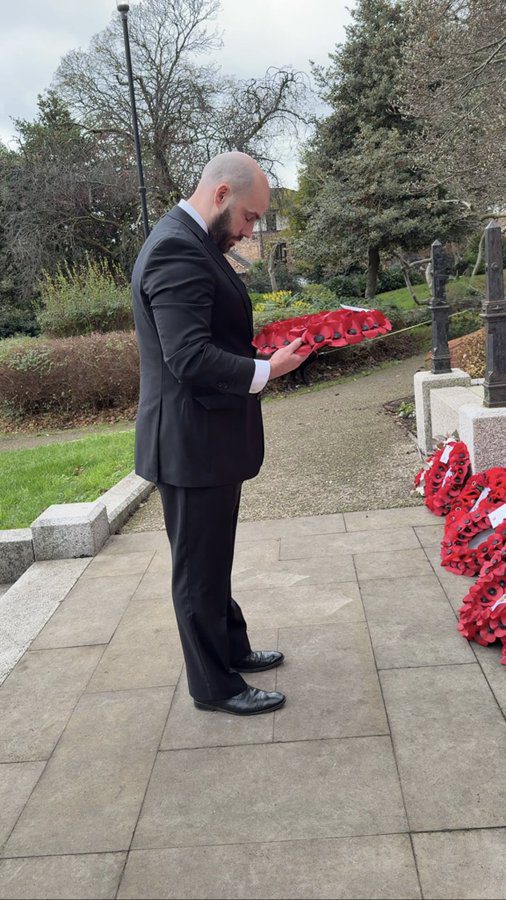
Yesterday, we witnessed activists from Britain First, the British Democrats, and other far-right groups inserting themselves into our national act of remembrance.
To see them there, standing in solemn hypocrisy, fouled the day’s events.
For in the 1930s, and in the immediate post-war period, their ideological ancestors did not just sympathise with the enemy—they actively marched for him. They marched under Oswald Mosley.
They were traitors then. They are traitors still.
The presence of these groups is not a coincidence or a simple political disagreement. It is the latest manifestation of an ideological poison that has learned to adapt, but never to die.
To understand why their presence at a war memorial is such a profound betrayal, we must follow the thread from Mosley’s Blackshirts to the suited activists of today.
The unbroken line from Mosley
The ideological foundations of these groups are not just “influenced by” historical fascism; they are directly connected to it.
In the 1930s,Mosley’s BUF advocated for a corporate state, espoused virulent antisemitism, and employed paramilitary “Blackshirts” to intimidate opponents. They were a British-made copy of the continental fascism our fathers would soon be sent to fight.
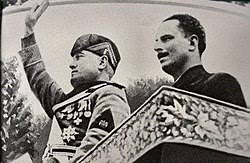
After the war, with fascism discredited, Mosley didn’t disappear. He rebranded. His new project, the Union Movement, shifted its rhetoric.
Pivoting from pure nationalism, it began advocating for “Europe a Nation” – a pan-European, white superstate. This was the first great adaptation: a move from narrow nationalism to a broader, ethnically exclusive identity, a concept that still underpins much of the modern far-right’s “pan-European” rhetoric.
How does an ideology responsible for the Holocaust and a world war manage to survive? It evolves, like a virus.

While Mosley’s pre-war movement was explicitly and obsessively antisemitic, his post-war rhetoric, and that of his successors, increasingly focused on a new target: immigration.
Forced repatriation
By the 1950s, his campaigns were built on the prohibition of “mixed race” marriages and the forced repatriation of Caribbean immigrants.
The tactic of redirecting public anxiety and hatred onto a new minority group remains the central play in the modern far-right handbook.
To rehabilitate Nazism, Mosley and his contemporaries became early architects of Holocaust denial. He dismissed evidence as fakes and claimed Hitler was unaware of the Final Solution.
This created a foundational conspiracy theory that allows contemporary extremists to deny the very historical reality that Remembrance Day is meant to consecrate. They can cloak themselves in the honour of the war dead while secretly dismissing the core reason for the war.
Repackaged ideology
These groups have learned to wrap themselves in the symbols of national identity – the flag, the military, the poppy – while subverting their true meaning. They claim to “protect” Britain, but their vision of Britain is the same exclusive, authoritarian state that Mosley promised.
Attending a remembrance event is the ultimate act of this hijacking: pretending to mourn the destroyers of fascism while promoting its repackaged ideology.
A history of resistance to remember
But the story of Britain in the 1930s is not just one of fascist organizing. It is a story of massive, courageous, and effective resistance – a tradition my father was part of.
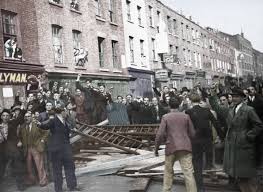
We must remember the Battle of Cable Street in 1936, where up to 300,000 trade unionists, communists, anarchists, and Jewish residents stood together and blockaded the streets with the cry, “They shall not pass!” They stopped Mosley’s march, and that public defeat was a critical blow to his momentum.
And we must remember the “43 Group”, formed after the war by Jewish ex-servicemen who had seen the face of Nazism first-hand. They refused to let Mosley regroup, confronting his meetings directly and driving his movement back into the shadows.
This short film tells their story:
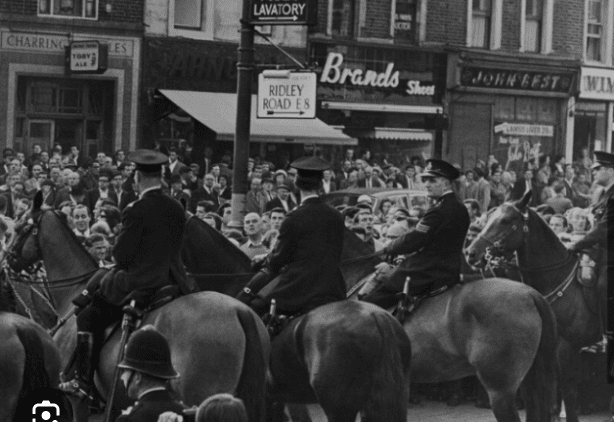
And, of course, we remember the 62 Group, who emerged to fight Colin Jordan’s National Socialist Movement and other resurgent nazi groups in the 1960s, and in whose direct line of succession Searchlight proudly stands.
The national Remembrance is not a passive act of looking back. It is a contract with the past that obligates us to act in the present. The promise made by my father’s generation was not just to lay wreaths once a year, but to ensure their sacrifice was not in vain.
When groups whose ideological forebears would have cheered for the Third Reich stand at the Cenotaph, they are not honouring the dead. They are spitting on their graves. They are attempting to steal the valour of the very people who fought to destroy them.
Defilement
My dad did not fight for their version of Britain. He fought against it. To see them at a Remembrance event is to witness the ultimate act of historical theft and defilement. We must call it out.
We must, like the veterans of Cable Street and the 43 Group, deny them the respectability they so desperately crave.
We owe that to the memory of every soldier who fell. We owe that to the memory of men like my father.
Lest we forget.