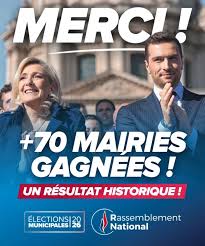
France’s two-round municipal elections, held on 15 and 22 March 2026, have produced a verdict on the far right that is simultaneously a record performance and a strategic disappointment.
The Rassemblement National (RN) and its allies made historic inroads across hundreds of small towns, yet failed to crack the major urban centres it had identified as the symbolic prizes that would prove its fitness to govern nationally ahead of the April 2027 presidential election.
The picture for Reconquête, the harder-edged nativist party of Éric Zemmour, was similarly mixed: notable in Paris but marginal elsewhere.
Patient colonisation
The RN and allied groups finished first in at least 75 communes in the first round, compared with just 11 in the first round six years ago.
More than 500 far-right candidate lists won at least 10% of the vote, roughly double the number in the 2020 municipal elections and higher than the previous record set in 2014.
These are not trivial numbers. They represent a steady, patient colonisation of local government that anti-fascists cannot afford to dismiss.
Local dynamics
Yet the geography of these gains is telling. Most of this progress came in towns with fewer than 10,000 residents, where local dynamics often favour political movements that contest the national political direction.

The RN re-elected its incumbents in existing strongholds. Louis Aliot secured re-election in Perpignan with 50.61% of the vote in the first round itself, while mayors in towns including Beaucaire were also re-elected outright in the first round.
In the larger cities, the RN arrived at the second round in a strong position in theory. In Marseille, the Socialist incumbent mayor Benoît Payan narrowly led the first round with 36.7%, just ahead of RN candidate Franck Allisio on 35%.
The RN also topped the vote in Toulon and possibly Nîmes, raising the possibility of further major city victories if it could broaden support in the second round.
Significant figure
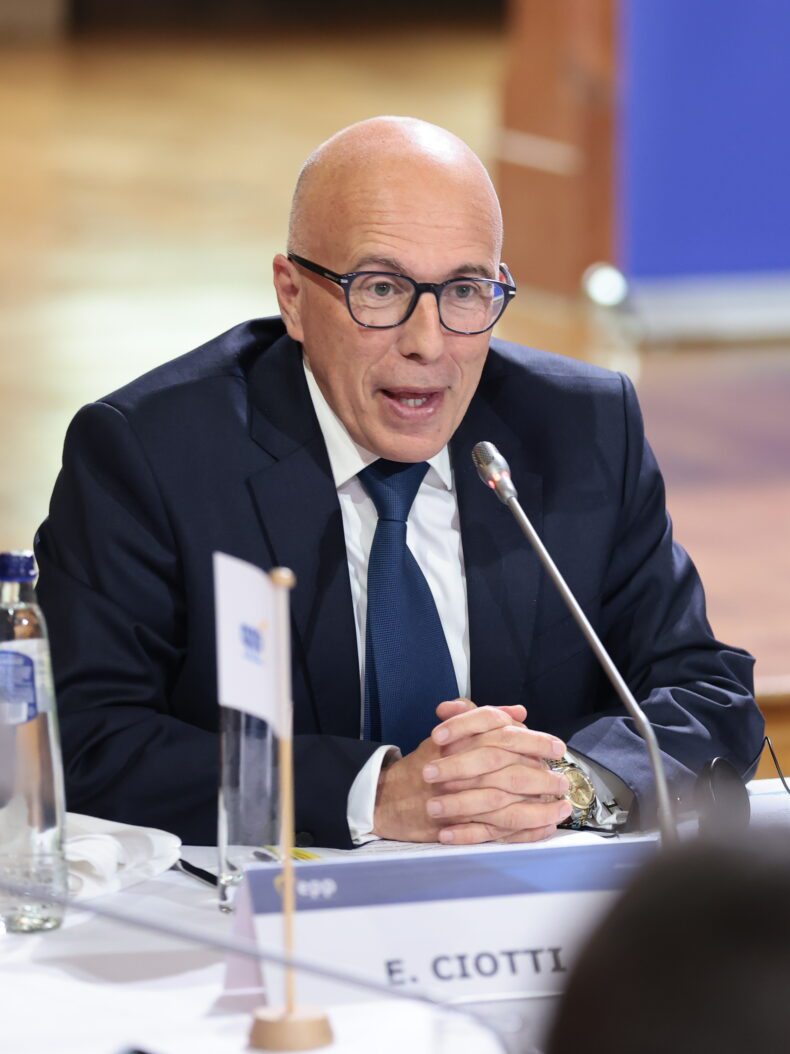
In Nice, Éric Ciotti, leader of the right-wing UDR party allied with the far right, finished well ahead of his rival Christian Estrosi.
Ciotti is a significant figure: a former stalwart of the mainstream Gaullist right who crossed the floor to ally with Le Pen during the 2024 snap legislative elections, personifying the accelerating collapse of the cordon sanitaire between the centre-right and the far right.
Le Pen’s party’s hopes of winning its largest cities yet were dashed last weekend as its candidates suffered defeat in the cities of Toulon and Nîmes, a week after leading the first-round vote in both.
The mechanism was familiar: the Republican Front, tactical voting by otherise rival parties rallying behind whoever can stop the far right.
RN’s chances of winning Marseille took a hit after the withdrawal of a left wing candidate from France Unbowed (LFI), aimed at uniting left-wing voters.
The results in the three most closely watched cities were unambiguous.
In Marseille, incumbent mayor Benoît Payan was re-elected on more than 54% against around 39% for the far right. In Nîmes, the RN also fell short, losing to a united left-wing list. In Toulon, RN candidate Laure Lavalette was defeated despite a strong score of more than 47%.
Resilient anti-right vote
That Toulon result deserves particular attention. Defeats like the one in Toulon, where the RN candidate had a 13-point lead over her nearest challenger in the first round, suggest the anti-far-right vote is resilient, at least in large urban centres.
Turning a 13-point first-round lead into a second-round defeat is a brutal lesson in how French electoral mechanics can punish the far right when opponents coordinate. RN candidates found no runoff partners.
The party’s continued inability to peel off allies for the second round, despite Bardella’s public calls for cooperation with “sincere right-wing lists”, remains its most significant structural weakness.
Unambiguous prize
The one unambiguous urban prize was Nice. The most significant result for the far right came there, where Éric Ciotti claimed a landmark victory with around 47.7% of the vote, ahead of incumbent mayor Christian Estrosi.
The result marks one of the party’s most important urban gains. Nice is France’s fifth-largest city. It matters. But it was won by an RN ally operating under a different party label, not by the RN itself, which is a distinction that will be significant when assessing the party’s independent electoral reach.
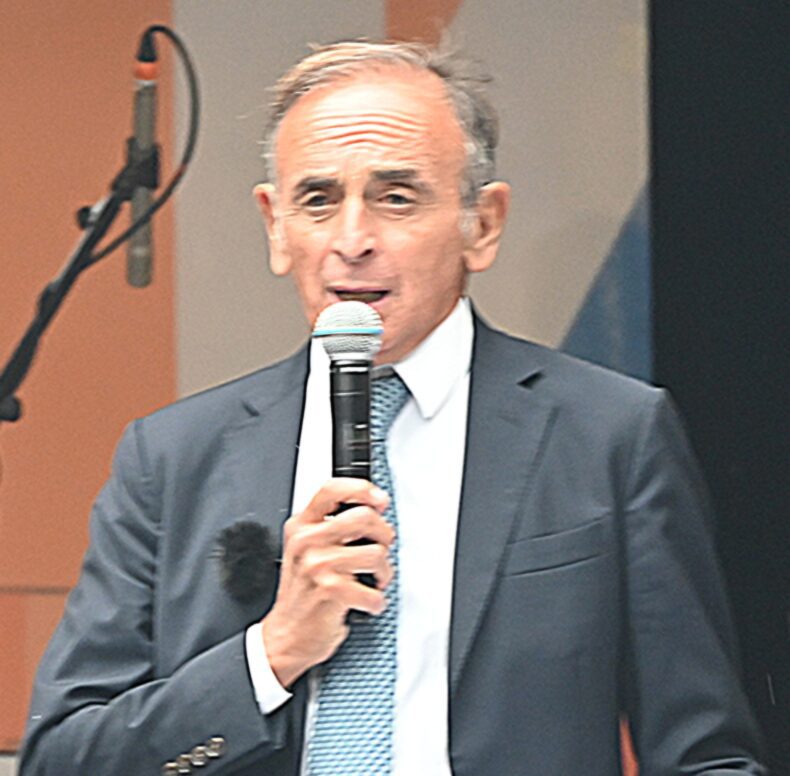
Eric Zemmour’s Reconquête party, the harder-line identitarian outfit to the right of the RN, had a curious election.
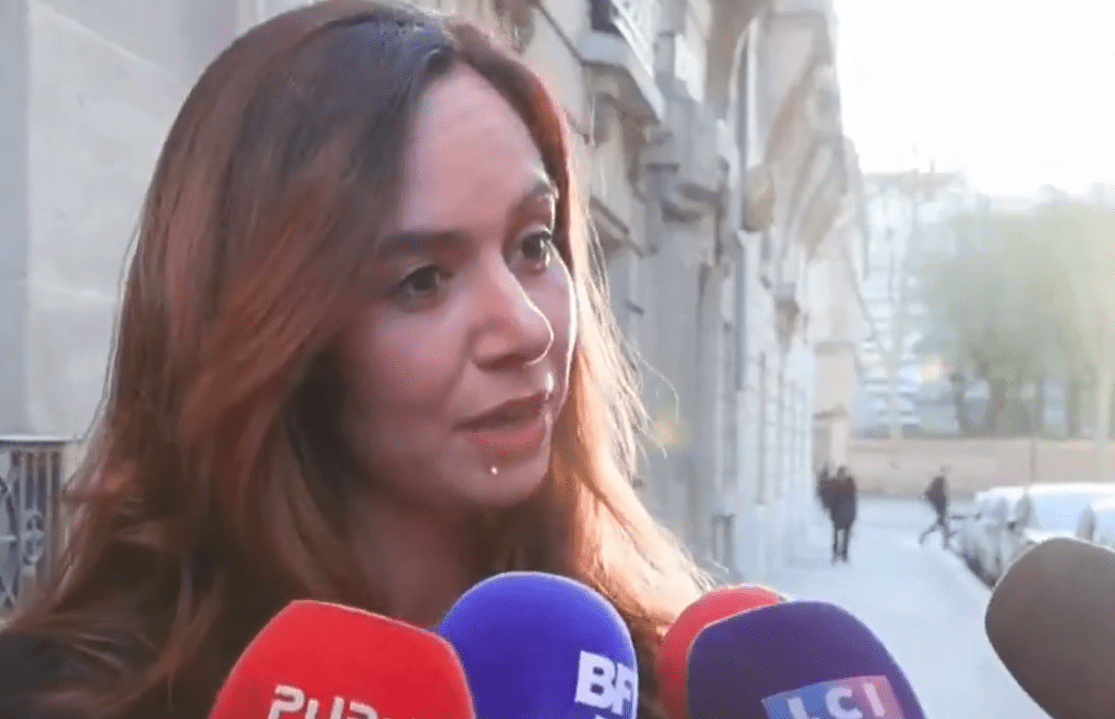
Its candidate in Paris, MEP Sarah Knafo, ran a disciplined campaign targeting the middle class, conservative voters of the western arrondissements, a deliberately different electorate from the RN’s working-class base.
Knafo scored 10.4% in the first round across the city, with her list in the 16th arrondissement reaching 22.6%, and 12.98% in the 8th arrondissement.
Narrowest margin
She qualified for the second round by the narrowest possible margin. What followed illustrated the chronic disunity of the French right.
Knafo sought an alliance with the mainstream conservative candidate Rachida Dati of Les Républicains (LR), framing it as an “union des droites”, an ideological project she had championed throughout the campaign.
Dati declined, and Knafo then withdrew her candidacy, endorsing Dati in an effort to prevent the Socialist list from winning.
It did not work. Dati conceded defeat as the Socialist Emmanuel Grégoire won with an estimated 51 to 53% of the vote.
When combined, Reconquête and the RN totalled roughly 12% in Paris in 2026, compared to almost 14% for both parties together at the 2022 presidential election, suggesting no dramatic breakthrough for the far right in the capital.
In Paris at least, the RN’s Thierry Mariani was effectively invisible, obtaining only 1.5% of the vote, a score that Zemmour pointedly contrasted with Knafo’s 10.4%.
Hailed ‘breakthrough’
The RN’s leadership was, predictably, defiant. Jordan Bardella hailed “the biggest breakthrough in its entire history,” alluding to wins in local constituencies where it previously had no presence.
The territorial implantation of the far right across hundreds of small communes is real. Local councillors and mayors are the infrastructure of French political life.
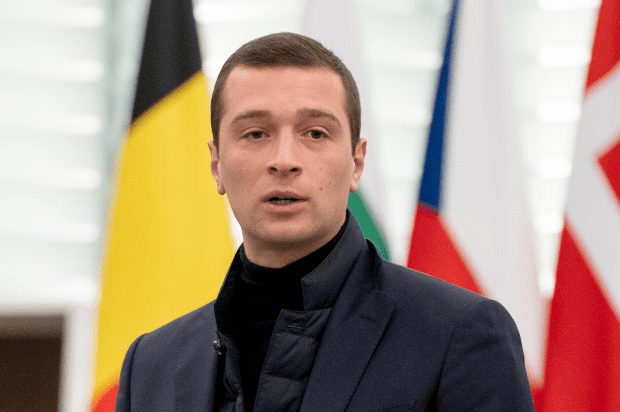
Securing endorsements from mayors to stand as presidential candidates has been a significant hurdle for parties with few local officials, meaning the municipal gains do have a direct bearing on 2027.
But the urban failures expose a fundamental problem. The RN has so far struggled to make meaningful gains in large urban areas where voters remain hostile to the Le Pen brand.
Permeability
There is a growing permeability between the traditional right-wing party and the far right, but in the cities, that has yet to become an electoral alliance capable of breaking through.
But the broader picture, going into the presidential cycle, is one of a far right that has successfully normalised itself at the local level across swathes of rural and small-town France.
Marine Le Pen’s trial has been shaping the political weather of the past year, and Jordan Bardella will enter the 2027 presidential race with a record number of local mandates, a proven ability to mobilise voters in smaller and medium-sized France, and an example in Nice of how to win cities through allied candidates rather than under their own banner.
The ‘Republican Front’ held this time. Whether it holds in a presidential run-off, with a more fragmented left and a weakened centre, is still an open question and will depend on the determination of anti-fascists to do whatever it takes in terms of tactical voting to stop them.