Denmark’s snap general election earlier this week produced a clutch of headlines about far-right gains, but they were not as dramatic as they are being portrayed.
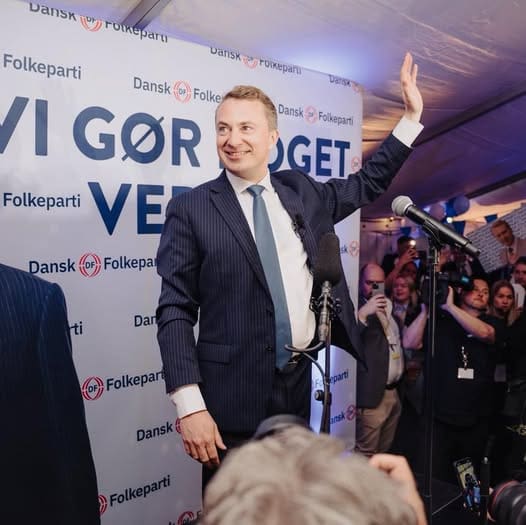
The biggest winner on the far right was the Danish People’s Party (Dansk Folkeparti, DF), which nearly trebled its vote share to 9.1 per cent, winning 16 seats. This was a dramatic recovery after its near-collapse in 2022, when it returned only five MPs.
Sweeping restrictions
Founded in 1995 as a hardline splinter from the Progress Party, DF rose to become one of the most influential forces in Danish politics during the 2000s and 2010s, routinely polling above 20 per cent and extracting sweeping immigration restrictions from successive centre-right governments in exchange for parliamentary support.
Its model – welfare nationalism for ethnic Danes combined with fierce hostility to Muslim immigration – became a template studied by far-right parties across Europe.
Second wind
After years of decline, partly eclipsed by newer rivals, the party appears to have found a second wind.
Leader Morten Messerschmidt ran a nakedly nationalist campaign and did not shy away from inflammatory rhetoric, calling for Muslims to leave Denmark entirely and making this a stated condition of his party’s support for any future government.
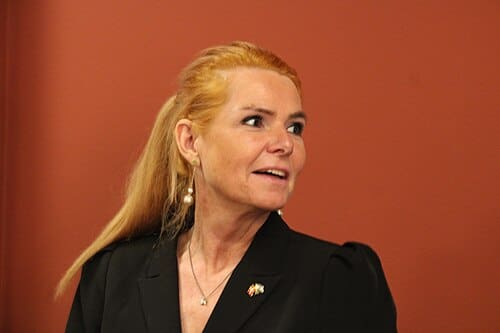
The Denmark Democrats (Danmarksdemokraterne), founded in 2022 by Inger Støjberg, and immediately joined by four formerly-DF MPs, held their ground with around ten seats, consolidating their position.
A more significant story, in the longer term, may be the arrival of Borgernes Parti (BP – the Citizens’ Party), which scraped into parliament with four seats.
Free market
BP is the brainchild of Lars Boje Mathiesen, a veteran of both Liberal Alliance and Nye Borgerlige (from which he was expelled). The party combines a hard line on immigration with a strongly free market economic agenda of radical tax cuts, shrinkage of the welfare state, and hostility to state regulation.
In this it differs from the older DF tradition, which historically championed welfare provision for ethnic Danes even while seeking to restrict who qualifies as one.

BP’s ideological DNA is closer to the free-market nationalism of its predecessor Nye Borgerlige than to the welfare nationalism of DF’s peak years. Crucially, BP crossed the 2 per cent threshold required to admit a new party to parliament, graanting it a share of the state party funding.
Redistribution of votes
Despite some excitable coverage, the overall picture is one of redistribution rather than growth. The three far-right parties combined – DF, Denmark Democrats, and BP – account for roughly 13 to 17 per cent of the vote: broadly where immigration-sceptic parties have polled for decades.
The collapse of Nye Borgerlige after 2022 largely accounts for the current reshuffling.
Meanwhile, neither the left nor right blocs secured a working majority, leaving the centrist Moderates, with 14 seats, as potential kingmakers. Coalition negotiations likely to prove protracted.