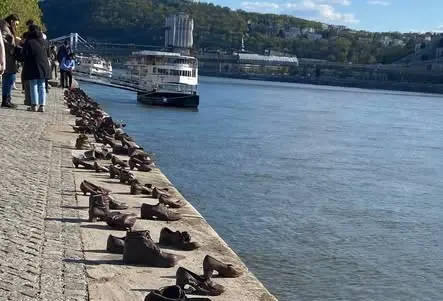
Each April, at this time, Budapest confronts one of the darkest chapters in its history: the mass murder of Jews from the city’s ghetto in the final months of the Second World War.
By late 1944, Hungary’s Jewish population had already endured ghettoisation, forced labour and the deportation of hundreds of thousands to Auschwitz.
Racial enforcers
In Budapest, the remaining community was crammed into a sealed district along the Danube, controlled first by the German occupiers and then by the Arrow Cross, the Hungarian fascist movement that revelled in its role as an enforcer of Nazi racial policy.
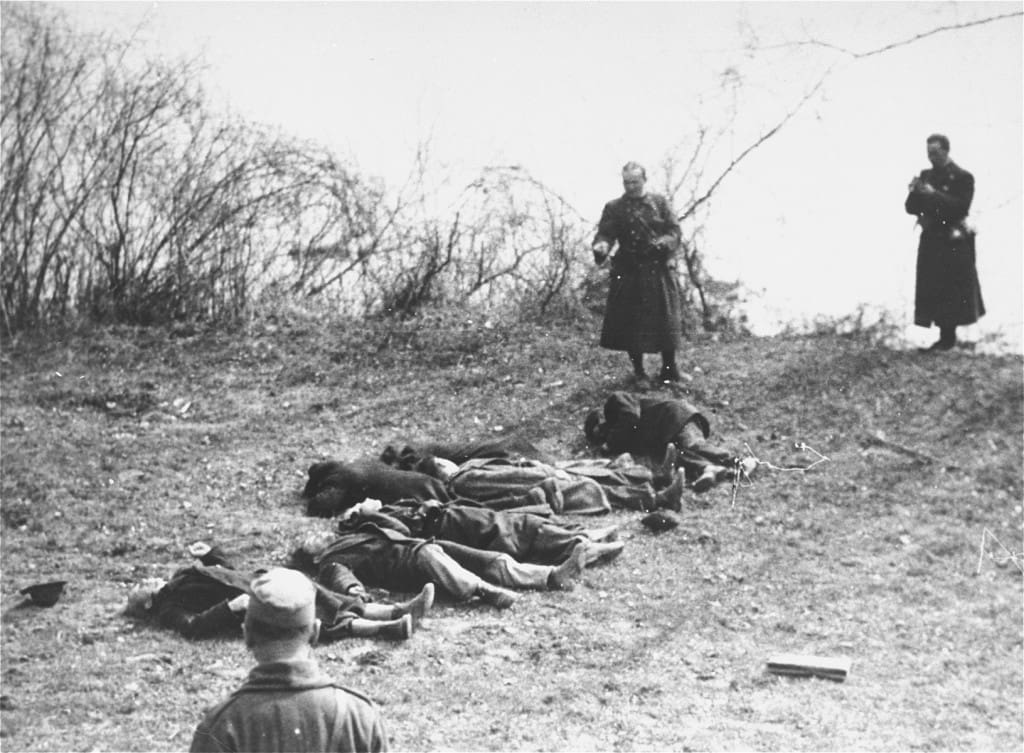
As the Soviet Red Army closed in, Arrow Cross gunmen embarked on a campaign of terror inside the ghetto: beatings, starvation, abductions and mass shootings on the riverbank.
Thousands murdered
Through late 1944 and 1945, thousands were murdered in the streets or dragged to the water’s edge, where victims were tied together, shot and thrown or left to fall into the Danube, their bodies never recovered.
Before being killed they were ordered to give up their shoes, which could be sold. Hence the memorial, comprised of rows of shoes, along the banks of the Danube, laid on this day in 2005.

Never again.