In the wake of Nathan Gill’s guilty verdict on multiple counts of bribery for taking payments in exchange for pro-Kremlin messaging, attention inevitably turns to Nigel Farage and Reform UK.
For reasons both historic and structural, the case serves as a spotlight on the deeper question: how far have Russian influence operations penetrated British politics, particularly in the Brexit era, and how might Farage and his circle have featured in that dynamic?
What follows is an analysis of four interlocking threads: Farage’s own response to the Gill verdict; Reform’s broader political standing and implications of Russian influence for its ambitions; Farage’s historic and documented ties to Russian-connected actors; and the wider context of financial networks – particularly via Dubai and the UAE – that form part of the global grammar of influence.
Farage’s response to Gill
Farage and Reform UK have sought to frame the Gill verdict as an isolated incident, distancing themselves from Gill’s admitted misconduct. Farage publicly described Gill as a “bad apple”, and insisted that Reform is “structured differently” to the Brexit Party with internal checks to prevent such behaviour.
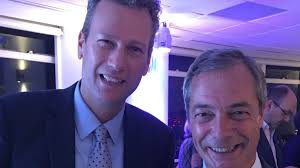
But the timing is politically sensitive: Gill was once one of Farage’s trusted aides, closely involved in his Brexit-era campaigns and in Welsh politics under the Reform banner.
In Wales, Reform has enjoyed a surge in support with candidate selection, ground-organisation and messaging having improved dramatically. But trust is a fragile commodity. The narrative of foreign influence is now attached to Reform’s brand and questions have to be asked as to whether this might be proof of systemic vulnerability.
What happens next depends on how Farage and his team manage that reputational damage. Will they treat the Gill case as the actions of a lone actor or address the risk of external influence more openly ?
Reform’s impact and the Russia question
Reform is no longer a fringe party, polling strongly and positioning itself as the main challenger to the Conservative Party on the right.
But electoral strength brings exposure. Voters, media and regulators increasingly ask: who funds you, who advises you, what interests shape your messaging ?
The broader question: does the party’s growth present a vulnerability to influence operations?
The Gill verdict suggests that third-party actors seeking to shape the Ukraine/Russia narrative found access via pro-populist networks. That implies a structural risk: the same emotional populist messaging that drives Reform may make it more susceptible to external narratives. Analysts are already raising the point that Reform must “manage its own Russia problem”.
If Gill’s case is the tip of the iceberg, then Farage’s leadership and his party’s internal governance are now entering a zone of heightened scrutiny. It is one thing to win votes; it is another to defend them from being weaponised by foreign actors.
The Brexit-era narrative is again relevant: the 2016 referendum may have been a watershed, but the question of foreign interference did not end in 2020 and remains a live issue.
Farage, Russia and the web of connections
Farage’s engagement with Russian media is well documented: he appeared repeatedly on the state-controlled network RT (Russia Today) while an MEP, and was reported to have received payment for appearances.
He claimed that he received only some “small appearance fees” totalling less than £5000, and none sine March 2017.
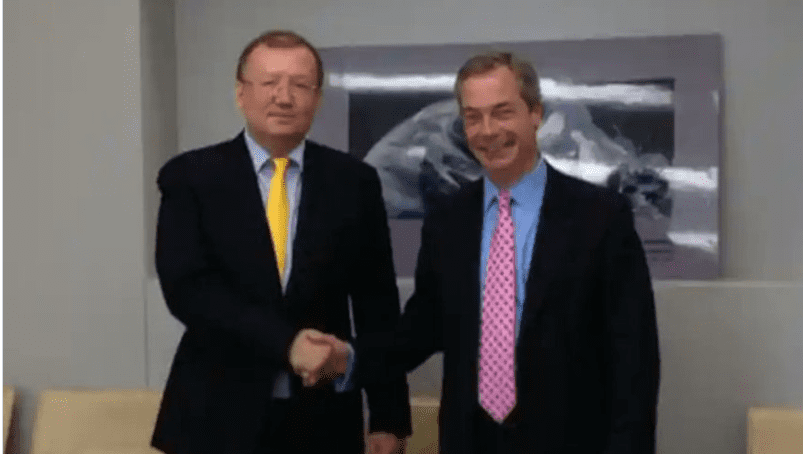
More concretely, Farage met Alexander Yakovenko, the then Russian Ambassador to the UK, in London on 13 May 2013 with the Russian Embassy website posting an official photo of Yakovenko greeting Farage.
Farage later denied having met the Ambassador, contradicting the photographic evidence, which placed the meeting on record.
For many observers this raises an obvious question: why was Farage meeting senior Russian diplomats at precisely the moment that Moscow was intensifying its campaign to influence Western Eurosceptic and nationalist movements ?
Farage and the US
Farage was a surrogate for Donald Trump and has close ties to his former advisers, including Steve Bannon and Roger Stone. These figures are often referenced in the context of the US investigations into Russian interference in the 2016 US election and the wider network of messaging, data-harvesting and social-media operations.
While Farage himself has not been convicted of wrongdoing in that domain, media reports in June 2017 stated that Farage had been identified by the Federal Bureau of Investigation as a ‘person of interest’ in its inquiry into potential collusion between associates of Donald Trump and Russian actors.
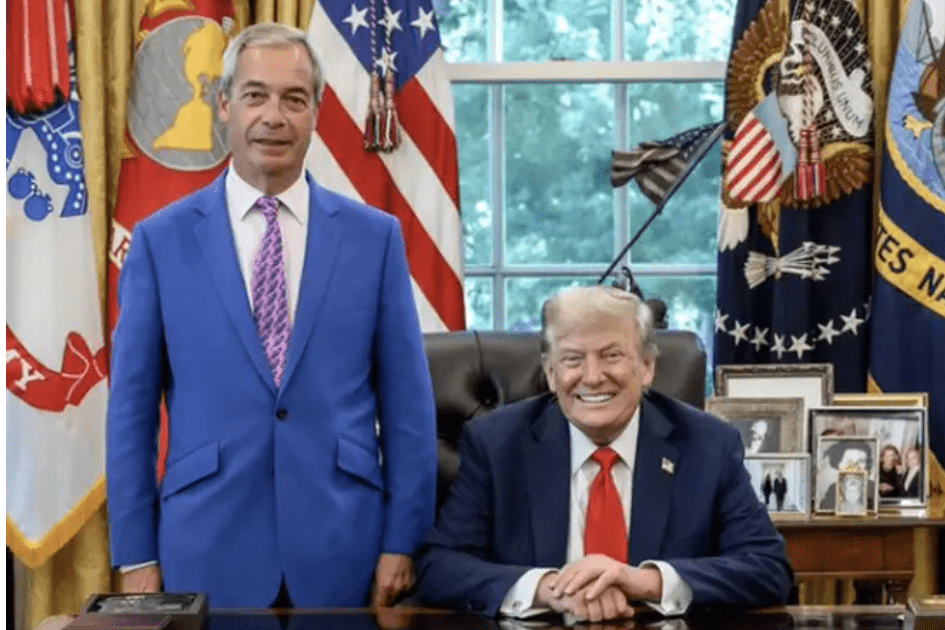
According to these reports, the FBI did not accuse Farage of wrongdoing or list him as a formal target, but investigators were said to be scrutinising his contacts and engagements in connection with the Russia-Wikileaks-Trump nexus.
Brexit – Russia’s opportunity
Specifically in the Brexit context, Russia is believed to have seen the UK referendum as a strategic opportunity. The UK Parliament’s Intelligence & Security Committee (whose findings were published in the so-called Russia Report) concluded that Russian efforts to influence UK politics were substantial, although it stopped short of concluding the referendum result was compromised.
Given that Farage was central to the Leave campaign, the question arises: what conscious or unconscious overlaps existed between his campaign messaging and the broader Russian strategic influence effort?
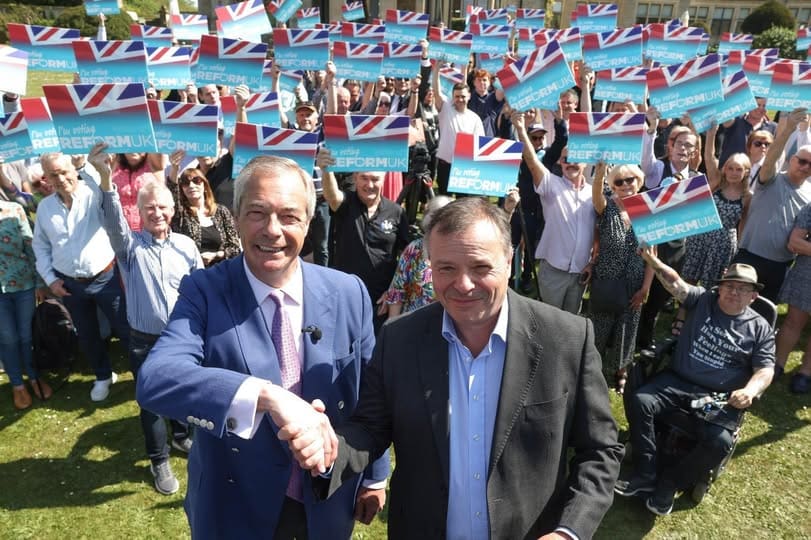
Few relationships defined the insurgent populism of the Brexit years more clearly than that between Nigel Farage and businessman Arron Banks. Banks’s fortune underwrote UKIP’s transformation into a serious electoral force and later powered the Leave.EU campaign that carried Farage to global notoriety.
Fusion of charisma and wealth
The two men were not merely political allies but social companions, photographed together from Bristol pubs to Trump Tower’s golden lift. Their collaboration fused Farage’s charisma with Banks’s money and digital reach.
Between 2015 and 2017, Banks is reported to have had multiple meetings with Russian embassy officials – including lunches with Ambassador Alexander Yakovenko – and was reportedly introduced to business opportunities in Russia (for example, a gold-mine deal) at a time when the referendum campaign was gearing up.
Banks insists no Russian money entered the Brexit campaign and that the meetings were personal or business-oriented and not politically motivated. Nevertheless, his contacts with Russia add an additional layer to the question of whether the campaign was open or digitised to external influence.
Rhetoric and geopolitical posture
Farage’s public statements in recent years show a pattern of criticism of NATO and the expansion of the European Union eastwards, arguments that align closely with Kremlin foreign-policy talking points.
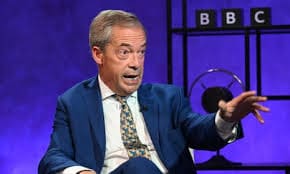
In June 2024, Farage appeared on BBC’s Panorama, where he stated that NATO and the EU had “provoked” Russia’s invasion of Ukraine by expanding eastwards.
He also expressed admiration for Putin’s political control over Russia, stating, “I said I disliked him as a person, but I admired him as a political operator because he’s managed to take control of running Russia.”
These comments were widely criticized by political leaders across the UK. Then-Home Secretary James Cleverly accused Farage of echoing Putin’s justification for the invasion, while former Defence Secretary Ben Wallace condemned his remarks as sympathetic to a leader who had used nerve agents on British soil.
Distancing from Putin
Farage later attempted to clarify his position, stating that while he believed the West had made foreign policy errors towards Russia, he was “not and never have been an apologist or supporter of Putin.” He also condemned the invasion as “immoral, outrageous and indefensible.”
In a 2025 interview with Bloomberg News, Farage further distanced himself from Putin, referring to the Russian President as “not a rational man” and “a very bad dude.”
He also stated that if he were elected Prime Minister, he would support shooting down Russian military aircraft if they entered NATO airspace and donating frozen Russian financial assets to Ukraine.
When backed into a corner, Farage does tend to present the Janus face.
Ukraine ambiguity
Reform UK’s official policy on Ukraine remains somewhat ambiguous also. While the party has not articulated a comprehensive foreign policy, individual leaders have made statements that have raised concerns.
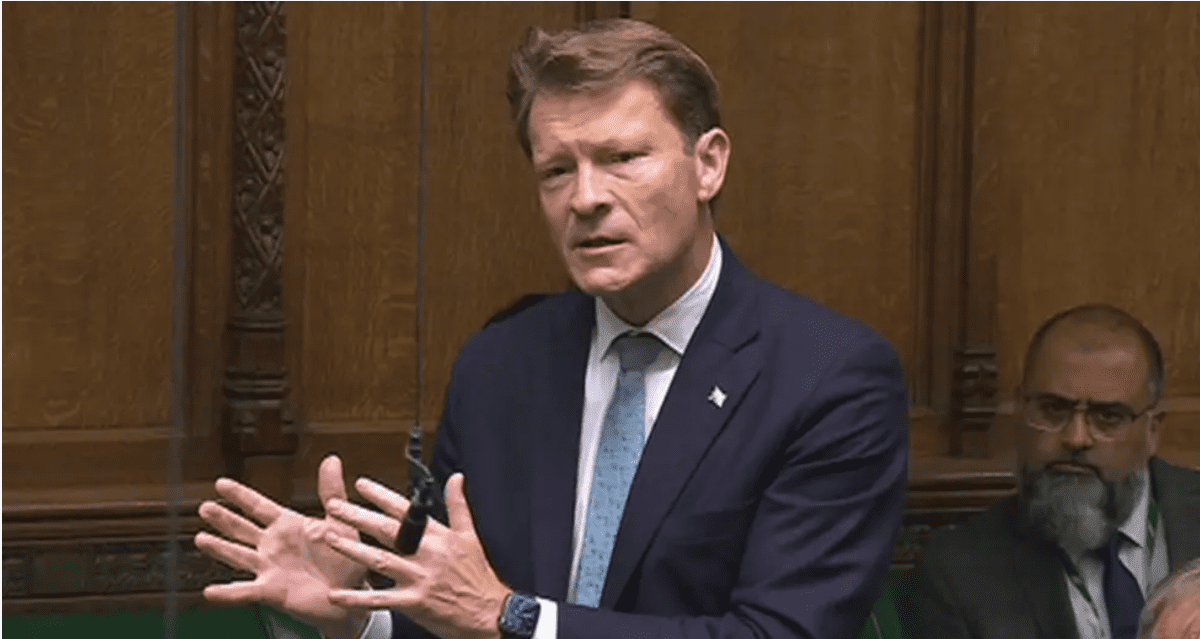
Deputy Leader Richard Tice suggested in August 2025 that Ukraine should not be admitted to NATO if it is an absolute red line for Russian President Vladimir Putin in peace talks.
This stance has been criticized for potentially appeasing Russian aggression.
Dubai, Russia and the influence ecosystem
Beyond politicians and media lies the infrastructure of global financial-flow, safe-havens and trading hubs, that less-visible but structurally essential layer of influence.
The United Arab Emirates (UAE), especially Dubai, has become a significant sanctuary and trading corridor for Russian capital, following sanctions and the war in Ukraine.
Analysts have noted that an overwhelming and increasing portion of Russia’s international trade now transits the UAE.
More narrowly, companies registered in Dubai are reported to facilitate the export of sanctioned Russian oil.
Russian hospitality
Deputy Leader, Richard Tice, the Reform MP for Boston and Skegness, is now dividing his time between his Lincolnshire constituency and Dubai, prompted by the relocation there of his partner, the right wing journalist Isabel Oakeshott.
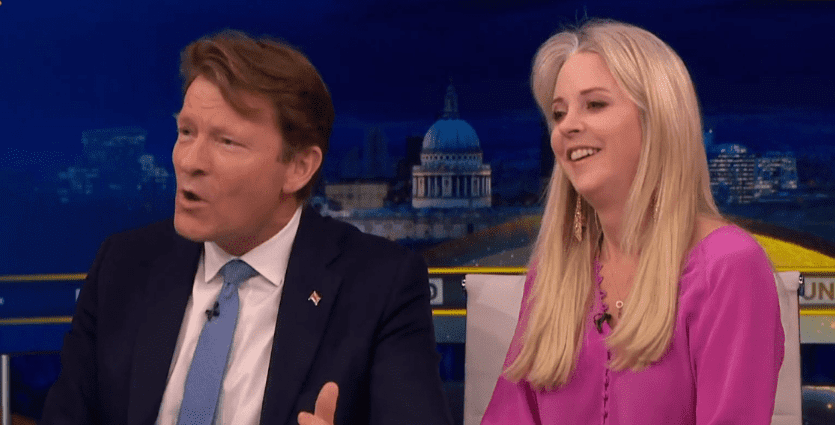
More significantly, the Register of MPs’ Interests shows that Tice accepted hospitality worth £1,400 from Lubov Chernukhin, for a stay at a French Riviera estate, described as involving discussions about UK gas-power.
She is married to Vladimir Chernukhin, a former deputy finance minister in Vladimir Putin’s government. Their many political donations have attracted scrutiny due to connections with Russian oligarchs and the timing of certain financial transactions.
In 2016, Vladimir Chernukhin received an $8 million loan from an offshore company linked to Russian billionaire Suleiman Kerimov, who has close ties to the Kremlin. This transaction was revealed in the 2020 FinCEN Files leak
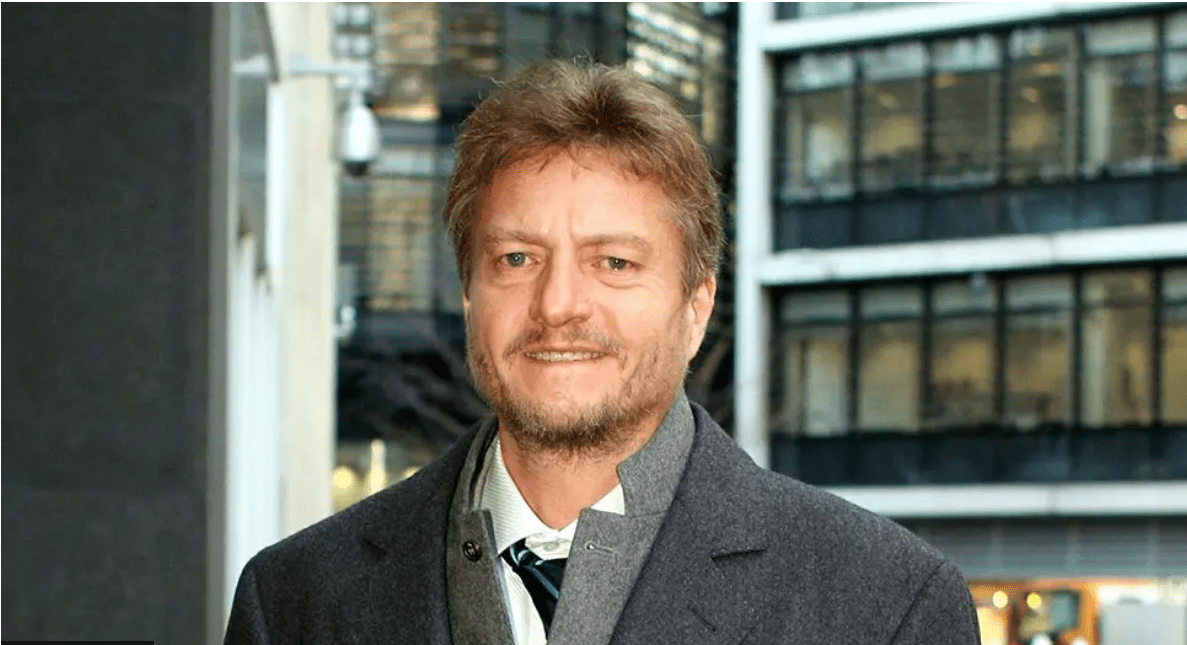
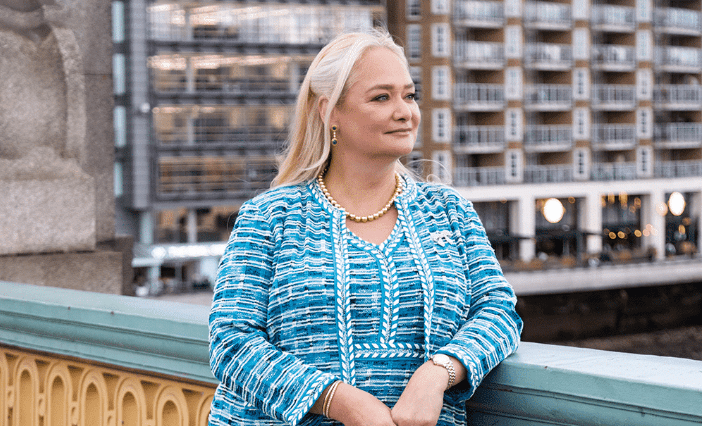
While no wrongdoing has been suggested in Tice’s case, the overlap of Russian connected individuals, Dubai residential/travel vectors, and senior figures within Reform UK illustrates how the influence ecosystem may span geography, finance and political networks.
A question therefore emerges: when senior party figures are located (even partially) in geographies associated with Russian trade-flows and safe-havens, how rigorously are potential conflicts of interest managed?
Corporate donors and Russia
In March 2025, The New York Times reported that one of Reform UK’s largest corporate donors had sold nearly $2 million worth of sensitive technology to a firm supplying Russia’s blacklisted state weapons agency, a transaction that took place just two days after Nigel Farage was announced as the party’s leader.
While there is no suggestion of wrongdoing by Farage or the party itself, the timing and nature of the sale underscored concerns about the ideological and financial networks surrounding Reform UK, particularly as the party navigated its emerging foreign policy profile on Russia and Ukraine.
Why this matters
- Narrative alignment plus access: The confluence of Farage’s media strategy, diplomatic meetings, campaign messaging and Russia-friendly rhetoric forms a pattern. It does not prove collusion but it does create a possible public policy risk.
- Structural vulnerabilities: Populist parties, with looser donor oversight and globalised networks, may be more exposed to influence operations than traditional parties. The Gill conviction confirms someone inside the network accepted payment to promote a Russian-aligned narrative.
- Financial flows and safe-havens: Influence is not just about speeches – it’s about money, access, hospitality, and global trading hubs. Dubai and the UAE matter because they show how Russian capital sidesteps sanctions and enters western systems. That such geographies intersect with the residence or travel of senior figures in Reform UK is a relevant issue.
- Electoral risk: For the UK’s democratic resilience, the combination of foreign influence and domestic populist disruption is dangerous. It’s not hypothetical as future election cycles will be fought in this environment.
- Policy implications: Party fundraising, media appearances, speakers’ interests and travel disclosures should all be subject to enhanced transparency. Voters should ask: who is funding you, who is hosting you, who are you meeting abroad and what might they want?
Questions for Farage and Reform UK
- How many times has Farage met senior Russian diplomats or Russian-state media executives? Are the records complete and publicly available?
- Does Reform UK maintain a register of third-party payments to its senior staff, particularly for overseas travel or media appearances?
- Given the hospitality accepted by Richard Tice from Lubov Chernukhin, what internal checks does Reform UK apply to hospitality/hospitality-origin declarations from individuals with Russian government affiliated backgrounds past or present?
- Given the Gill verdict, what internal procedure has Reform UK implemented to vet any foreign contacts of its rank-and-file candidates and advisers?
- What is Reform UK’s policy on transparency of donations, travel, hospitality, and overseas ties of senior party figures?
- How does Reform UK manage potential perception risks when senior figures spend extended periods abroad (e.g., Dubai) in jurisdictions known for high volumes of Russian capital flows?
Conclusion
The conviction of Nathan Gill has triggered a moment of reckoning. It is no longer sufficient for Reform UK to treat Russia-influence concerns as tangential. Given the documented intersections between Farage’s orbit and Russian-connected actors, the story has moved from “possible” to “material”.
Farage is a leading figure in UK public life, and the questions raised about his past relationships – media engagements, diplomatic meetings, campaign networks – merit further investigation.
Exactly how this plays out – whether as electoral liability, regulatory intervention or reputational damage – remains to be seen.
But one thing is clear: the combination of populist politics, global finance, media engagement and foreign messaging has created a nexus that is difficult to defend simply as mere coincidence. For the UK’s political system and the democratic integrity of its elections, the stakes are high.
From his past praise for Putin’s political acumen to his leadership of a party with donors engaged in controversial Russian-linked deals, Farage’s entanglements – personal, political, and financial – are now under intense scrutiny.
Over to you, Comrade Farage.