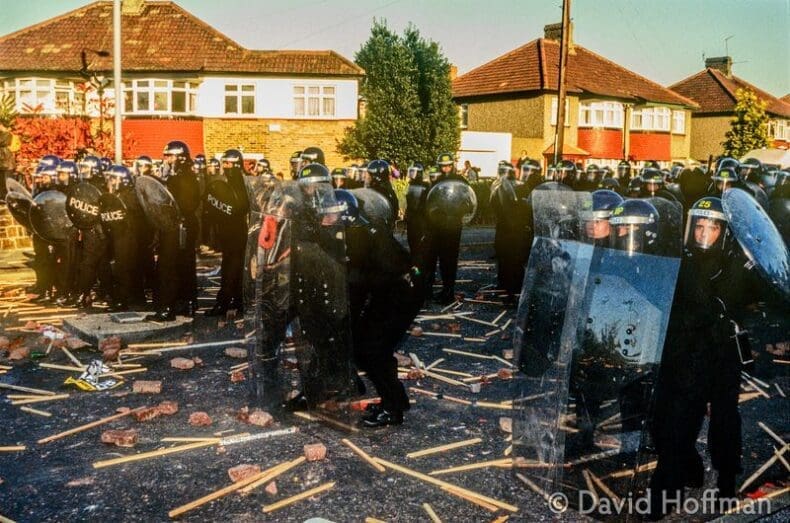
On October 16, 1993, a massive demonstration marched in Welling, south London, protesting against the presence there of a British National Party ‘bookshop’ – in fact, the party’s national organising base. It had been bought by Richard Edmonds, and ever since it opened, racial attacks and harassment in the area soared.
It was a huge demonstration of tens of thousands of anti-fascists, but it became violent as a result of extremely aggressive actions by the police who blocked it, contained it, then attacked it.
Several hours of fighting ensued and many anti-fascists were arrested. This editorial, from Searchlight in October 1995, highlighted what happened when some of these cases came to trial.

The scales of justice are out of balance
In our editorials of November 1993 and January 1995 we examined the events on the day of the mass march in Welling to protest against the presence of the British National Party’s headquarters. Our first account told of how a peaceful demonstration had been turned into a full-blown riot by police mismanagement on the day.
At Croydon Crown Court, as the trials of anti-fascists arrested at the march ended in a large number of acquittals, it became clear from the police’s own internal debriefing document that our allegations were correct.

Then the rest of the anti-fascists were sent to be tried at Maidstone. The result has been the jailing for up to three years of nine people, some of whom had pleaded guilty believing there was sufficient mitigation to earn them non-custodial sentences.
Judge Rogers hearing these cases clearly wanted to set an example that would warn anti-fascists off from asserting their democratic rights in the future. He stated that the march should not have taken place at all as the BNP had every right to be there, something the Department of the Environment has since ruled not to be the case.

He refused to consider the police tactics even though one officer said in court that their tactics “were to terrify demonstrators”. The massive media and police campaign at the time created an atmosphere of hysteria that still prevailed in Judge Rogers’s court.
The story that 200 police officers had been injured was whittled down to only five who needed to stay in hospital overnight, and one of the worst injured of those was beaten up by a person described as a BNP supporter.
One officer was said to have suffered a broken jaw and some teeth knocked out, but the hospital record showed this to be untrue. Dozens of marchers suffered serious head injuries.

Searchlight stated at the outset that if people had gone further than exercising their lawful right of self-defence and broken the law, they should be caught and convicted. But the scales of justice are not balanced.
How can the Crown Prosecution Service claim that it cannot proceed against two Combat 18 leaders who have admitted a violent assault on two women because of media coverage of their actions, when 14 anti-fascists can be tried and convicted after nearly all the media carried exaggerated claims about what they had allegedly done and their photographs were seen on police wanted lists on television and in the press?