When the Israeli football team Maccabi Tel Aviv visit Villa Park on 6 November for a Europa League fixture, there will be no away fans in the stands – not because of football rivalry, but because of fears that extremists could hijack the event.
And at the centre of the controversy sits Tommy Robinson, whose intervention scuppered any possibility of Maccabi fans attending the game
Risk of disorder
In October, West Midlands Police and the local Safety Advisory Group (SAG) classified the Villa v Maccabi tie as high risk after intelligence and risk assessments suggested potential for serious disorder.
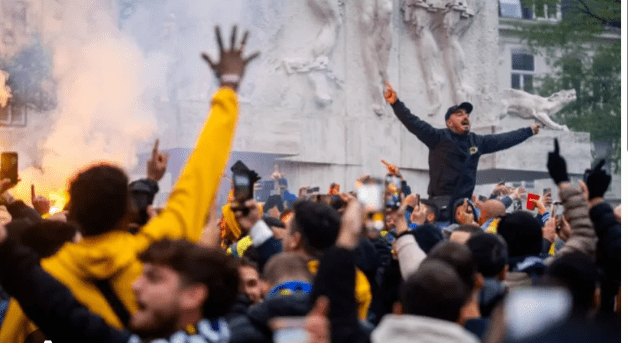
Maccabi fans do have a reputation for disorder. There were violent confrontations with local Muslims when they played Ajax in Amsterdam last season.
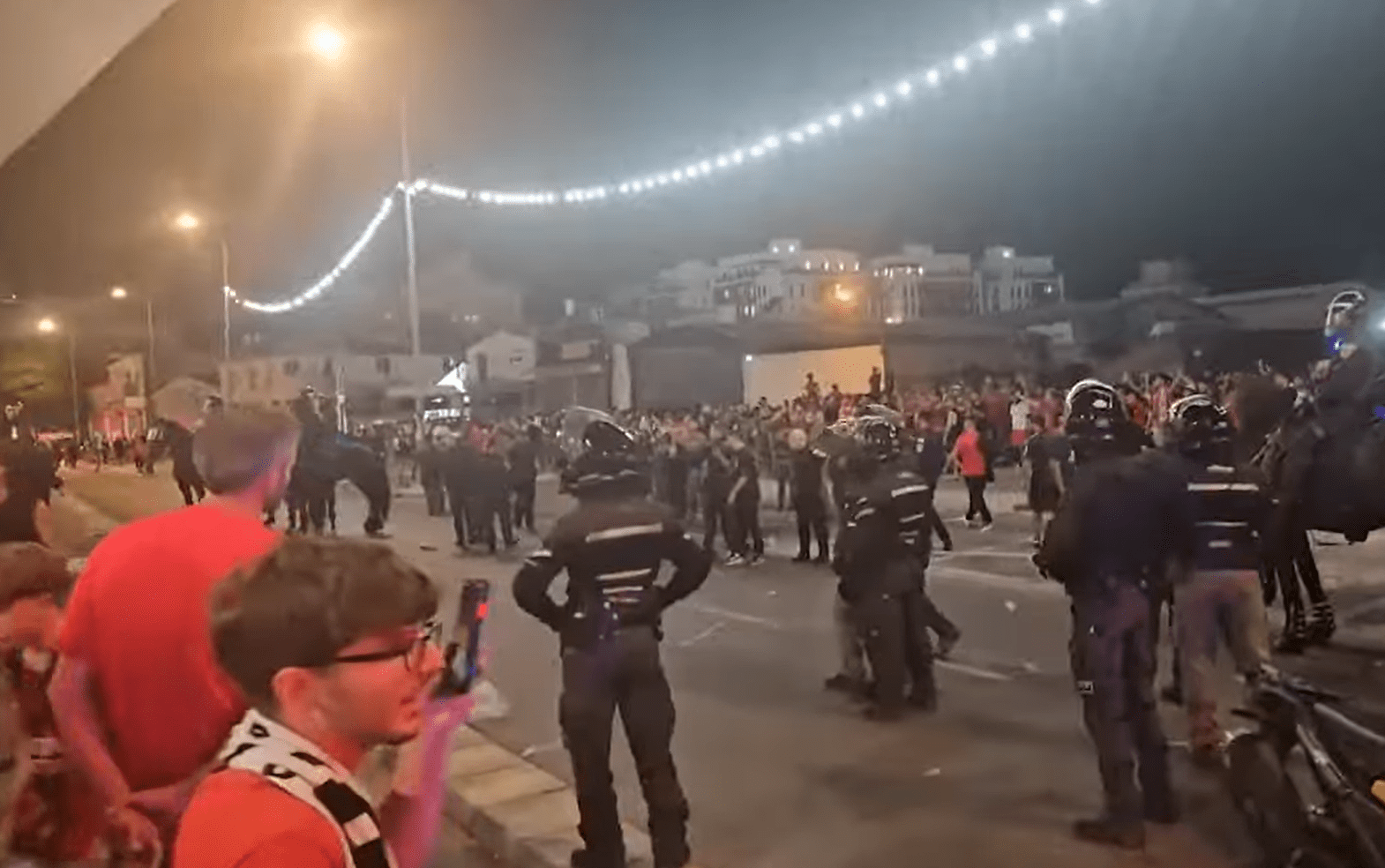
And only last weekend, police in Tel Aviv called off a local derby match against Hapoel Tel Aviv shortly before the kick-off, responding to “public disorder and violent riots”.
Safety concerns
Citing safety concerns, the SAG advised that no away fans be permitted to attend.
Maccabi Tel Aviv initially protested, insisting their supporters had on many occasions travelled peacefully across Europe.
Others weighed in supporting Maccabi and opposing the ban. Keir Starmer called it “the wrong decision,”, suggested that it smacked of capitulation to antisemitism, and insisted that football fans “should be able to attend matches without fear.”
The Home Office ordered a review of West Midlands Police’s risk assessment.
Risks from external groups
Then, within days, Maccabi reversed course. It announced it would not take any ticket allocation, even if the ban were lifted, because of the risk posed by “external groups unconnected to our club”
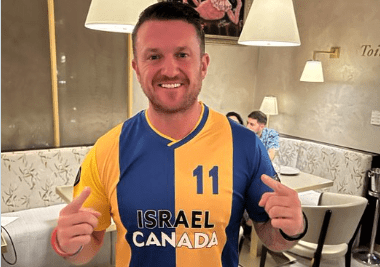
The shift followed a post by Robinson – real name Stephen Yaxley-Lennon – who uploaded a photograph of himself in a Maccabi Tel Aviv shirt, captioned: “Who’s coming to support Maccabi Tel Aviv at Villa Park on November 6th???”
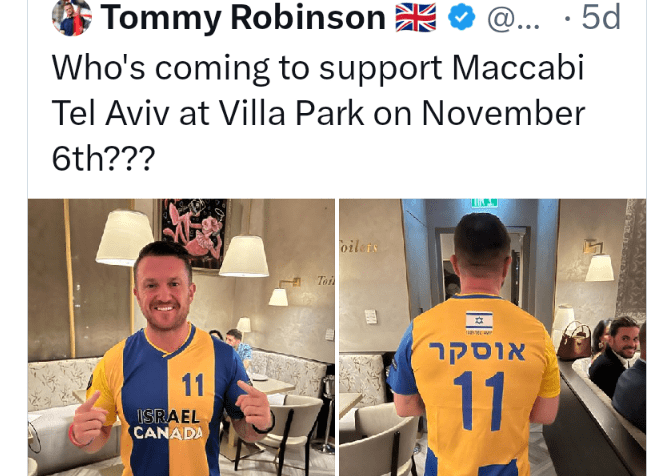
Grinning to camera, Robinson, in true Robinson style, thought he was being oh-so-clever.
In fact, he had just killed off any chance of Maccabi fans travelling to Birmingham.
He was in Israel at the time, on a controversial visit sponsored by right-wing members of the Israeli government – a visit which has since been bitterly condemned by the Diaspora Committee of the Israeli parliament, the Knesset, as ‘a disgrace’.
Cynical gesture
But as the image of a smirking Robinson in a Maccabi top quickly spread across social media, it was prompting alarm among both clubs and community groups.
Jewish organisations denounced the gesture as cynical and dangerous; police sources privately acknowledged it “escalated” the threat level.
Robinson’s call-out raised fears that significant numbers of his supporters might attend posing as Maccabi fans, potentially turning the night into a flashpoint between far-right groups, pro-Palestinian protesters and genuine Israeli supporters.
Maccabi Tel Aviv’s management reportedly viewed his post as the decisive factor in their decision that their fans should stay away.
“We cannot allow our name to be used as a banner for extremists,” one source told Jewish News.
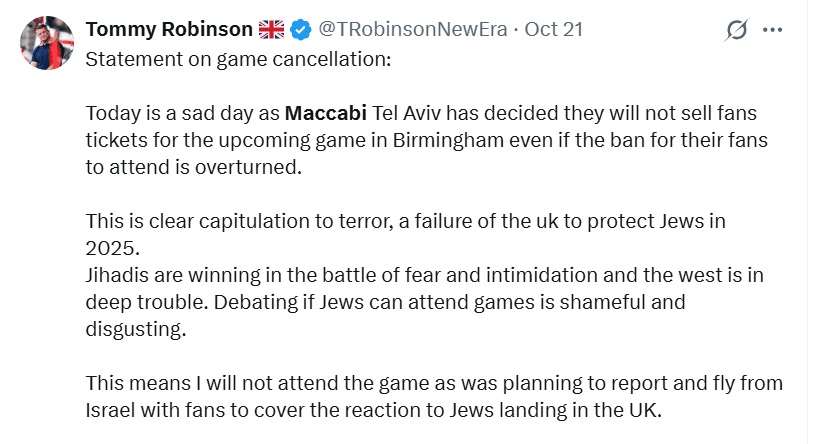
Robinson, for his part, blamed the club’s decision on the “failure of the UK to protect Jews in 2025”.
Not a mention, of course, of his own poisonous role in forcing the decision on them.
Robinson’s behaviour fits a familiar pattern. In recent years, sections of the European far right have courted symbols of Jewish identity or support for Israel to frame themselves as defenders of “Western civilisation” against Islam.
In fact, this appropriation is utterly fake: the same movements often harbour hateful antisemitic tropes and conspiracy theories.
Potentially toxic
As things stand, Aston Villa’s home leg will proceed without visiting supporters, under heavy police presence. The club has urged fans to “focus on football,” though this fixture long ago ceased to be only that.
For Maccabi Tel Aviv, the decision not to send supporters marks an unprecedented step: a football club effectively barring its own fans to avoid being co-opted into extremist politics.
They decided that an association with Robinson was too toxic.
In that respect, the club have shown themselves to be far more principled and astute than some ministers in their own government.