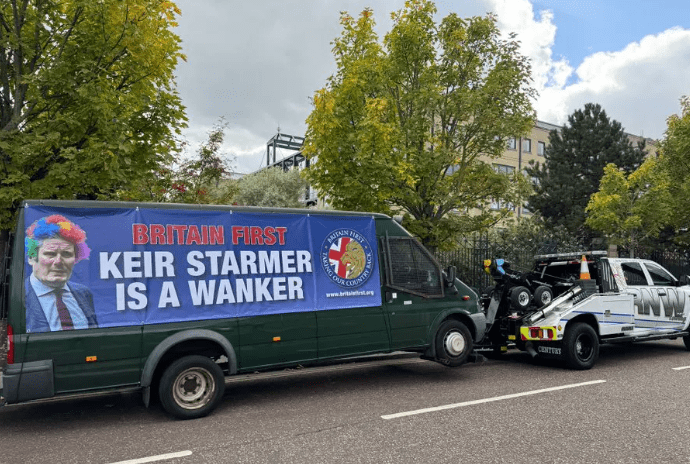
The Britain First ‘battle bus’ saga has taken yet another predictable turn, with Paul Golding now launching an online appeal claiming he faces a driving ban and needs supporters’ cash to “help”.
It is, in effect, the latest attempt to spin a self‑inflicted farce into a persecution narrative, and raise a few quid in the process from his ever-gullible supporters.
Juvenile banner
When Searchlight first reported on the story, Golding had been stopped in Greater Manchester and issued with a 12‑month Section 59 warning after parading his so‑called “battle bus” through Altrincham, complete with its juvenile banner attacking the Labour leader, Keir Starmer.
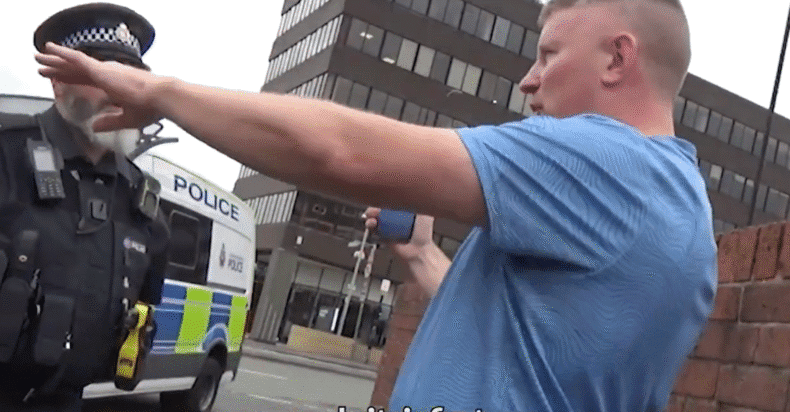
Police made the consequences abundantly clear: repeat the stunt and the vehicle would be seized. Golding, naturally, repeated the stunt a week later at the Labour Party conference in Liverpool. And the vehicle, naturally, was seized.
Then, the police threatened to have it destroyed.
Victimisation
What followed was the usual routine: Golding railing about “victimisation” and pleading for funds, despite having engineered the situation himself.
In the end, British fascism’s village idiot used thousand of pounds of BF members money to buy it back at a police auction, then had the gall to claim they had “completely outsmarted” Greater Manchester Police.
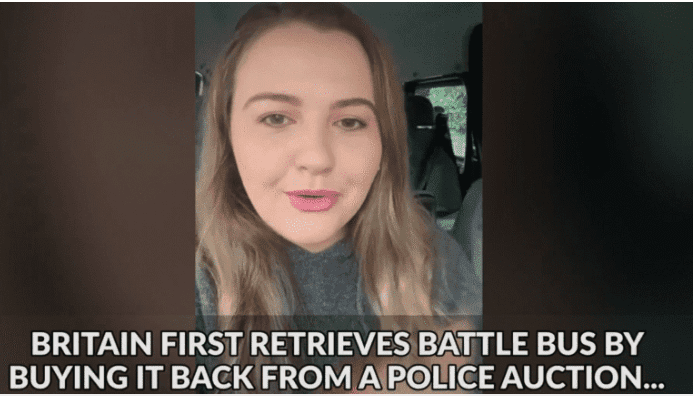
Now he is being portrayed as a man on the brink of losing his licence due to even more “persecution” by the authorities. The narrative is as predictable as it is hollow.
Criminal charge
Greater Manchester Police have now written to inform him that he is being charged with driving without insurance last October on the trip to the Liverpool Labour Party conference. He is offered the standard choice: plead guilty and accept six points and a fine, or contest it in court.
True to form, Golding insists this is “utterly ridiculous” because, he claims, officers themselves contacted his insurer at the roadside and caused the policy to be cancelled.
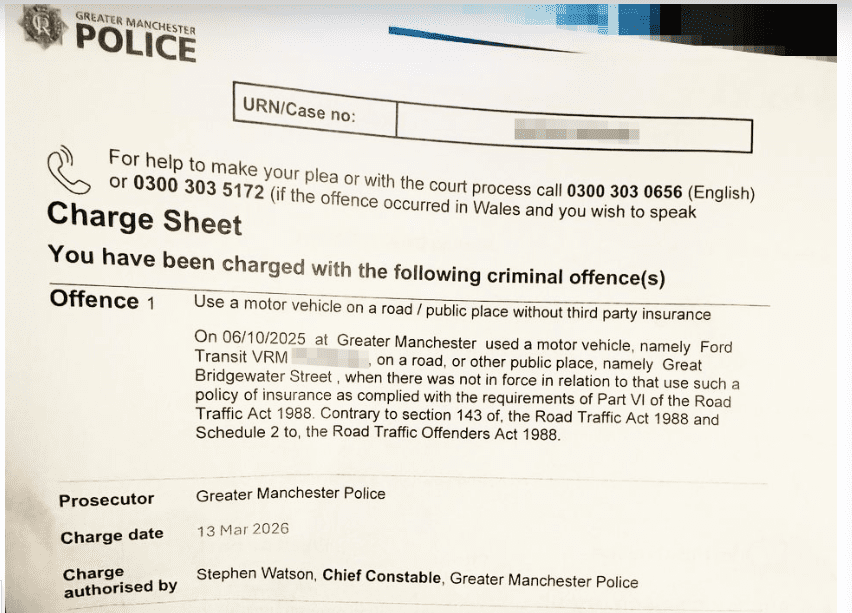
In fact, it is likely that when the insurers were told by police that the vehcle was already subject to a Section 59 warning, which was probably the first they had heard of it, they immediately cancelled his cover.
What is striking is not the brazenness of the grift – Golding has never been subtle – but the sheer repetitiveness of the script. Golding’s latest appeal is simply the latest instalment in a tired routine: manufacture a problem, cry foul, pass the hat.