
Paolo Berizzi has spent 25 years tracking Italy’s neo-fascist underground. He tells Searchlight why the movement has never been more dangerous – and why Giorgia Meloni handed it the legitimacy it always craved.
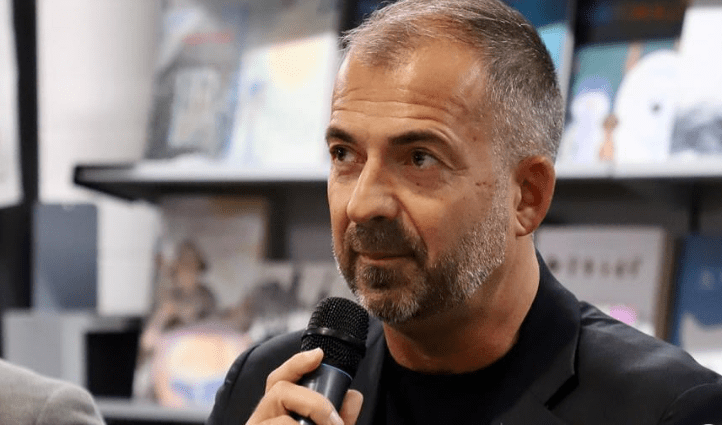
Berizzi is a special correspondent for la Repubblica, and is Italy’s most prominent investigative journalist covering the neo-fascist and neo-Nazi movements.
Police protection
His most recent books are Il Ritorno della Bestia (The Return of the Beast) which examines how the Meloni government has revived and emboldened the Italian far right, and Il Libro Segreto di CasaPound (The Secret Book of Casapound) an investigation into secret, high-level support for the fascist street movement.
Since 2019 he has lived under police protection, requiring armed security on account of neo-fascist and neo-Nazi threats.
Football terrace politics
He did not set out to become Italy’s foremost chronicler of neo-fascism. He began, as journalists sometimes do, by following something that seemed marginal, the politics of football terraces.
In the late 1990s, writing a philosophy thesis at the University of Milan on ‘ultras’ violence, he noticed something that others were choosing not to see. The ‘curva nera’, the black end of Italian stadiums, was not simply rowdy. It was organised, politicised, and in the hands of neo-fascist and, in some cases, openly neo-Nazi groups.

“The lens of the reporter settled on the extreme right,” he says. “I began to study it, to conduct investigations, to follow demonstrations and rallies and the black terraces of Italian football.”
What started as an academic inquiry became a journalistic vocation and, for many years, a profoundly lonely one.
Excitable young men
The dismissiveness came early and often. Colleagues, editors, people who should have known better told him he was seeing things. Fascists were dead and buried since 1945. These were, at most, a handful of excitable young men.
The phrase he heard most often still irritates him. “They said: they’re just four noisy kids. There was always that narrative in those years, that neo-fascism was a marginal phenomenon, that it wasn’t a real problem.”
A thick skin
He gave technical answers, pointed to specific evidence, and was largely ignored. “I had to grow a thick skin.”
The evidence, he insists, was always there for anyone willing to look.
Neo-fascist organisation was visible not just on the terraces but in schools and universities, at concerts, in the physical and virtual squares of Italian public life.
“The extreme right’s capacity to occupy spaces was capillary – in some cases almost military.”
Hard to look away
The problem was not that the movement was invisible. It was that too many people found it convenient to look away.
Twenty-five years on, the looking away has become harder.
Italy is governed by Fratelli d’Italia, a party Berizzi characterises without hesitation as one of the extreme right, leading an extreme-right government.
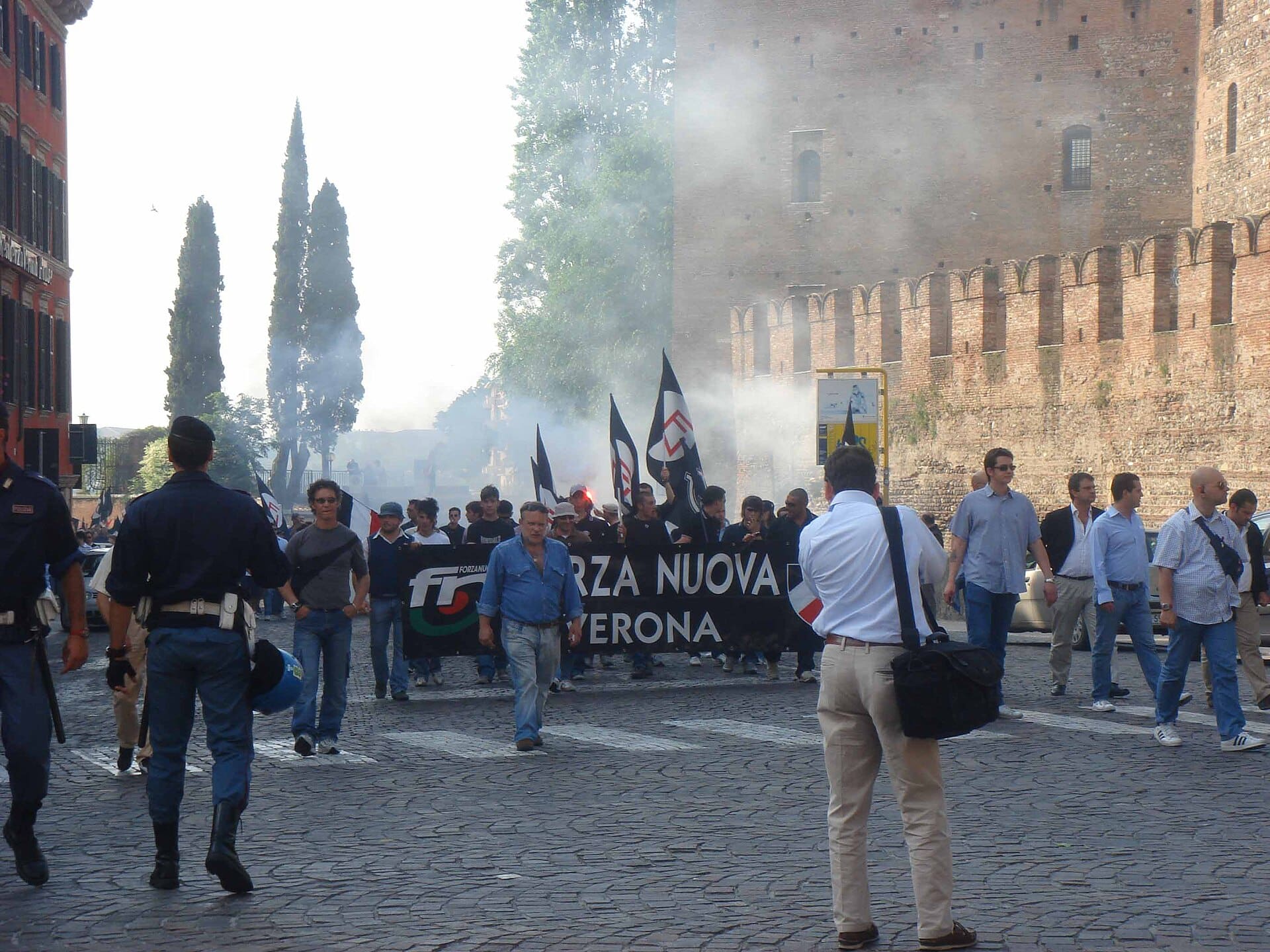
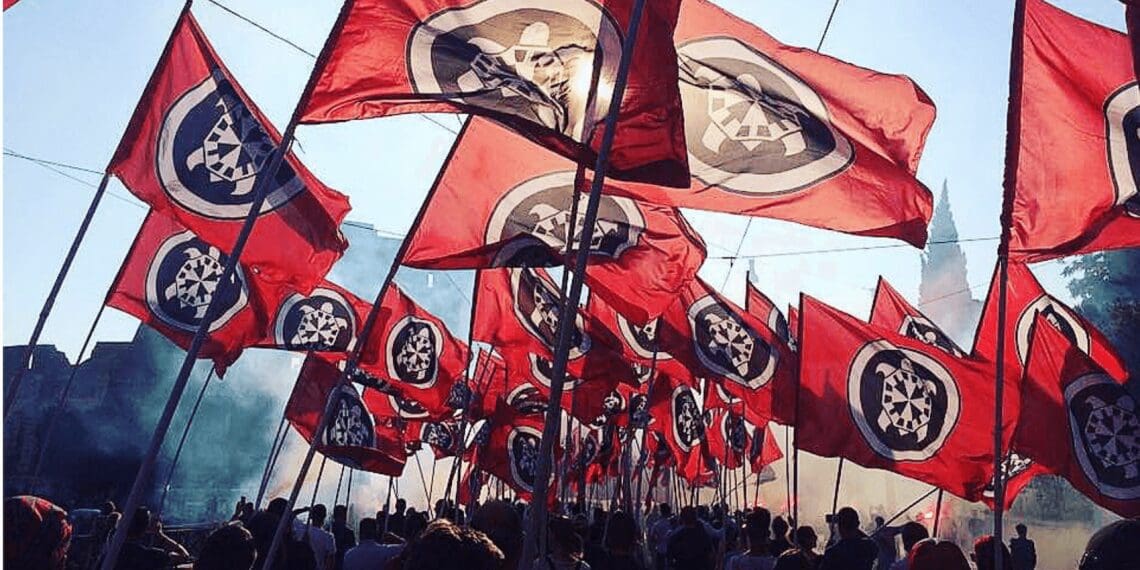
The street neo-fascist movement – CasaPound, Forza Nuova, Veneto Fronte Skinhead, the explicitly Nazi Comunità Militante dei 12 Raggi in Varese, Lealtà Azione in Lombardy, the Hellas ultras of Verona – has not retreated in response.
It has expanded, emboldened, and in Berizzi’s analysis, it has done so with the knowing encouragement of those now in power.
Ties to government
‘Il libro segreto di CasaPound’, his most recent investigation, is built around the testimony of a long-standing senior CasaPound militant speaking from inside the organisation for the first time.
Berizzi exposes the group’s financing, its internal hierarchy, its ties to the governing right and the institutional cover it has received. CasaPound attempted to block publication. It did not succeed.
The connection between the governing right and the street neo-fascist movement is the central argument of the book, and he makes it with forensic precision.
A shared matrix
“These two rights are not distant planets,” he says. “They share the same ideological, political and cultural matrix. They share origins, symbols, themes and battles.”
“The source said something interesting. They said: the brothers and sisters of FdI can no longer say and do what we continue to say and do quite freely.” The distinction, in other words, is tactical, not ideological.
Same instincts
FdI leaders share the same instincts as CasaPound; they simply cannot afford to be seen acting on them.
“FdI is a party full of fascists,” Berizzi says flatly.
“Full of fascists. And every other day, someone, a councillor, an alderman, some third or fourth-rank figure, puts their foot on the accelerator and forgets about the moderation Meloni keeps invoking.”
Fascists can raise their heads
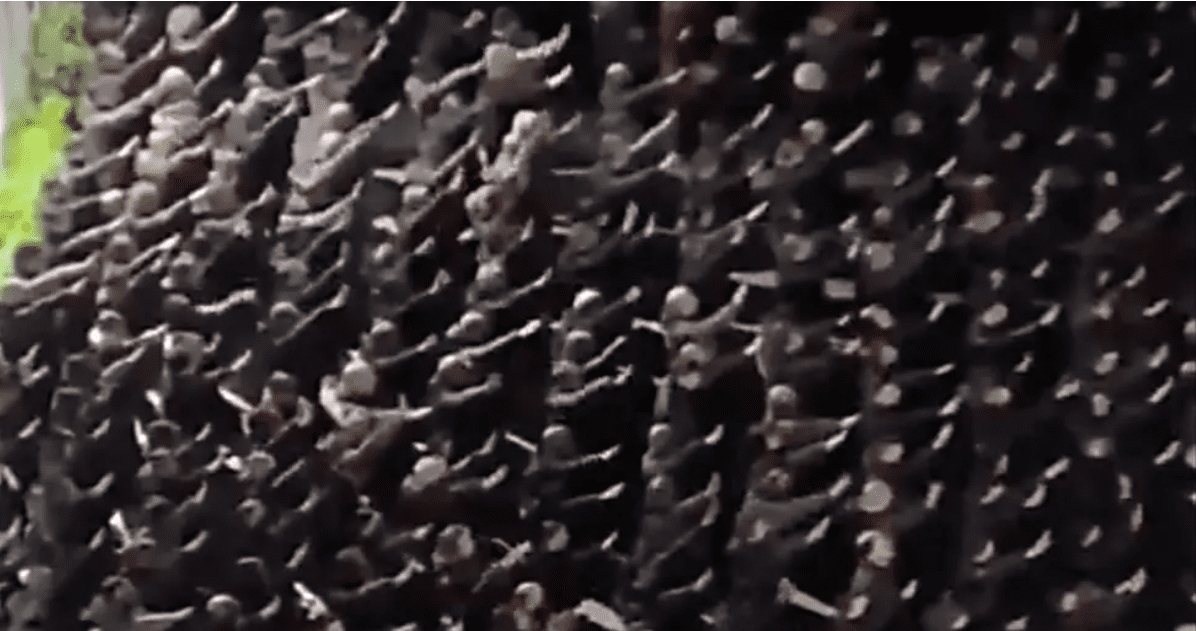
The moment that crystallised the shift, for Berizzi, was Meloni’s victory speech in October 2022. Her promise to allow “those who had to keep their heads down” to finally raise them was received, he argues, by the neo-fascist movement as precisely the signal it was intended to be.
“She made one electoral promise and she kept it. She made the extreme right raise its head – more than she perhaps intended.”
Where neo-fascists once felt obliged to exercise a minimum of public restraint, they now conduct themselves, in his words, “in a swaggering, arrogant way, with the feeling of having been legitimised, of being covered and protected by the political climate.”
Institutional protection
The protection, he argues, has been institutional as well as atmospheric. CasaPound continues to occupy a public building in Rome it has held illegally for 22 years. Despite a court ruling in Bari and repeated calls for its dissolution, the organisation has faced neither eviction nor legal suppression.
“CasaPound is one of the neo-fascist groups most covered and protected by this government,” he says.
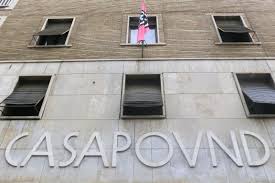
The question of whether these groups pose a revolutionary threat draws a careful response. He does not believe they currently have the numbers or the specific gravity to mount any kind of insurrection. But he refuses to treat history as a guarantee.
“I am not one of those who thinks history cannot repeat itself. I think it can repeat itself in forms that are even worse than the first time — not necessarily as farce or comedy.”
Never accepted defeat
The new fascism, he argues, will not arrive in a black shirt with a castor-oil bottle. “It will be more liquid, more insidious, but it still has its template in the ventennio and above all in the neo-fascism of the 1970s.”
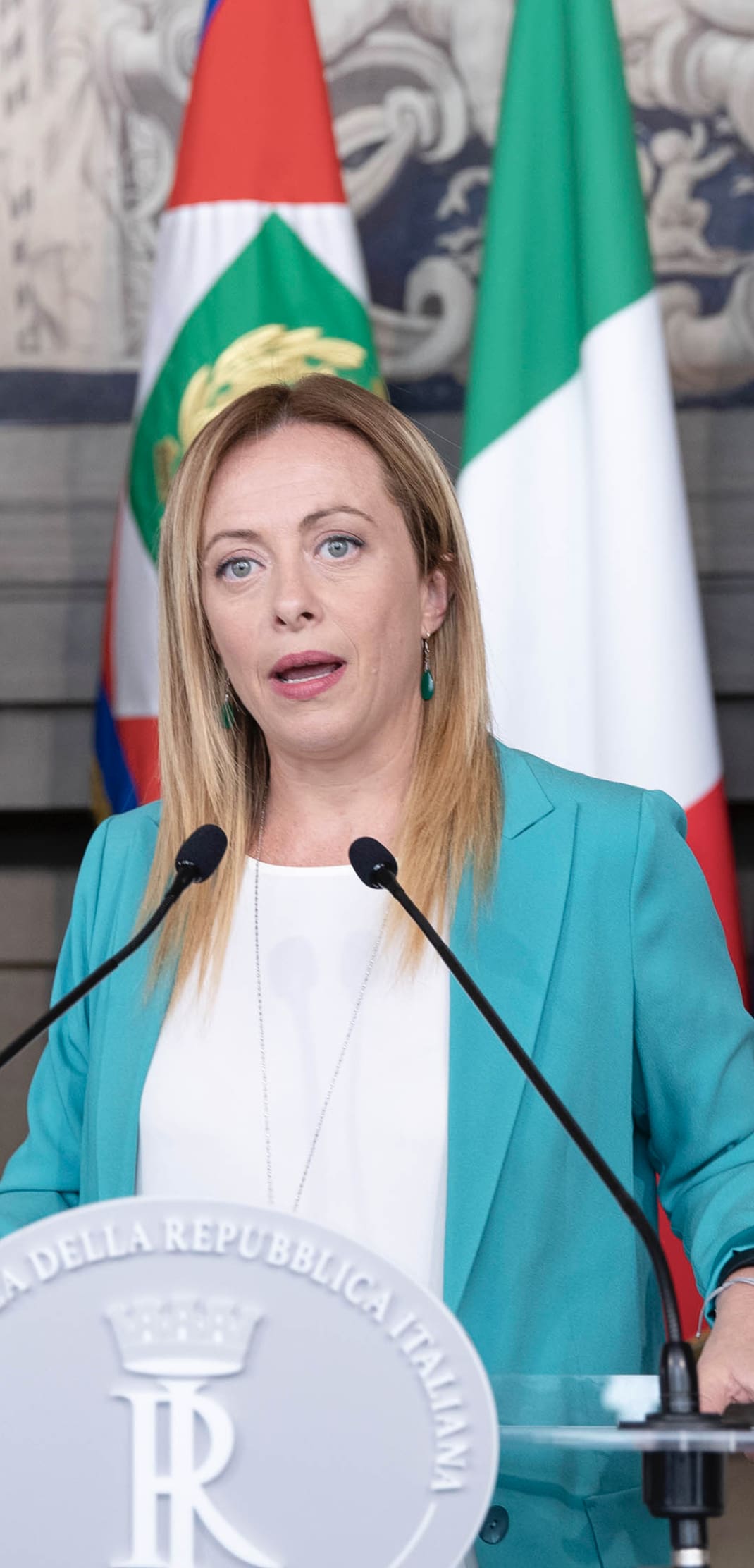
Underneath everything, he argues, lies an unresolved trauma. The Italian far right never accepted the verdict of 1945. Meloni herself, he notes, cannot bring herself to describe herself as anti-fascist, “for the simple reason that she isn’t.”
Her party is the direct heir of the Movimento Sociale Italiano, founded by veterans of Mussolini’s regime and the Republic of Salò.
“They were defeated. Their fathers lost. And they never accepted that defeat. They have been chasing revenge ever since.”
There is, he concedes, one recent source of democratic reassurance.
The referendum defeat of Meloni’s proposed constitutional reform, which he characterises as an attempt to dismantle the post-war republican anti-fascist settlement, was delivered in significant part by young voters, with 64 per cent of those aged between 18 and 35 voting against it.
A democratic slap
“It was a democratic slap to those who evidently have some intolerance toward democracy and the constitution.”
The constitution written by the founding fathers, born from anti-fascism, has proved more resilient than its enemies hoped.
“They never digested it. They were allergic to it. And they got their answer.”