Last month, St Petersburg’s Mariinsky Palace — the city’s Legislative Assembly building — quietly hosted a meeting which led to the formation of a new international alliance of the extreme right across Europe.
Within its historic chambers, an international congress brought together far-right, neo-Nazi and ultra-nationalist movements under the banner of the newly declared ‘International League of Anti-Globalist Paladins.’
Alarming convergence
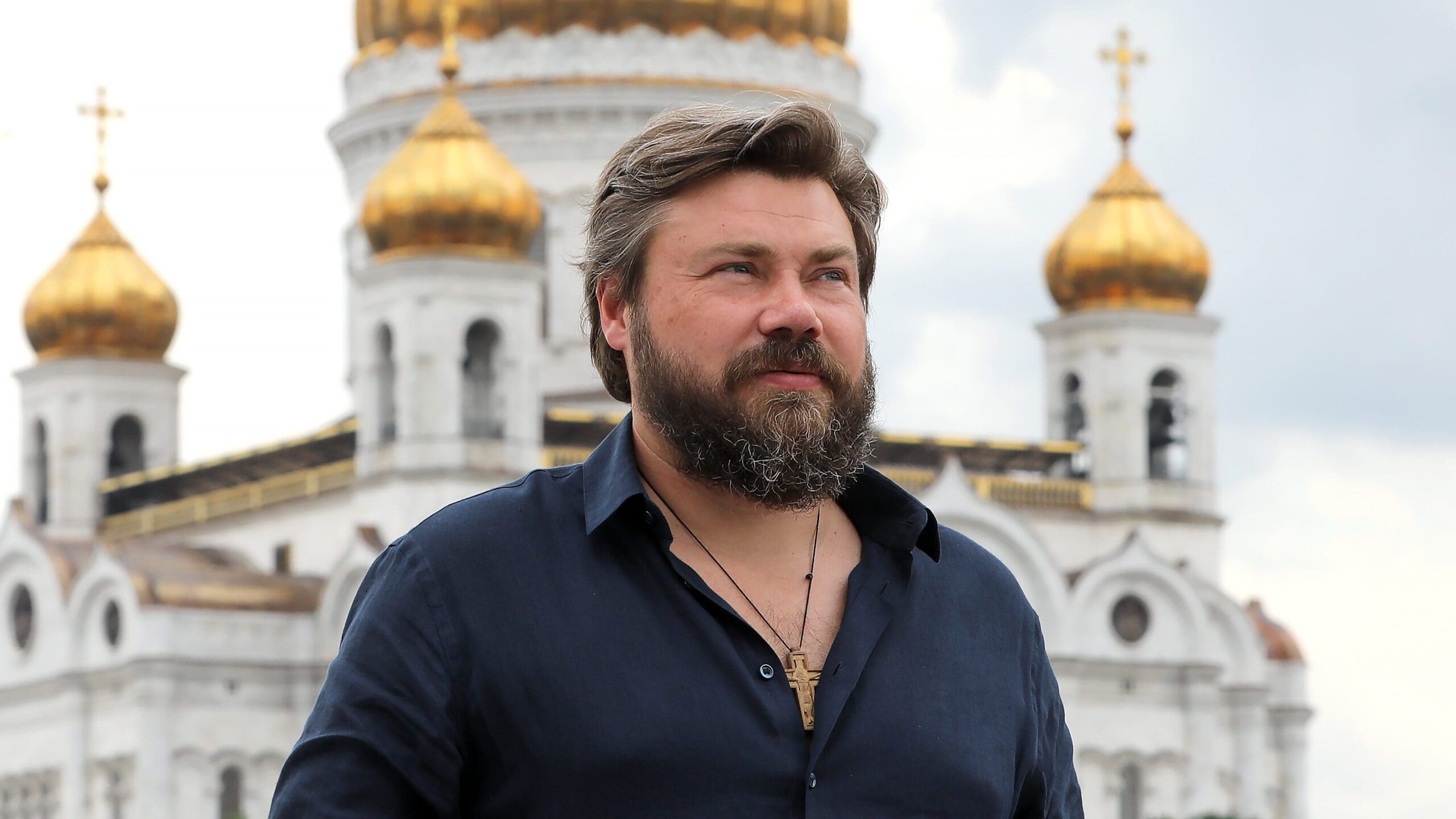
The event, organised by the Kremlin-linked businessman Konstantin Malofeev, was more than a symbolic gathering – it represented an alarming convergence of religion, identity and extremism.
Malofeev, a sanctioned oligarch, is the main sponsor of the Russian Brotherhood of Academists, one of whose representatives was recently interviewed on Patriotic Alternative leader Mark Collett’s online chat show.
The Brotherhood is closely linked to Malofeev’s ultra-right television station Tsargrad, which is also subject to international sanctions.
Although the congress took place in a parliamentary building, state-run Russian media conspicuously failed to mention it.
It was only later in the month, and via Telegram channels, local outlets and exiled media, that the event’s details were made public.
It was revealed by Malofeev himself posting on Telegram, describing the gathering as “inaugural,” and attended by “more than 50 delegates from 15 right-wing patriotic organisations across three continents,” whom he said were “united in defending Christian values, national identity, sovereignty, and resisting “globalism.”
Code for ‘Jews’
The term “anti-globalism” in extremist circles often signals a conspiratorial framing, blaming ‘liberal elites’ for migration and other symptoms of what they see as societal decline. And it is often a coded reference to Jews.
In his post, Malofeev echoed familiar Kremlin narratives, warning of the threat of LGBT “propaganda” and invoking “traditional values.”
He described how the event opened with a “Christian memorial” and a moment of silence dedicated to the US right-wing activist Charlie Kirk, who had been assassinated days earlier – an effort to cast the gathering as part of a broader cultural struggle extending beyond Russia’s borders.
Liturgical and nationalist mix
Proceedings began with a religious procession through Nevsky Prospekt, led by Orthodox clergy and supported by Malofeyev’s Tsargrad media network, the Double-Headed Eagle organisation, and the anti-migrant group Russkaya Obshchina.
The procession – mixing liturgical and nationalist slogans – echoed an even bigger event held in Moscow earlier that month, which drew around 40,000 participants.
Inside the Mariinsky Palace, over fifty delegates convened in an atmosphere of religious and militant symbolism.
Malofeyev was flanked by United Russia MP Konstantin Chebykin and the influential right-wing ideologue Alexander Dugin, known as Putin’s philosopher.
Among the foreign attendees were neo-fascists from Italy and Brazil, members of Greece’s Golden Dawn, Serbian ultranationalists, and representatives linked to Germany’s Alternative for Germany (AfD).
Spain sent delegates from the Falange of the JONS and National Democracy Party; Mexico was represented by the group Union Nation Revolution. Neo-nazi symbols were openly displayed by several of these groups.
Additional participants were reported from France’s Les Nationalistes, as well as Belgium, Hungary, Argentina and South Africa.

Meanwhile, prominent far-right thinkers joined via video link: French ‘new right’ author Alain de Benoist, ideologue Alain Soral, and German politician Alexander von Bismarck all addressed the congress remotely.
Bismarck, who in 2018 acted as a Russian election observer, has since conducted interviews with the Russian ambassador in Berlin – an indication of enduring connections between Moscow and Europe’s extremist fringe.
At the conclusion of the congress, delegates announced the formation of the International Sovereign League ‘Paladins,’ also to be known as the International Anti-Globalist League.
Beholden to Russia
They set out a manifesto: to defend Christian tradition, oppose immigration, reject globalisation, and contest what they called the “LGBT movement.”
Yet even among nationalist circles, the conference was divisive. Some groups criticised Dugin’s rhetoric as too beholden to Russian imperial ambitions, rather than reflecting independent nationalism.
The Telegram channel Europa Revival urged Polish nationalists to avoid associations with the Spanish and Hungarian groups present, while the neo-Nazi brand Runic Storm denounced the attendees as “pro-Russian pseudo-nationalists.”
AfD response
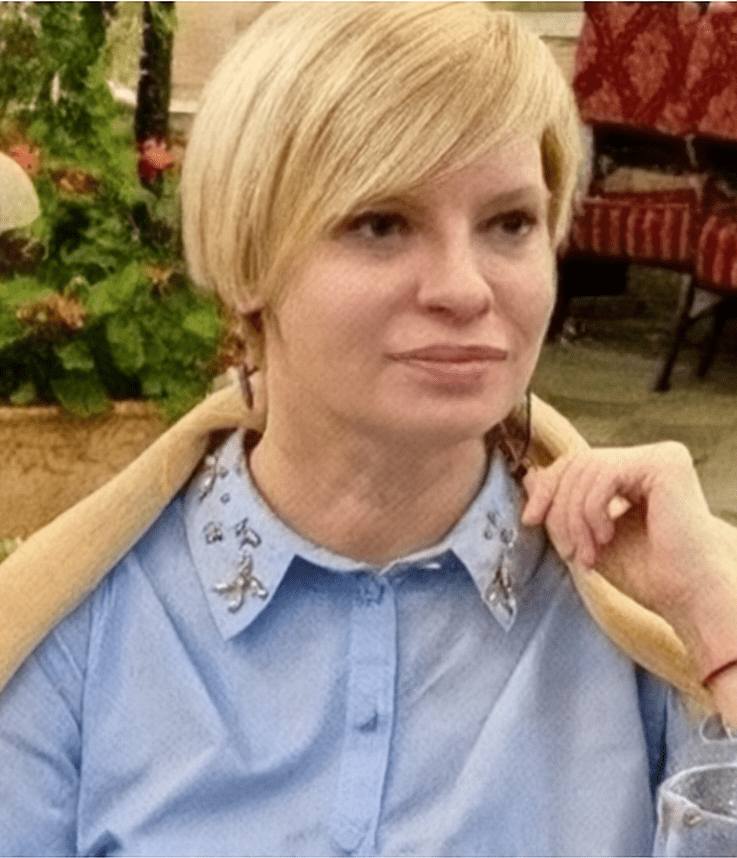
One of the most immediate responses came from Germany. Robert Risch, a Hamburg city councillor from AfD, was expelled from his party after photographs showed him attending the St Petersburg congress.
AfD’s leadership launched a unanimous disciplinary process. Risch defended himself by saying he had attended in a personal capacity at the request of a friend, former Hamburg AfD council member Olga Petersen, and that he had merely spoken of peace.
He claimed to have had no prior knowledge of the event’s participants or agenda.

The incident exposed one of the tensions within European right-wing parties: while some may adopt right-wing, anti-establishment rhetoric, an association with open fascists or neo-nazis can be a step too far in their search for electoral respectability.
Plausible deniability
The St Petersburg congress represents more than a gathering of extremists: it appears to mark a new phase in Russia’s ideological projection.
Hosting the conference within a legislative building conferred a veneer of official legitimacy, while the absence of state media coverage provided plausible deniability.
This is consistent with a playbook used by Moscow: to cultivate ideological proxies that can operate overtly while the state maintains deniability.
The significance of the St Petersburg gathering is yet to become fully clear, but the intention is plain: Moscow is attempting to transform its ideological offensive through an international network of far-right extremism, equipped with religious motifs, covert legitimacy and high-stakes ambition.