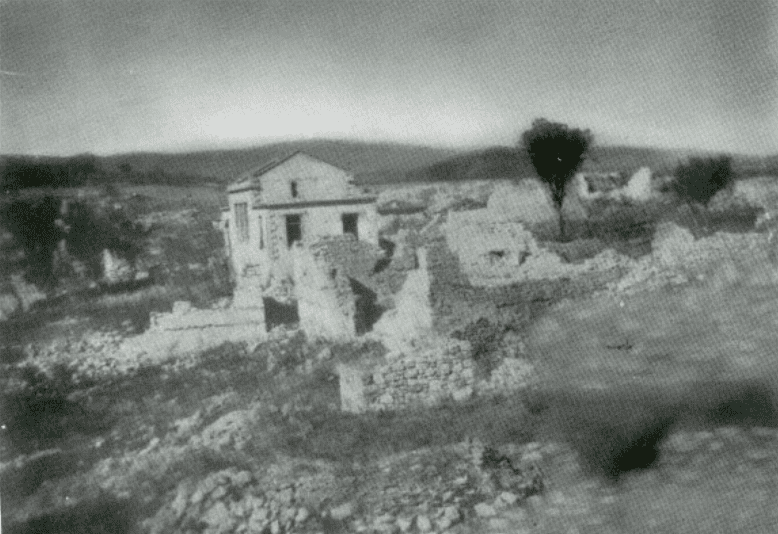
As dawn broke on 17 October 1941 in the villages of Ano Kerdyllia and Kato Kerdyllia in the Serres region of northern Greece, the tranquillity of mountain-life was shattered.
German troops, who had been hunting partisans in the area, rounded up some 230 men – estimates vary – forced them to dig mass graves, shot them, and reduced the villages to ashes.
The massacre at Kerdyllia, though it was the first mass execution of civilians on mainland Greece, was not the last in what became a pattern of collective punishments where villages accused of sheltering partisans or resisting Nazi rule were singled out for extreme retaliation.
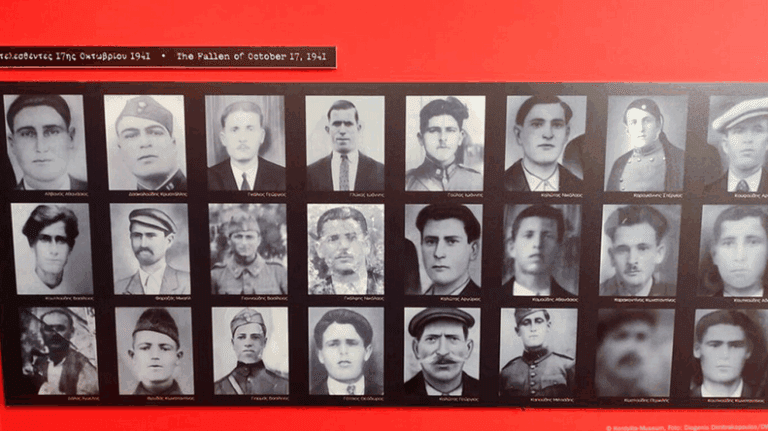
In Kerdyllia, entire households lost fathers, sons, uncles. Schools and churches were destroyed. The houses of Kato Kerdyllia and Ano Kerdyllia still stand in parts as ruins — memorialised but scarred.
One of the village memorials bears the plaque: “Εκτελεσθέντες Κερδυλλιώτες 17.10.1941” (“Executed Kerdylliotis 17.10.1941”).
Each year, on 17 October the villages of Ano and Kato Kerdyllia host memorial services.
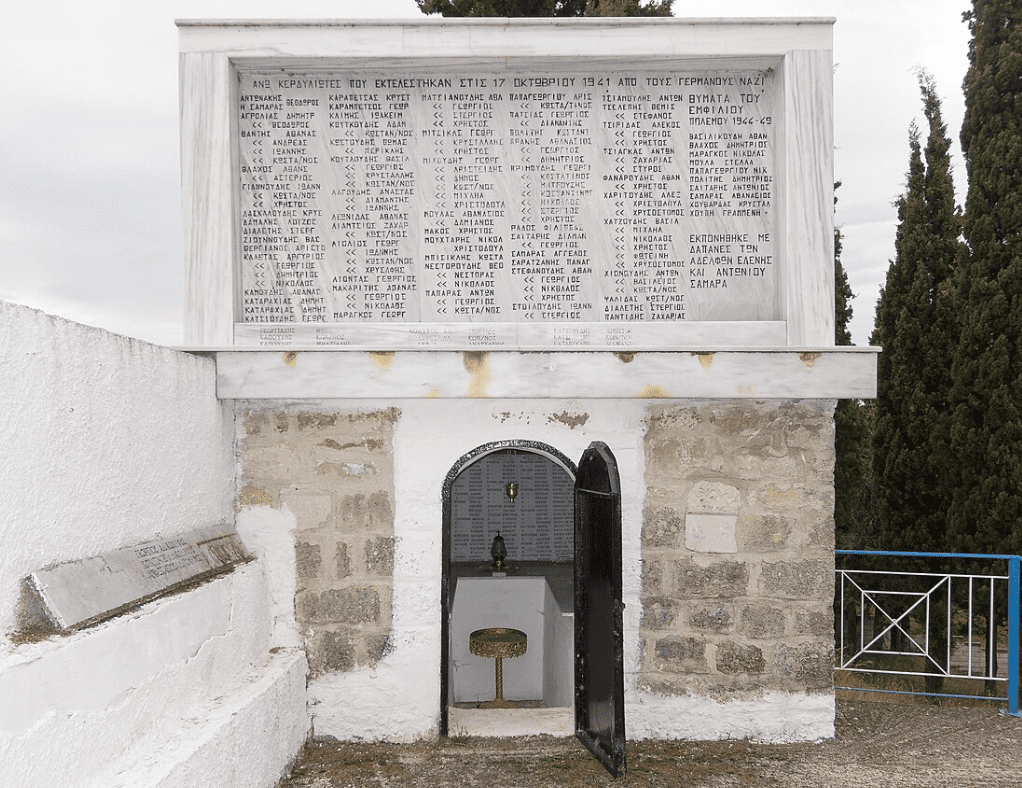
Residents and descendants gather for a religious ceremony, wreath-laying and a silence observed before the cross on the central memorial.
Visitors often bring photographs of the victims, place wreaths, and participate in readings of the names lost.
“Among the victims were both my grandfathers,” says George Galios, president of the local community of Neo Kerdyllia.
“I didn’t live through the massacre, but I grew up in its shadow.
“My grandmother lived with us — she always mourned. She cried silently under her headscarf.
“As children, we didn’t understand, we only felt the sadness hanging in the air,”
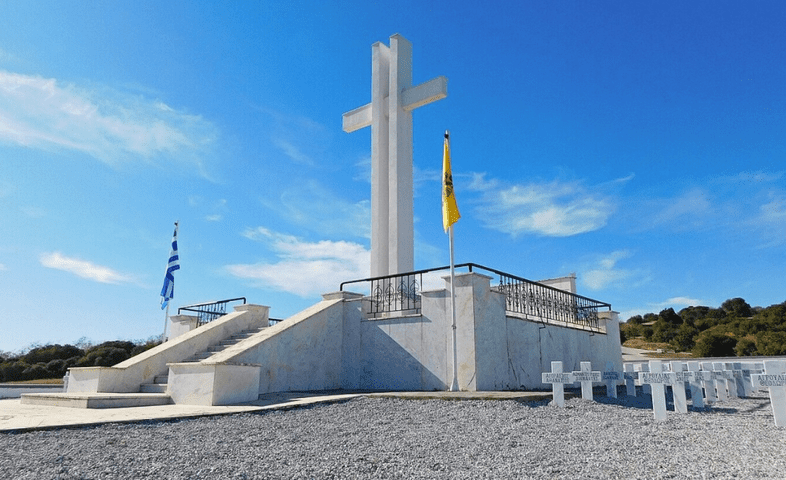
Local authorities, including the Municipality of Serres, have taken steps to preserve what remains of the ruins and memorials.
Schoolchildren from the regional capital Serres also participate in educational programmes, visiting the site, hearing survivor testimonies and participating in discussions about occupation, memory and reconciliation.
These efforts seek to transmit the memory to younger generations.
Never Again.