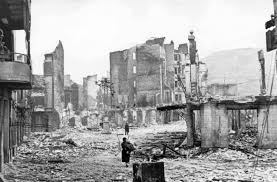
On this day in 1937, a Monday market morning in the Basque town of Guernica ended in fire and rubble.
Ten thousand people, locals, refugees, and peasants, had gathered in the town centre when, by late afternoon, the Nazi Condor Legion and Fascist Italian Legionary Air Force descended, dropping over 31 tonnes of munitions for more than three hours. The bombing reduced 85 per cent of the buildings to ruins.
Overthrow the republic
They had joined the Spanish Civil War on the side of the Spanish army, led by General Franco, which had set out to overthrow the democratically-elected republic.
Any military justification was threadbare from the start. When the bombing ended, the Rentería Bridge, the town’s main strategic access route, remained untouched. This was terror as policy.
Spread fear
As the Francoist General Mola had put it: the objective was to spread fear, to eliminate all who did not think as they did.
The Times correspondent George Steer, who arrived to find the town still burning, reported that the object of the raid was the demoralisation of the civilian population. The world paid attention, at least briefly.
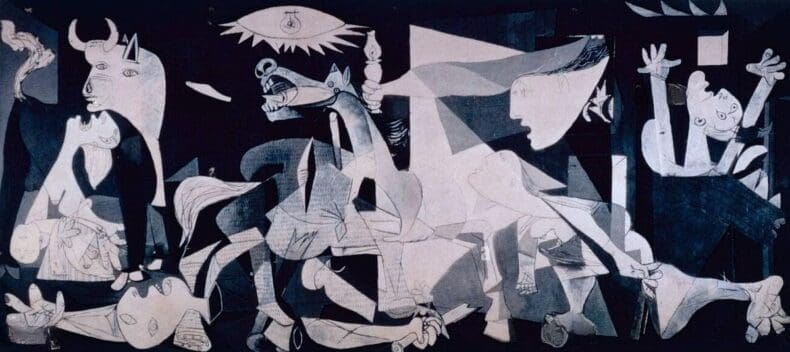
Picasso responded with his vast monochrome accusation, probably the greatest painitn of the 20th century, which has since hung ever since as an indictment of fascism.
Fascism practised on Guernica what it would perfect elsewhere. We were warned.
Never again.